

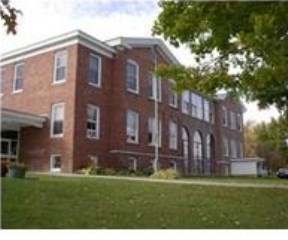
When North Bennington turned its public school private this year, some people in the Statehouse and Agency of Education grew nervous.
What would this mean for local and state taxpayers, they wondered. For the Education Fund? For children in the district?
A moratorium and an outright ban on the same transition in other towns were floated in both the House and Senate, but ultimately lawmakers settled on a committee to study the issue further. That group met for the second time Wednesday morning. It’s off to a slow — but passionate — start.
Central to the sometimes edgy debate was all manner of access: Access to a full range of services for students with special needs, access to school choice for families and access to school records and accountability mechanisms for state officials and members of the public.
Access to education
A public school’s privatization boils down to nothing short of constitutional and civil rights concerns for Secretary of Education Armando Vilaseca.
That’s because, when it comes to providing services to any and all students, independent schools are not necessarily subject to the same state and federal obligations that public schools must deliver.
Parents who choose to send their children to independent schools, for example, often forgo their right to appeal the special education services their children may or may not receive. In fact, independent schools needn’t offer any special education.
That’s not to say they don’t, however.
St. Johnsbury Academy, which offers a general education program, also is approved to provide services for all 13 categories of disability. The Austine School for the Deaf is a different model of independent school, one that specializes in a narrow range of services. Still other independent schools accommodate some disabilities, or none.
Daren Houck, head of the Mountain School at Winhall, said children with IQs of 62 and 132 routinely attend classes together there. “We are fully integrated,” he said, noting that every child has a place on the stage at school plays, too.
From the independent Maple Street School in Manchester, headmaster Fran Bisselle shared similar stories. She said many parents have sought out Maple Street precisely because of the range of special education services her small school is able to provide.
Bisselle explained that children who don’t quite qualify for special education programs at larger institutions, but who can’t quite succeed in those schools’ traditional classrooms, find greater flexibility in a more intimate environment.
Those stories sounded all well and good, but fell short of reassurance for most of the agency representatives and some other committee members at the table.
“Is that a legal obligation? Or a moral obligation?” asked Jeff Francis, executive director of the Vermont Superintendents Association.
The answer: It depends.
If a child with special needs is placed by a local education agency in an independent school — perhaps because the local public school has closed — then that school is obligated to provide special education services, Houck said.
That requirement disappears in placements that are purely a matter of choice. “That’s called a parentally placed child,” explained Agency of Education attorney Barbara Crippen in a phone interview, “and they forgo all their rights to special education due process.”
And that’s what got her worried — not just regarding special education, but also as state and federal laws apply to provision of English Language Learning programs, free and reduced price meals and educational support teams, for starters.
“As a lawyer … I’m not looking at the quality of what’s being provided,” Crippen said. “I’m looking at the legal entitlements.”
Not just any independent school
The Legislature is entangled in an ongoing debate over whether the same entitlements that are standard at public schools should be provided by all independent schools receiving public money. But that’s not the debate this committee was asked to wade into.
The question for the people at the table is whether it’s both legal and appropriate for a public school to turn itself independent.
Vilaseca thinks not.

“I am opposed to closing down a public school and opening up an independent school in its place,” he said in an interview.
He considers it a separate issue from independent schools started by private citizens, which he thinks offer a lot of benefits. It’s also different than a public school that decides to close entirely and provide school choice to area families.
He also acknowledged independent schools’ “long and positive history” in Vermont’s hybrid education system.
“But we’re talking about the closing of public schools and using the same staff, same principal, same building, books, materials,” he said, referring to North Bennington’s privatization, which actually was spearheaded by the public school board. “I think that was not the intent of the law,” Vilaseca said.
The distinction matches Crippen’s concerns. “The state has obligations under federal law,” she said in the committee meeting. “The school board in North Bennington was part of a municipality, which is part of the state.”
Yet acting as an arm of the state, she said, the school board actively worked to close the public school, with voter approval, in order to create a new, independent version in its place.
It’s a version that may provide some of the same services public schools are bound to, but that is not required to do so.
Crippen wouldn’t hazard a guess as to whether North Bennington’s move was legal, even though she knows that opinion is what the Legislature wants from the committee.
“Until a court decides that, you don’t know,” she said by phone. “I’m not suggesting it should (be litigated) or that there is a case, but I’m saying there are some questions and concerns, and there’s not going to be a definitive answer out of our study group.”
What does — or doesn’t — come next
Another answer that may not be forthcoming from the study group, but not for lack of interest on many committee members’ parts, is the impact of privatization on taxpayers.
The available data are limited in what they can illustrate, explained education finance manager Brad James. That’s partly because figures for pupil attendance, budgets and expenditures are self-reported, he said.
It’s also because Vilaseca is not willing to devote unlimited resources to data mining and analysis for the sake of the committee. His agency is short-staffed, he said, and he has doubts how seriously the committee’s report will be taken by the legislators who asked for it.
“We’ve done studies and quite often they seem to not have been followed up on,” he said, “or a report comes out counter to what people want, so they drop it.”
Nonetheless, he said he’d try to provide more data to the committee at its next meeting in September. “There are some opportunities to come up with local costs, but more likely it will be state aggregates and averages,” he said, because the agency doesn’t have granular data at the community level.
And while the committee continues to struggle to stay on task — discussing the implications of a public school turning independent, not the merits of independent schools themselves — some independent school representatives likely will stay on alert.
Julie Hansen, co-chair of the Council on Independent Schools, said it’s her duty to defend independent schools any chance she gets.
Just as policymakers in the room weren’t entirely convinced by an assurance that children’s needs would be met (rather than a legal obligation), Hansen didn’t buy assurances from other committee members that independent schools were not under attack with this study.
“I agree with you that this (the scope of the study) is very narrow,” Hansen said toward the close of the meeting. “But I think … with any aspect of any discussion of any law, erosion starts with a narrow issue. And then there’s another issue that gets added on to that. So any time there’s going to be an issue that affects independent schools, we’re going to be at the table (with) our input and perspective. That’s our responsibility to democracy,” she said.
For more information on the study committee, including upcoming meeting announcements and committee documents to be posted soon, visit the committee’s page on the Agency of Education’s website.
