

Vermont’s congressional delegation is taking a month-long break in August. During the past several months, Sens. Patrick Leahy and Bernie Sanders and Rep. Peter Welch have lent their names to a number of bills, and they’ve been vocal on topics ranging from surveillance to student loans. Some of those efforts have come to fruition, others failed, and some are still in play.
All three lawmakers are invested in the fate of Farm Bill, which remains up in the air, and all three were on the losing side of the student loan deal. Their positions on immigration reform, another up-in-the-air bill, are less uniform, but they all support a path to citizenship for undocumented workers, which could be in jeopardy in the House. After the Edward Snowden leaks, they have each redoubled on work-in-progress efforts to reel in surveillance programs at the National Security Agency (NSA). On the home front, they helped draw down millions of dollars in federal grants for Irene recovery work and recent flood damage in Vermont.
Sen. Patrick Leahy
The immigration reform bill is stuck in the House, but Leahy’s role in ushering it through the Senate remains a feat in its own right. He even got the satisfaction of seeing his major concession during the mark-up process — withdrawing an amendment that would have allowed a same-sex spouses to get green cards — become nullified after the Supreme Court struck down the Defense of Marriage Act (DOMA).
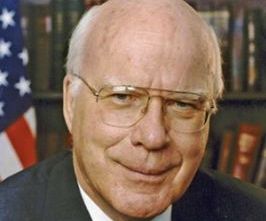 Leahy was involved in reworking the conditions for aid to Egypt in the foreign aid bill that the Senate Appropriations Committee approved on July 25.
But Leahy doesn’t have all of his ducks in a row just yet. He’s held one hearing on how to revise the Voting Rights Act, after the Supreme Court struck down the formula that required states with histories of racial discrimination to get approval before changing their voting laws. But he hasn’t offered a legislative remedy yet.
Leahy had wanted the Judiciary Committee to vote on a media shield bill, introduced in response to the federal government’s mass seizure of phone records from AP and Fox News reporters, before the August recess. The committee did vote to take up the bill, but there are several sticking points— including how to define just who is a journalist — that promise to slow down the process.
Leahy held a high-profile hearing on the National Security Agency’s (NSA) surveillance programs, where he publicly reprimanded the deputy director for “locking the barn door after the horse was stolen.”
But the Senate President Pro Tem still has his work cut out for him on the legislative front. He has introduced two bills in the aftermath of the scandal that have yet to move out of committee — one, recycled from years past, protects email privacy by updating the Electronic Communications Act (ECPA), and the other would tighten up provisions in the Patriot Act and FISA Amendments Act.
In the meantime, Leahy managed to get a clearer-cut version of the bill out of the Judiciary Committee as an amendment right before the August recess. The proposal is an amendment to legislation that reauthorizes a law that provides bulletproof vests to state and local law enforcement agencies.
Rep. Peter Welch
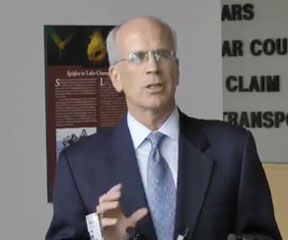 Welch, unlike Leahy and Sanders, is operating in a Republican-run chamber. One of his bigger doses of publicity came as part of his role in the “Problem Solvers Coalition” — a bipartisan group that Welch co-founded back in January with the goal of ending the congressional gridlock. The 81 lawmakers showed off their first evidence of bipartisan output on July 18, unveiling nine bills and attracting positive and less enthusiastic news coverage in outlets including The New York Times and The Washington Post.
The House passed the 2014 defense appropriations bill without voting on a joint resolution to authorize military intervention in Syria — something that Welch fought to include but was rejected at the committee level.
Welch is the lone sponsor of a bill that would step up the registration requirements for private drones owners. That legislation, introduced mid-July, has been assigned to two committees but hasn’t seen any action.
Welch’s closest brush with a big victory came when the House nearly passed an amendment that Welch supported, which would have prevented the NSA from continuing to collect phone record metadata on American citizens. Rep. Justin Amash, a Republican, led the effort, which failed on a vote of 205 to 217.
The House Farm Bill was stripped of its food stamp component and still needs to be reconciled with a drastically different Senate version. Welch lost out when the House rejected a provision that gave price supports for dairy farmers, but the bill did include several provisions he fought for, including a two-part maple syrup stimulus that would allow states to get grants for sugar production and would help improve the energy efficiency of sugar shacks.
Sen. Bernie Sanders
Sanders, still the rebel darling of the national media, has attracted recent news coverage for everything from his unruly hair to his stance on student loans.
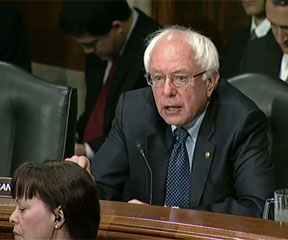
A member of the Education Committee, Sanders opposed the student loan rate deal and made a fruitless bid to put a two-year sunset on the bill before it passed in the Senate.
The immigration bill was, by Sanders’ estimate, a mixed bag. He supported items like the path to citizenship, but was less than pleased with provisions that beefed up border security and expanding guest worker programs. Sanders, who says he’s concerned guest workers will crowd out American in need of jobs, did manage to get the Senate to set aside $1.5 billion dollars to help 16- to 24-year-olds find jobs. Sanders told the Washington Post he was “very proud” of the two-year program, but added that “it doesn’t go anywhere near far enough.”
Sanders also introduced a bill to reel in the NSA’s surveillance apparatus, but unlike Leahy, he doesn’t preside over the committee of jurisdiction.
Sanders does chair the Veteran Affairs Committee, and he’s had better luck there. The committee passed a rash of legislation a week before the congressional vacation, including a bill that brings the Department of Veteran Affairs in line with the DOMA ruling and one that improves services for veterans who have been sexually assaulted. A third bill requires the department to report more frequently to Congress on the number of benefits claims it hasn’t gotten around to processing.
Correction: An earlier version of this story included an incorrect age range for Sanders’ job assistance measure.
