

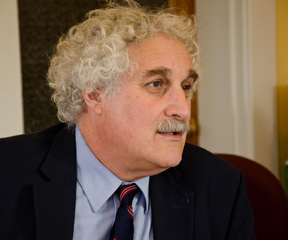
“Income tax has been strong this year,” said Stephen Klein, the group’s chief fiscal officer. Overall revenues for April were $26.8 million higher than expected, he said.
Klein appeared before the House Ways and Means and House Appropriations committees earlier Friday, to tell them the latest news, though figures haven’t been formally released by the administration.
The takeaway is that there could be more money available for reserves.
Back in March, when House Appropriations and the full floor approved the budget, these figures weren’t available, said Klein. Back then, also, no one knew if there would be a fiscal surplus at the end of the year, he said.
“It’s more likely now that there will be money for the federal sequestration and for the rainy day fund from the surplus, so it may affect the negotiations on the budget,” Klein told VTDigger.
House Appropriations chair Martha Heath, D-Westford, signaled her willingness to stow away less reserve money in light of the new information to her Senate counterpart, Jane Kitchel, D-Caledonia. Heath’s remarks came as a budget conference committee met for the first time, to schedule meetings every day next week.
A surplus “could obviate our need for reserves,” said Heath at that initial meeting on Friday afternoon. Three members from the two Appropriations committees will bargain over differences in their budget language all of next week.
State senators set aside no reserves in their budget vote earlier this week.
But House Speaker Shap Smith also cautioned at a Friday news conference that rosy revenue forecasts don’t necessarily address revenue needs in 2014, even if they comfort lawmakers fearful about the need for reserves.
“I don’t think we’re going to be in a situation where we would up the forecast at this point and time in the session,” Smith said. “So a rosier outlook on revenues doesn’t necessarily mean additional spending in 2014, but I do think it might give us some comfort on the issue of reserves.”
Under current law, a quarter of any fiscal surplus in June goes toward the state’s ‘rainy day’ fund, with another quarter poured into a fund which compensates for cuts in federal funding. Half of any surplus goes to the education fund, and in particular a special property tax relief fund.
Other topics of contention that Heath and Kitchel broached during their brief initial meeting included the Senate’s more austere take on adding new positions to state government, relative to the House’s decisions. The Shumlin administration asked for 79 new positions: the House bargained it down to 66: and the Senate decided on 58.
The two money chairs also acknowledged differences in the way they’d tinker with the state’s Reach Up welfare program, a topic of controversy in recent weeks. They plan to start next week by solidifying their agreements, before moving onto more contentious conflicts.
The three members from House and Senate Appropriations on the six member committee are: Reps. Heath, Mitzi Johnson, D-Grand Isle, and Anne O’Brien, D-Richmond; and Sens. Kitchel, Dick Sears, D-Bennington, and Diane Snelling, R-Chittenden.
