

Last week, the Green Mountain Care Board released two reports: one that details a 2011 dip in the growth of health care spending and another that concerns what is known in the medical community as “the cost shift.” The latter is what happens when commercial insurance payers and the uninsured are charged higher health care prices due to underpayments from Medicare and Medicaid, which is the assumed case in Vermont.
The board’s expenditure analysis found that between 2011 and 2012, Vermont residents paid 1.5 percent more for health care. That increase in spending on health insurance premiums and other costs is 3.2 percent less than the average annual growth between 2006 and 2012 of 4.7 percent.
While this decrease in health care spending is viewed as a positive step for reeling in rising costs, Anya Rader Wallack, who chairs the Green Mountain Care Board, said that it’s too soon to tell what this outlying number actually means.
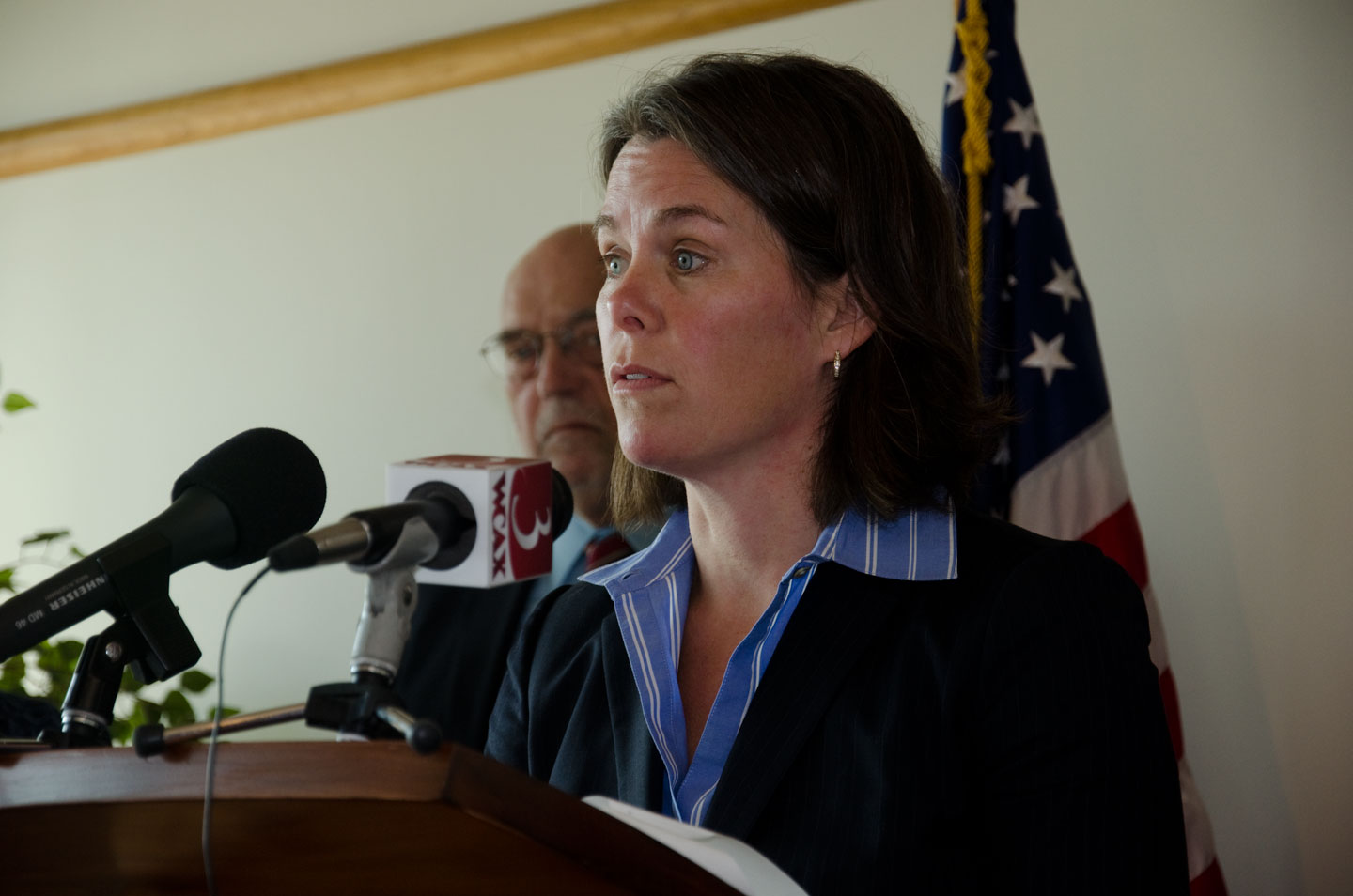
“In general, we say don’t read too much into any one year because a multi-year trend in a small state like Vermont is much more reliable than one year of data,” she said.
The dip in spending growth occurred before the Green Mountain Care Board fully took effect. But the decrease came when the Legislature and the Shumlin administration were honing in on bringing down health care costs. In spring of 2011, they enacted Act 48, which created the Green Mountain Care Board to control cost growth and set the state on a path toward a publicly funded health care system.
Wallack said that if this downward trend in spending were to continue, an argument could be made that the pressure to contain costs actually had the desired effect before new policies set in.
“If it’s a one-year dip-down,” she said, “I’d say it has more to do with the downturn in the economy, which has an impact on how much people use health care. We’ve seen that nationally, but the dip-down in Vermont is more dramatic.”
Wallack and the board are not projecting such low spending growth in the upcoming years. Using national data, the board projects a steep rise of 7 percent in health care spending next year. The trend follows national numbers (see the figure below). Spending will spike when many key provisions of the Affordable Care Act, or Obamacare, take effect at the outset of 2014.

According to Wallack, the upward pressure from the federal law can be attributed to three shifts:
• More people will be covered by insurance, according to state and federal projections, which will drive up the use of health care services.
• More people will have more comprehensive coverage, according to state and federal projections, which will also drive health care utilization.
• The federal law imposes a new premium tax on insurers.
“So, insurers will charge that through to their customers in premiums,” Wallack added.
The Green Mountain Care Board’s goal for the foreseeable future is to bend the federal cost curve in Vermont by better regulating and monitoring provider costs.
“It’s quite possible that one of two things or both would intervene at the state level to make us different than the nation,” she said. “One is regulatory control, and one is innovations that would reduce costs of care, efficiencies and unnecessary use of services by Vermonters.”
On the regulatory front, the Green Mountain Care Board is reeling in patient revenue increases at 3 percent for hospitals. On the innovation front, the board received a $45 million State Innovation Model grant from the federal government to test out global budget payment models and to shift Vermont away from a fee-for-service payment system.
Another measure that could reduce health care costs for private payers, Wallack said, is addressing the Medicare and Medicaid cost shift. But this would only work if her board keeps a close eye on how hospitals and other providers respond.
The cost shift conundrum
“It is real — private payers pay more because public payers under pay,” Green Mountain Care Board wrote in the cost-shift report.
The idea is that Medicare and Medicaid reimburse providers at a rate below the cost of care.
Therefore, providers charge private insurers — who then charge their Vermont policyholders — extra to make up the difference.
According to the board’s cost-shift analysis, 17 percent of a private payer’s premium goes to paying off the hospital cost shift.
“On average, if you’re a privately insured individual, 17 cents of every dollar you pay on insurance will go to pay for the cost shift,” Wallack said.
To address this issue, Gov. Peter Shumlin proposed a 3 percent, or $24.4 million, increase in state Medicaid reimbursement rates at the beginning of the legislative session. The Legislature will decide over the next two weeks whether to pass the proposal or pare it down.
But what the Green Mountain Care Board report makes clear is that this shift on its own might not have the desired effect of lowering costs.
The report pulls from the work of Uwe Reinhardt, an economist at Princeton University.
“If the cost-shift theory is generally valid, it implies that in many local markets, private health insurers bring relatively weak market power to the bargaining table with major hospitals or groups of physicians. This would explain why they cannot resist price increases triggered by the alleged cost shift and pass these on to their clients,” Reinhardt wrote in the publication Health Affairs. “Furthermore, if private insurers have insufficient market power with providers and therefore the cost-shift theory is valid, it raises the question to what extent the nation can rely on private health insurers as agents of cost control.”
Even if the state were paying providers more, in a market with weak competition, like Burlington, a hospital could take the money and boost revenues without reducing prices in accordance with the new funding stream.
For this reason, Wallack explains, it’s imperative that her board closely monitors a cost-shift measure. One of the hurdles to regulating this measure effectively, Wallack and Reinhardt argue, is that there is a “huge variation of prices for identical services within the private market,” as Reinhardt wrote.
Over the next several years, the Green Mountain Care Board is planning to analyze how the state can set uniform rates for specific services, like X-rays, to standardize health care costs and make them more transparent.
“You need to have some sort of explicit constraint on the setting of a uniform price,” Wallack said. “If you’re just going to say government is going to pay more, but don’t have an explicit agreement about what’s a reasonable rate, then in a non-competitive market providers will just increase overall spending rather than using the added investment from government to equalize payments.”
The other side of the coin
When the board analyzed spending growth, it also looked at overall payments to Vermont providers.
While Vermont residents spent 1.5 percent more on health care in 2011, providers received 4.8 percent more from patients. The 2011 increase to providers is below the average growth rate of 5.3 percent, from 2006 to 2012.

The chief reason Wallack offered for this discrepancy is that a rising number of New York residents are coming to Vermont for treatment. Fletcher Allen Health Care has grown its relationships with upstate New York providers, and the influx of New York residents seeking care at Vermont’s largest hospital is made apparent by its budget, she said.
Although the provider payment numbers are useful, Wallack added, they don’t reveal as much about how Vermont health care costs are growing.
“The provider view is interesting, but I tend to think the resident view is more meaningful in that it captures what’s going on at Dartmouth-Hitchcock and the services provided for and paid for by Vermonters and their insurers,” she said.
Links:
