

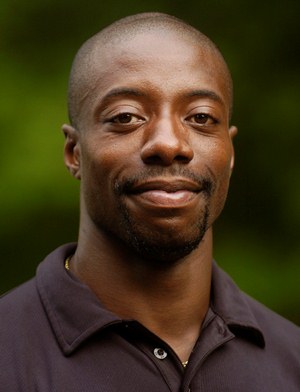
I placed a public records request on July 13, 2010, with the Town of Hartford asking for documents I knew would be hard to get. Town police officers had allegedly beaten, pepper sprayed and handcuffed a dazed black man in his own home. I wanted the 911 tapes, dashcam recordings, statements and reports. Two other news organizations — the Associated Press and the Valley News — had already asked for the records and had been turned down.
It was easy to see why. The situation was embarrassing for police. The story had already been publicized in a gripping column by Jim Kenyon of the Valley News. Not long afterward, Allen Gilbert, the executive director of the Vermont ACLU, penned an op-ed in which he called the beating of Wayne Burwell, the victim of the Hartford Police beating, a “carbon copy” of the arrest of noted Harvard professor Henry Louis Gates Jr., who the summer before was apprehended by police for allegedly breaking into his own home in Cambridge, Mass.
Kenyon gathered information from neighbors and interviewed Burwell, but the details of exactly what happened inside the condo were unknown. The police department went mum and Burwell was in a state of diabetic shock at the time of the incident and couldn’t remember what happened.
The gist of the story at that point was this: The Friday before Memorial Day weekend, Hartford Police went to what they thought was a possible burglary at a condo in a new subdivision in Wilder, Vt. A housekeeper had called dispatch. She had entered the condo, saw smoke from an overturned lamp and a naked black man who “wasn’t responsive.” The house, she said, looked “ransacked.”
Police entered the home and found Burwell sitting naked on a toilet.
One neighbor told Kenyon that Burwell had been pepper sprayed, hit with a baton, handcuffed and hauled out on the steps of the condo by police. Once police realized Burwell actually lived in the home, they took the handcuffs off. Burwell, a graduate of Dartmouth College and well-respected physical trainer, resided there with his daughter.
Shortly afterward, the Vermont State Police investigated the incident, and it wouldn’t be long before Vermont Attorney General Bill Sorrell would review the case.
At the time, I was working as a volunteer for VTDigger.org, an online-only news website I founded in 2009. I had a home office, and the operation consisted of an advisory board, fiscal status through another nonprofit and several other volunteers.
I was working on a story about racial profiling incidents and included a synopsis of the Burwell case in the overview. After the story was published, I placed a public records request with the Town of Hartford, which was rejected. My appeal to Hartford was also denied.
The Vermont-ACLU offered to sue on my behalf. At first, I was ambivalent about the prospect. Should a news organization, even a fledgling one, team up with an advocacy group?
We went to court, and the long legal battle began. Dan Barrett, the Vermont ACLU’s lawyer, made our case in Windsor Superior Court in the fall of 2010. We waited. We lost in 2011. We appealed to the Vermont Supreme Court and the justices heard our case last December.
I knew I couldn’t pursue the case on my own, I didn’t have money to pay myself as an employee of VTDigger.org, let alone hire a lawyer, but I believed the case was vitally important, not only for journalists and the public who had a right to know what actions police had taken, but also for Burwell who was not conscious during the attack.
We went to court, and the long legal battle began. Dan Barrett, the Vermont ACLU’s lawyer, made our case in Windsor Superior Court in the fall of 2010. We waited. We lost in 2011. We appealed to the Vermont Supreme Court and the justices heard our case last December. Would the justices agree with the attorneys for the town, who believed opening the records would be a violation of Wayne Burwell’s privacy? Would they agree with the defense that Burwell was not charged with a crime and therefore had not been arrested? Would they agree with us and order the release of the records?
The Vermont Supreme Court ruled in our favor on Aug. 3, and required that the Town of Hartford turn over everything I requested.
I received the documents, two years and three weeks after I placed my original request: a packet of CDs, and 28 pages of incident reports, 911 call reports, statements from witnesses and narratives from police officers.
Ironically, the very same documents had been made available to Burwell on Sept. 22, 2010. The Town of Hartford entered into a confidentiality agreement with Burwell. They would give him the documents, if he agreed not to sue or to release the information to anyone else. It’s not clear why they would flout the public records law to make such an agreement.
A week before the Vermont Supreme Court decision, news came out that Burwell had decided to sue the town. Burwell gave the documents to the Valley News, which immediately published a story detailing what happened that Saturday afternoon more than two years ago.
What do the records tell us? That officers entered the home with guns drawn (one of the officers carried a rifle). Once they found Burwell sitting unresponsive on the toilet they repeatedly pepper sprayed him in the face. Burwell reacted to the spray and tried to walk away (toward the officers). They wrestled him to the ground and attempted to handcuff him, and when he pulled away, one officer grunted with effort as he beat Burwell with a nightstick. Eventually, they handcuffed him. They threw a blanket on him and hauled him downstairs onto the front steps of his apartment.
The officers described Burwell in statements as “muscular” and “very large.” In the video clips from the police car dashcam, Burwell who stands up briefly, staggering in apparent shock, is no taller than the officers, and is more slightly built.
For about 15 minutes of the clip, officers help him try to wash the pepper spray from his eyes every few minutes. His body is agitated and he thrashes as he lays on the pavement rubbing his face, with only a blanket around his waist.
It’s the telling details that matter. Often those details only come to light when records are made available to the public.
Anne Galloway is the founder of VTDigger.org, a Montpelier-based online news organization and a project of the Vermont Journalism Trust.
