

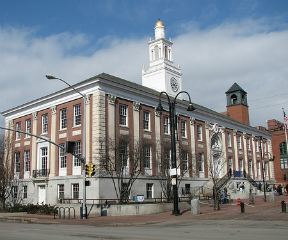
“This is a preventive measure,” said Progressive City Councilor Rachel Siegel on Monday night during the debate over a health care buffer zone ordinance designed to keep anti-abortion protesters at least 35 feet away from women entering or leaving Planned Parenthood in Burlington. The ordinance was adopted on a 13-1 vote.
Siegel, a co-sponsor of the ordinance, was responding to questions about exactly how many incidents have occurred since Planned Parenthood moved its regional headquarters from Mansfield Avenue to a downtown location. According to police records, there have been eight official complaints, with two related directly to protesters. However, PPV supporters who spoke during a public forum preceding the vote claimed that there have been 30 recent acts of intimidation. Siegel argued that “two calls is too many.”
“This is an explosive issue, people have been killed” elsewhere in the US, she added. Siegel called the tactics of some militant anti-abortion activists “scary business.”
The ordinance acknowledges that “a person’s right to speak for or against certain medical procedure is a First Amendment activity,” but balances that with the right to “obtain medical counseling and treatment in an unobstructed manner.” Under the new standard anti-abortion activists, who currently gather weekly outside the women’s health center, will be legally required to stay at least 35 feet from the building.
Anyone who violates the buffer zone to “obstruct, detain, hinder, impede, or block” a person’s entry or exit will face a fine of between $50 and $500. The minimum triples for each offense within a two year period.
Democrat Chip Mason, who chairs the ordinance committee, reported that the buffer zone boundary had been tweaked slightly so that it refers only to the entrance, exit and parking lot.
Independent Sharon Bushor, another member of the committee, added that although it was difficult to substantiate reports of intimidation the potential is clear. “When people say they were intimidated you have to pay attention,” she said.
Bushor compared the buffer zone to restrictions on electioneering outside polling places. “We’re trying to remove in-your-face confrontation,” she explained.
A majority of comments during the public forum expressed support for the ordinance. But
two women who have protested outside Planned Parenthood insisted that they are peaceful critics of abortion and contraception who want to offer women another choice. During the comment period at a May meeting of the council dozens of people testified on both sides of the issue.
Decelles reprised the argument he made during that session, comparing the situation at Planned Parenthood with other local protests. If a buffer zone is appropriate in this case, he said, why not also have a buffer zone for panhandling or protests in front of banks? For several months a group of Occupy activists have been gathering in front of the Citizens Bank to demand that it close and leave town.
The council’s decision “should be based on statistics and facts,” Decelles said. He called the buffer zone an “infringement of the ability to speak freely.”
Vince Dober, the other Republican on the board, disagreed with his colleague. “People can walk another 25 feet,” he said.
Democrat David Harnett, who sometimes aligns with the Republicans, was not certain how he would vote until he personally witnessed the situation. The walkway is a small area, he pointed out. While he was watching at least one person looked afraid to approach the building because of the protesters. “No one should feel intimidated,” he concluded.
While some members of the council said they struggled with the vote, Democrat Ed Adrian felt the decision was clear cut. “Health and safety has to take precedence,” he said.
Strategic planning for diversity and equity
The council also voted, in this case unanimously, to create a diversity, equity and inclusion committee that will develop a strategic plan for the city. The resolution explains that Burlington is becoming a more multicultural community but “racial and social disparities nevertheless continue to exist.”
A committee appointed by Mayor Miro Weinberger will look at best practices and models, evaluate the city’s current initiatives, develop a strategic plan that identifies budget impacts and benchmarks, and possibly call for the creation of a new city commission on diversity, equity and inclusion.
The resolution also prescribes the composition of the committee. Representation will include people a strong background in social justice and equity, stakeholders from diverse communities, representatives of groups like the United Way, the city administration and council, Burlington’s human resources director and the head of the Community and Economic Development Office, the business community, and the school district.
An interim report is due October 15, with a follow up on December 3. Proposed charter changes will be placed on the March 2013 ballot.
Sending a message on climate change
A resolution in support of reducing greenhouse gas pollution under the clean air act also passed, on an 11-2 vote. It begins by noting that 2000 to 2010 was the warmest decade on record, while 2005 and 2010 are tied for the hottest years. A litany of climate change impacts follows; among others, 300,000 climate change-related deaths each year, threats to food security, species extinction, and rising sea levels.
The resolution then points to the benefits of the Clean Air Act and notes that Burlington “prides itself on being a leader in the fight against climate change and for clean air.” However, an update to the city’s Climate Action Plan that was also reviewed on Monday acknowledges that Burlington’s overall greenhouse gas emissions increased by 7 percent between 2007 and 2010, largely due to transportation.
“We can’t do it all alone,” concluded Progressive Vince Brennan, a sponsor. The resolution urges the Environmental Protection Agency and President Obama “to move swiftly to fully employ and enforce the Clean Air Act to do our part to reduce carbon in our atmosphere to no more than 350 parts per million.”
Bushor called the Clean Air Act controversial in the current political climate, but added that the resolution is one part of a necessary response. “Will the president listen,” she wondered, “I don’t know.”
The no votes came from Republicans Dober and Decelles. Dober argued that sending a resolution to the federal government is not an answer to the problem. “We need to do real, tangible things,” he said. “I see no purpose in this resolution.”
Decelles went farther and called the proposal hypocritical. The councilors were sitting in an air conditioned auditorium, he pointed out, and some would likely drive home in air conditioned cars.
