

In This State is a syndicated weekly column about Vermont’s innovators, people, ideas and places. Details are at http://www.maplecornermedia.com/inthisstate/.
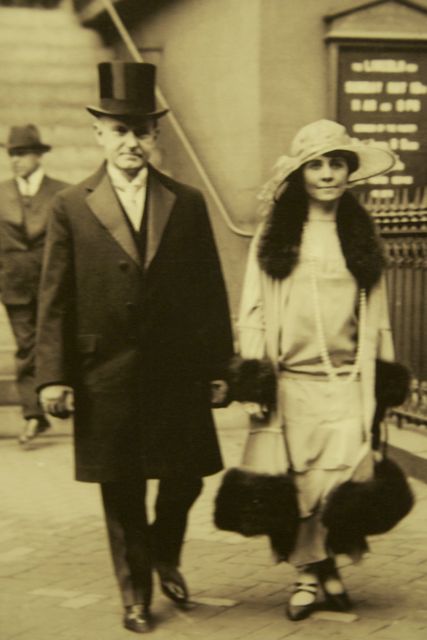
Silent Cal is seated at a dinner party, possibly one of those obligatory social engagements that he disliked. A female guest next to him reports she had just bet someone a few dollars she could coax more than two words from Coolidge that evening. “You lose,” the vice president replied.
The story is not apocryphal like some Coolidge tales, says William Jenney, site administrator of the Calvin Coolidge State Historic Site in Plymouth Notch. There is evidence this actually happened.
Coolidge, who was president of the United States from 1923 to 1929, was the embodiment of Yankee thrift: He was as prudent with words as he was with money, both his own and the public’s. He hated waste in any form, but that’s not to say he didn’t put words to good use. He just was careful with them. And (occasionally) he could flash wit.
A permanent exhibit that opened last month at the Coolidge Museum & Education Center celebrates the president’s reticence.
“More Than Two Words: The Life and Legacy of Calvin Coolidge” is a time warp of sorts, one that takes visitors back to the heady times of speakeasies, the Charleston, Babe Ruth and Lucky Lindy, but also to a White House where sobriety reigned literally and figuratively.
Go farther back in time with the exhibit and walk around the homestead, and you can visualize late 19th century and early 20th century rural life in Vermont.
“People come here not just to see a presidential site but to see a well-preserved old Vermont hill town,” says Jenney.
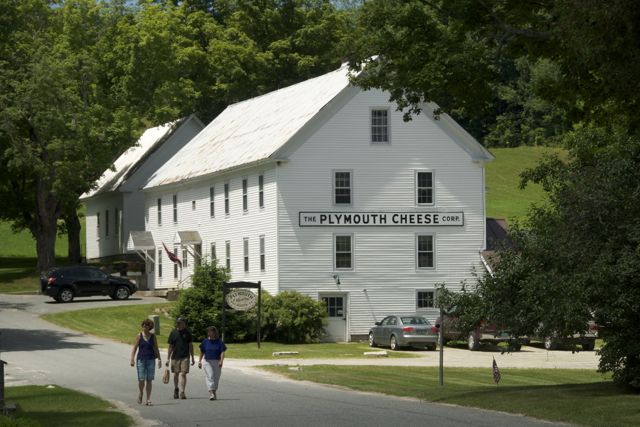
Among the 25 buildings at the 580-acre homestead are the general store that Coolidge’s father owned, the home in which his mother grew up, the barn where he did chores, the Plymouth Cheese Factory that his father, with others, had opened, and the 1840 Congregational Church, where he worshipped. Coolidge rests at a simple nearby gravesite.
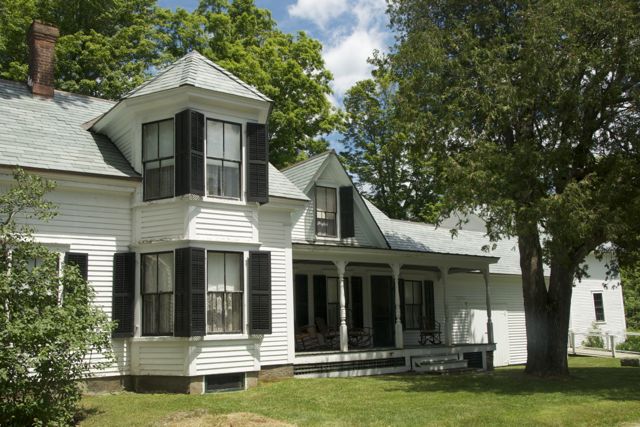
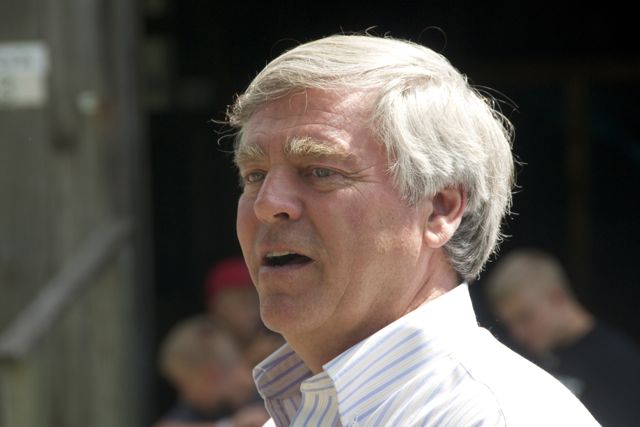
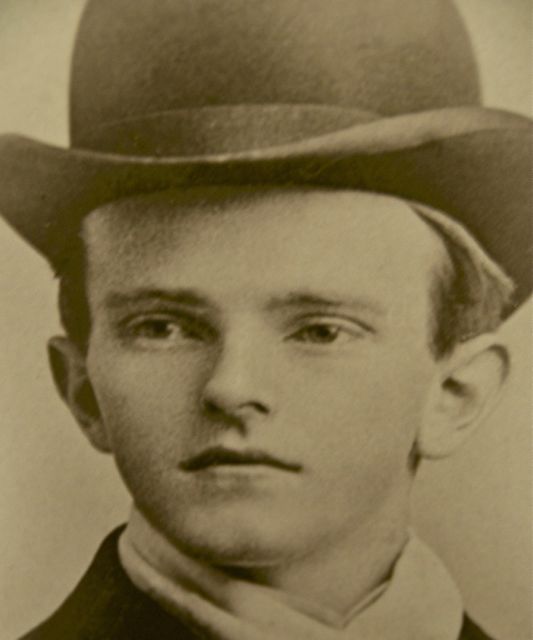
The exhibit, which had its grand opening five weeks ago with a speech of more than two words by Gov. Peter Shumlin, takes visitors back to Coolidge’s birth in 1872 in the living quarters behind the store; to his boyhood years of riding horseback, mending fences and driving oxen; to his years at Black River Academy in nearby Ludlow, where he was both a scholar and a prankster; and to his years at Amherst College, where he received the education so favored by his father.
“It would be hard to imagine better surroundings for the development of a boy than those which I had,” Coolidge wrote of his upbringing at Plymouth Notch. He appreciated the beauty of his surroundings: “There was little about it that was artificial; it was all close to nature and in accordance with the ways of nature.”
The exhibit’s photographs, newsreels, and interactive displays trace Coolidge’s public life as a lawyer in Northampton, Mass.; as a legislator in various capacities in Massachusetts; as that state’s governor; as vice president in 1920 under Harding, and finally as president after Harding’s unexpected death from a heart attack in 1923.
Despite the nickname, Silent Cal wasn’t always silent. He probably delivered as many or more addresses as any president up to his time. He wrote his own speeches.
He got along famously with the press, averaging two press conferences a week, which would be unheard of today. “I shall always remember that at the conclusion of the first regular conference I held with (reporters) at the White House office, they broke into hearty applause,” he wrote.
And he became one of America’s oft-quoted presidents.
“The business of America is business,” he is said to have once declared. One problem, though. That was a misquote, and the words are out of context, says Jenney.
“After all, the chief business of the American people is business,” were the actual words in a speech to the American Society of Newspaper Editors. Coolidge followed with: “We make no concealment of the fact that we want wealth, but there are many other things we want very much more. We want peace and honor and that charity which is so strong an element of all civilization.”
One of Coolidge’s best-known statements, a sentence that propelled him into the national limelight, was uttered in 1919 during the Boston police strike, when Coolidge called out the National Guard to ensure order. “There is no right to strike against the public safety by anybody anywhere, anytime.”
The law-and-order governor received tens of thousands of letters and telegrams of support and a place on the Republican national ticket.
Check out the exhibit, and look closely for a smile from Coolidge, even a trace. Despite his success, he seldom looked happy. There he is standing awkwardly presenting the Congressional Medal of Honor to Charles Lindbergh. There he is stiffly receiving a headdress from Sioux Indians. He couldn’t even lighten up during a visit from Santa to promote Christmas seals.
Coolidge suffered emotionally from the death of his mother from tuberculosis, when he was 12, and from the death of his sister from appendicitis, when he was 18. The death of his own son, Calvin, as a result of blood poisoning from a blister that developed while playing tennis at the White House, probably figured in the president’s decision not to seek re-election in 1928, says Jenney.
Coolidge was easily and unfairly targeted. Upon hearing of the former president’s death in 1933, the acerbic writer Dorothy Parker is said to have quipped, “How could they tell?”
The exhibit is instructive, but one who really wants to learn about Coolidge should register for one of Jenney’s Tuesday afternoon tours of the homestead grounds.
All kinds of information is available for the asking. For instance, did you know that no members of the national press were on hand when at 2:43 a.m. on Aug. 3, 1923, by kerosene lamplight, Coolidge’s father, a justice of the peace, administered his son the oath office? A cub reporter from the Springfield, Vt., paper was there to witness the historic moment, but the big-city reporters were in Woodstock still writing about Harding.
Or that we can thank the Coolidge family’s housekeeper, Aurora Pierce, for many of the family’s belongings that can be viewed at the homestead? She saved things out of a sense of history and a natural reluctance to throw anything away, explains Jenney.
Or that Coolidge caught heat from trout-fishing snobs for using worms instead of flies?
Or that Grace Coolidge was an inveterate baseball fan, who as a student at the University of Vermont, kept stats on the school’s team? The Coolidges showed a bit of treachery when it came to which teams they’d support: They switched allegiance from the Red Sox to the Senators when they moved to Washington.
Where did Coolidge fall on the political scale? He was conservative, a tax cutter. He insisted on balanced budgets. He was a hero, then and now, to those who believed in smaller government. (In fact, one of the early presidential acts of Ronald Reagan was to hang Coolidge’s portrait in the Cabinet Room of the White House.)
Yet Coolidge held some moderate positions in his day: He supported women’s suffrage and anti-lynching measures; he gave citizenship to Indians; he opposed the League of Nations but signed the Kellogg-Briand Act that condemned war as a way of settling international disputes.
So, here’s a question for Jenney: If Coolidge were around today to run for president, would he win his home state?
“We don’t go beyond the politics of the 1920s,” Jenney replies quickly as though he had heard that question too many times.
Coolidge might only have said “no comment.”
Dirk Van Susteren of Calais is a freelance writer and editor. Archived copies of In This State columns can be found by checking: http://www.maplecornermedia.com/inthisstate/archives.html

