

Part One: In a report to Gov. Shumlin, an advisory panel proposes modifying the in-state tuition rule, targeting limited public investments, and becoming an innovation hub. Read Part Two.

Halfway through the report of Gov. Peter Shumlin’s advisory committee on the relationship between the State of Vermont and University of Vermont, a list of 11 recommendations begins with this provocative question: “Should the University retain its public status and state funding or become an independent private institution?”
The answer is yes, it should remain public, but with the qualifications that “the nature of the public status must be examined” and two key provisions should be addressed – composition of the board of trustees and the “inflexible” rule that sets a limit on in-state tuition. During their deliberations, some committee members made the case that given the state’s “limited investment in UVM,” it may make sense for UVM to become a private university, as it once was.


The nine-member panel appointed by Gov. Peter Shumlin to examine the relationship between UVM and the State of Vermont has been working since last November to find ways to maximize the return on the state appropriation to UVM. It released its report June 22. After hearing the recommendations, Shumlin promised to do “everything in my power” to turn them into reality.
None of the six members in attendance at a press event mentioned in-state tuition or representation on the board in presenting the governor with their findings. In fact, the first two recommendations in the committee’s report, generically named “New Ideas for Changing Times,” were not brought up until the question period.
At that point Chairman Nick Donofrio, an IBM executive appointed by Shumlin to lead the group, said not to read too much into the order of the proposals.
Instead, he and the governor stressed that the state and university are “inextricably linked.” The report clarifies that with the argument that UVM is “an essential driver of economic viability, jobs creation, and prosperity for the state.” But big changes will be required if it – and presumably the state, too – is to avoid “losing its competitive edge.”
The central argument is that the university needs a timely reorientation that emphasizes research and entrepreneurship, with the goal of making UVM an innovation hub connecting the public and private sectors. This may sound like a significant change, but it is consistent with the direction of the current Strategic Initiative Project. SIPs’ central vision is UVM as premier research university specializing in health, environment and public service. The focus of related transdisciplinary research includes complex systems, food, neuroscience and health.
Another argument also runs through the document, however. Despite the economic importance of UVM, it suggests, the state “often does not recognize its value” and for years has provided “limited resources” that don’t match the university’s value or the state’s needs. In other words, the State of Vermont has not kept its end of the bargain and the relationship should be revisited.
Shumlin questioned the dynamic last November in an address at the College of Medicine. Outlining his own priorities for changing UVM-state relations and simultaneously announcing an eight-member advisory committee to conduct further research, he added, “In my view, we are falling short of our goal of maximizing our return on state investment.”
Interpreting UVM history
The findings section of the resulting report features an abbreviated UVM chronology under another leading question: private or public?It then attempts to answer this query by stating that the university was chartered as a private institution in 1791, becoming the “fifth private institution of higher education” in New England.
Early schools were supported “almost exclusively by private funds,” it adds, and a “modest program of public support for higher education”began only in 1862 with passage of the federal Morrill Act, named for Vermont’s Sen. Justin Morrill.
There is more to the story, however. The first Vermont Constitution, adopted in 1777, called for a state university at public expense as part of a total program of public education. This provision was eliminated a decade later, and a charter was granted to UVM in 1791, along with 29,000 acres of land.

After the Morrill Land Grant Act passed, the state eventually chartered the Vermont Agricultural College. The college needed a home, and the solution was to create one institution. “This began a bifurcated and yet cooperative existence of the university which was functioning more or less as a private institution and the college as a state institution,” write Andrew and Edith Nuquist in their exhaustive 1966 book,”Vermont State Government and Administration.”
The report describes the dynamic a bit differently, saying “the private and land-grant components retained their independent identities for 90 years.” The university was private, it states, but “the public appropriated funds to support agriculture and medicine.”
At this point the committee’s narrative jumps to 1955, when “the university became an instrumentality of the state.” The boards of the college and university were consolidated, and the addition of public trustees created anew majority with some accountability. The report could have added a few more significant developments during the intervening years; for example, the creation of the Agricultural Experiment Station in 1888, which gave rural lawmakers an early motivation to increase state appropriations.
Also significant was the addition of a private, affiliated medical school in 1900. Like the Agricultural College, the Medical College was quickly able to win public support. In comparison the College of Arts and Sciences, at that time the heart of the university, received no public assistance.
Fundamental to Vermont
“New Ideas for Changing Times” considers the crucial role of the College of Medicine, the College of Nursing and Health Services, laboratory facilities shared with the state, and”transfers of world class technology to companies in Vermont and beyond.” It hints at, but does not much illuminate, the complex “alliance” between UVM and Fletcher Allen Health Care. And it makes the weighty point that together these two, closely linked institutions are the largest employer in the state.
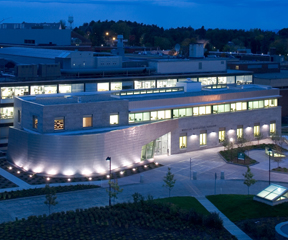
The report also provides a useful list of UVM impacts and characteristics; for example, $428 million in annual spending, $344 million in compensation and benefits, $128 million in grants and contracts, $405 million spent on capital construction projects in the last eight years alone, not to mention 2,292 employees and a total enrollment of more than 13,000undergraduate and graduate students. And that doesn’t include Fletcher Allen Health Care.
Recommendation 6, covering the health professions, bio-medical research and technology, suggests that the state and UVM should continue to collaborate on projects that advance Vermont’s reputation for “outstanding science and discovery.” The fresh advice in this area is targeted state support that helps the university to build a “biomedical research infrastructure,”attract the best personnel and obtain access to“important biotech equipment.”
Going public and setting tuition
Both the UVM-state background provided in the report, and comments added during its delivery, point to a key moment. “In 1959, there was a legislative change to the University of Vermont charter specifying that in-state tuition for Vermont residents (excluding medical students) must not exceed 40% of out-of-state tuition,” the report explains. The point, repeated several times, is that this rule has not been matched by public appropriations sufficient “to benefit all Vermonters” who want to attend.
Prior to the legislative change that limited in-state tuition, the rate for the College of Arts and Sciences was so high that Vermonters tended to leave the state to save money, the Nuquists report in their book. Meanwhile, many students from outside who could not gain admission to a name school came to Vermont. During that period “the loss of able young Vermonters was not acknowledged, only the savings for the small number of agricultural and education students,” the writers conclude. By law, those students paid much lower tuition than others in the same college.
Another key moment, also absent from the report, is a 1941 financial crisis when it seemed possible that the university might close. This motivated the Legislature to re-examine its responsibility and increase public appropriations. UVM might have survived anyway, but the state’s choice to intervene at a crucial moment proved to be a crucial step toward making it a public institution.
Transformation into a public entity also answered criticisms from private colleges about the special financial treatment provided by the state. On the downside, however, it quickly became obvious that state appropriations could not keep pace with UVM’s growth and increasing costs. This has now become the basis for recommendation 1B: that the current 40 percent rule “be modified to make tuition more affordable for low-income and middle-class Vermonters while improving the sustainability of the University.” Basically, UVM wants to set specific discount priorities to compensate for outgrowing the state’s financial resources.
The specific proposal is that UVM “should set its own tuition with a mechanism in place to provide access and affordability to Vermonters according to ability to pay, while still maintaining an advantage for Vermonters and their families.” Beyond that, the group also endorses Shumlin’s feeling that appropriations should be “applied strategically” in line with “identified high-value state priorities.” Some potential priorities are mentioned in other recommendations. In essence, UVM wants the freedom to decide who receives discounted tuition and delink that from the focus of state funding.
Unless this “inflexible” rule is changed, the report predicts, some Vermonters will not be able to afford UVM,debt for all students will grow, and “the state will be deprived of the well-educated citizens and workers it needs.” For good measure it plays the fairness card; the rule does not apply to Vermont State Colleges, it notes, nor to any other public institution the group could find.
The fact that the current in-state discount is provided regardless of merit, income, need or area of study is defined by the advisory committee as “a non-strategic use of limited public funds.” The legislative intent, they assert, was to subsidize the difference between the cost and the discount, but “this has not happened.” Instead, UVM last year covered the “gap” by providing $16 million from the general fund to subsidize Vermonters with “revenues generated by out-of-state tuition, an unsustainable practice.”
The 40 percent rule change is “imperative,” the report insists, adding as a final nudge that “the future viability of the university is in jeopardy” if this doesn’t happen.
A description of the report’s recommendation will continue in Part 2. Members of the governor’s advisory committee include Nick Donofrio, John Bramley, former state Secretary of Administration William Gilbert, attorney and UVM graduate William Wachtel,former banker Deborah Grandquist, former Lyndon State College President Peggy Williams, St. Albans Messenger publisher Emerson Lynn, and UVM student Alma Arteaga.
The full report is available at: http://governor.vermont.gov/blog-advisory-group-presents-working-report-to-governor-shumlin.
Next: food systems, better branding and the public-private balance
