

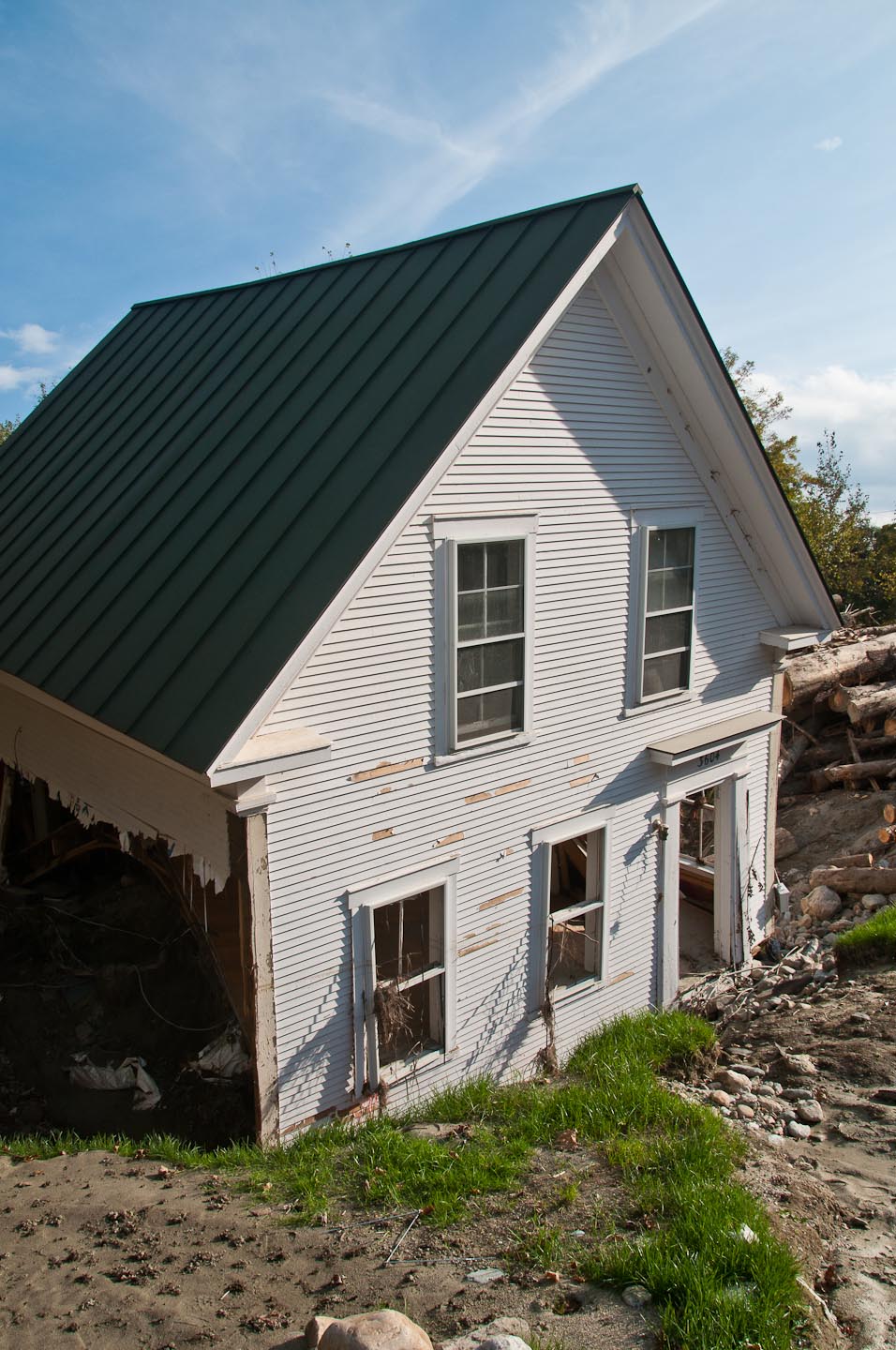
WATERBURY — When it comes to housing damaged by tropical storm Irene, the numbers tell quite a story.
But so do the mind-numbing rules and regulations, obstacles and misunderstandings, and twists and turns that displaced Vermonters face as they try to cope with restoring homes or finding new housing.
All of that and much more was spelled out to key housing lawmakers in the Vermont House during a marathon session held Monday in Waterbury’s Congregational Church. And to punctuate what they were hearing, Rep. Tom Stevens, a member of the panel, took the General, Housing and Military Affairs committee on lunch and post-meeting tours to see with their own eyes the devastating impact Irene had on his town.
At Patterson’s mobile home park, opened in 1957, 19 units were destroyed and 33 people left homeless when the Winooski River backed up and circled in to flood the park, Ed Patterson told lawmakers. Owner of the park with his two brothers and mother Ramona, he wondered where many of his tenants were going to live now, noting one woman only paid $175 for rent, a bargain she was unlike to find anywhere else.
All day long the panel heard about the complexities and challenges Vermont agencies faces in rebuilding housing stock after Irene, and about the mismatch between what many of those who lost homes can pay and what replacement housing and rentals actually cost, or how rental housing is scarce in areas with the highest need.
“We’re all in this together and trying to push every lever” to find solutions, said Gus Seelig, executive director of the Vermont Housing and Conservation Board.
Perhaps no one put a starker face on the situation than Jennifer Hollar, Deputy Commissioner of the Department of Economic, Housing & Community Development, who came armed with the latest tally of Irene’s toll.
She called the numbers she presented “staggering” and the impact on Vermonters’ “heartbreaking.”
Her Irene list included:
- 225 communities impacted, 45 severely
- More than 1,300 residential properties damaged, many severely, primarily in Washington, Windsor, Windham and Rutland Counties .
- 433 mobile homes damaged or destroyed in 15 mobile home parks
- 1,200 homeowners permanently or temporarily displaced, according to the latest FEMA figures
- 986 homes recorded by FEMA that received more than $10,000 in damage.
She said approximately 70 percent of the damage done by Irene was inflicted on private homes, and 40 percent of those were lived in or owned by low-income Vermonters.
In what Hollar called “a very good development,” she revealed that plans to use FEMA trailers for temporary housing had been dropped and they were no longer being considered because they were deemed inappropriate in Vermont’s winter climate.
She said a plan to purchase mobile homes as a replacement is under consideration. She also said a housing task force with 25 members is working to identify how to address all the problems created or exacerbated by Irene.
A FEMA official told the panel that more than 6,400 Vermonters had registered with FEMA and the number of new registrations for damage assistance were slowing down. The deadline to register is Oct. 31 and he said a big push is planned for outreach to alert all homeowners that time is running short.
“We really want folks, even if they don’t think they need to register, to register,” said Hollar.
While a parade of speakers including FEMA representatives praised extensive cooperation and organization across numerous agencies, there wasn’t much sugarcoating of the difficulties that face the state and homeowners.
Mobile homeowners are caught in a Catch-22. They must not remove their damaged trailers if they hope to get FEMA funds. However many mobile home owners face being charged rental for destroyed homes they are not living in. The state is pushing a program to assist mobile home owners who want to dispose of their property, said Shaun Gilpin, a mobile home advocate with the Champlain Valley Office of Economic Opportunity.
But if they go ahead and remove the mobile homes, they put any FEMA money in jeopardy, he said.
“Some people are definitely going to lose out,” he said. “But frankly, at this point, eight weeks out, there’s a lot of people tired of waiting.”
Another wrinkle is the way FEMA and the Small Business Administration work in tandem, according to Carl Sherrill of the SBA. He noted that many homeowners don’t bother to apply for an SBA low-interest loan, not realizing that sometimes rejection by SBA can lead to more funds from FEMA.
Sherrill said the SBA can provide triple the funds that FEMA does but many don’t take advantage for various reasons. SBA loans have a very low interest rate of 2.5 percent and can even be rolled into existing home mortgages, he said.
Sherrill said the SBA has disbursed $13 million in loans compared to $17 million to $18 million in FEMA grants, but only 13 percent to 15 percent of those who register with FEMA fill out a “15 minute” SBA application.
Arthur Hamlin, who oversees mobile homes for the Department of Economic, Housing & Community Development, said mobile home owners aren’t the only ones in crisis. Park owners are facing their own disaster, since they are not eligible for FEMA loans and many have lost all their rental income. He cited two parks that need loans of $400,000 and $600,000 to rebuild. The cost of reconstruction will have an impact on future rents and affordable housing availability for low-income Vermonters.
Also, because of many parks are often located close to a river, they face thorny flood zone issues. Most were built before 1970 and were grandfathered in before zoning and floodplain regulations that now may make rebuilding difficult, he said.
Gilpin said the future of mobile home parks “is a huge issue for a number of reasons.”
Seelig echoed that concern, noting that rebuilding the infrastructure or building a mobile home park from scratch is going to be financially tough.
“The numbers just don’t work very well,” he said.
In one encouraging note, Gilpin said the state is progressing on a plan to remove damaged mobile homes for $1,500 each or less, using economies of scale, which perhaps may bring the cost down to zero. Average costs to remove a damaged mobile home are $4,000-8,000 but the average FEMA grant was $5,000-$10,000, so removal would eat up most of the payment, at a time when some renters are still liable for a mortgages or rent, he said.
Sarah Carpenter, director of the Vermont Housing Finance Agency, said homeowners face “a very painful process” with finding refinancing mortgages for repairs, especially if they want to buy mobile homes, where there is little financing available.
Rep. Helen Head, D-S. Burlington, the chairwoman of the Housing Committee, said the daylong hearing was intended to get a “snapshot” of the issues as lawmakers prepare for the upcoming session. She said the goal was for legislators to get a clearer sense of the major public policy issues facing the state before the Legislature convenes.

