

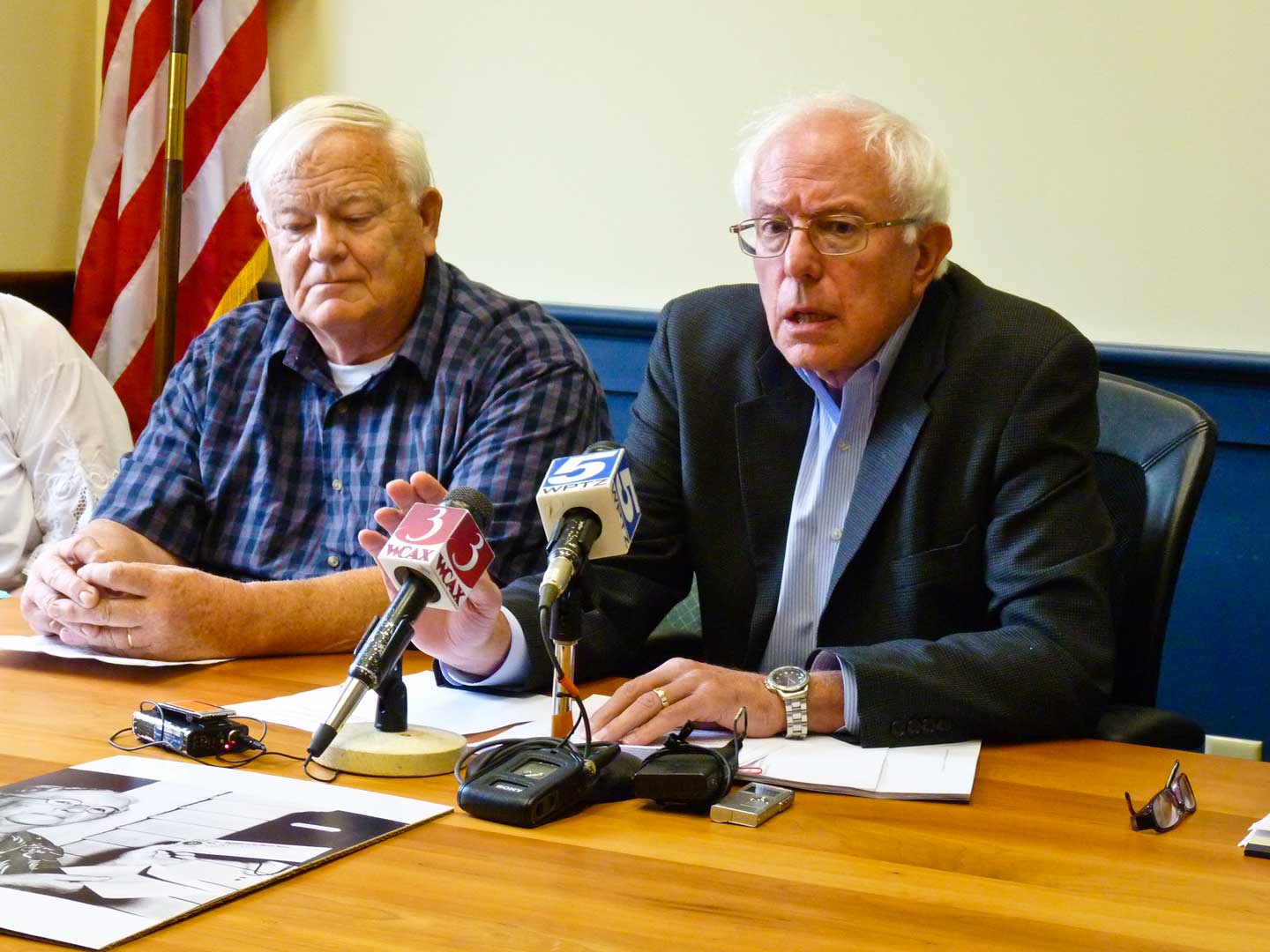
Sen. Bernie Sanders, I-Vt., will propose legislation to protect the Social Security Trust Fund from cuts and ensure the long-term viability of the fund, which provides cash benefits to seniors, orphans and disabled Americans.
Sanders is pushing for an expansion of the 6.2 percent payroll tax to include earned income that exceeds $250,000 per year. Sanders also wants Congress to hold the fund harmless as it develops deficit reduction proposals.
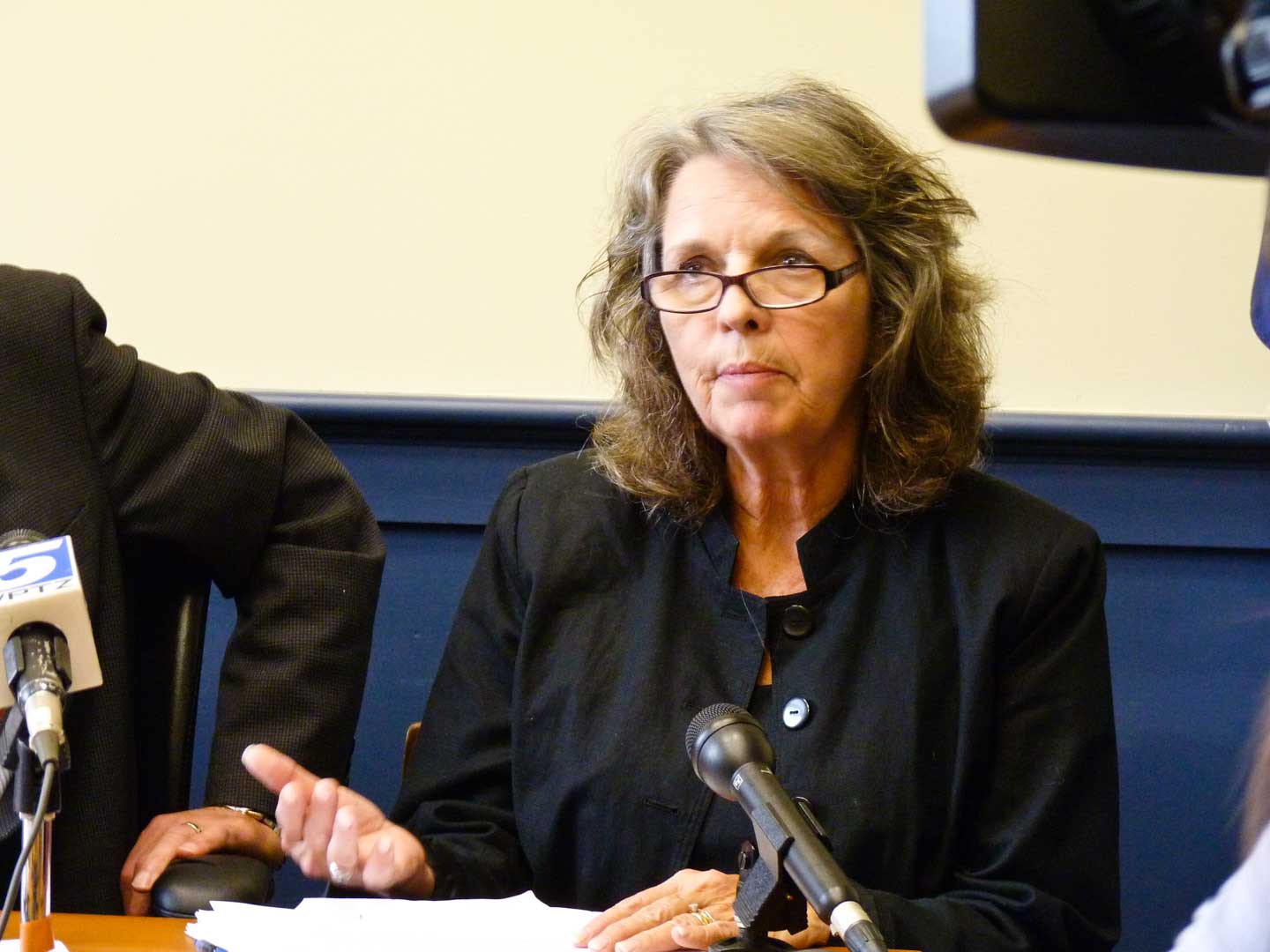
The senator, flanked by advocates for seniors and disabled Vermonters, told reporters at his Burlington office on Thursday that he will do “everything in his power” to protect Social Security from cuts by the congressional “super committee” charged with developing deficit reduction proposals.
Social Security is funded by a separate payroll tax that is not lumped in with the nation’s gross tax receipts, Sanders said, and it has not contributed “one nickel” to the nation’s $14 trillion deficit.
“We are here today to send a loud and clear message to this super committee: Do not cut Social Security,” Sanders said. “In my view, it’s a promise made to Vermonters, made to Americans, that when you’re old, when you’re disabled or if you’re a child and you lose your parents, you will not live in abject poverty.”
The senator said 94 percent of Americans contribute to Social Security through the 6.2 percent payroll tax on all of their wages, while the wealthy, the remaining 6 percent, pay the tax on a small percentage of their total income. When Congress reconvenes after Labor Day, Sanders will introduce a bill to lift the $106,800 cap and apply the payroll tax on all earned income above $250,000 a year.
The proposal would shore up the benefits program for decades to come, Sanders said. The system, however, is not in crisis. Social Security is currently running a $2.3 trillion surplus, the senator said.
The Congressional Budget Office issued a report recently that shows the fund will be exhausted in 2038, Sanders said, at which time the Social Security, based on projected payroll receipts, would be on schedule to make 81 percent of its current benefit outlays to seniors, orphans and disabled Americans.
His payroll tax proposal would ensure that Social Security pays out 100 percent of benefits and is sustainable for, as he put it, “another 75 years.”
Sanders said he couldn’t take credit for the idea – it was originally floated in 2008, during President Barack Obama’s campaign. At the time, Obama said it wasn’t fair for “Warren Buffet to pay a fraction of his income in payroll tax, whereas the majority … pays payroll tax on 100 percent of their income.”
Sanders’ will introduce his bill in a more hostile context. The proposal runs counter to growing pressure from the GOP majority in the House of Representatives to cut entitlement benefits. Republicans, and some Democrats, are looking to resolve the deficit crisis by dipping into Social Security, Sanders suggested. The congressional “super committee” is likely to propose significant cuts to Social Security as it examines options for reducing the national deficit by $1.5 trillion over the next 10 years, he said.
“We have to deal with that (the deficit), but Social Security hasn’t contributed one penny to the national debt; it’s funded by the payroll tax,” Sanders said.
When Congress returns to Capitol Hill after Labor Day, the Senate and House will take up the budget and the deficit. The so-called “super committee,” made up of six Democrats and six Republicans, is charged with evaluating expenditures for all government programs and services. “Everything,” including the Department of Defense, Medicaid, Medicare and Social Security, is “on the table,” according to Sanders.
Congressional Republicans are currently considering a proposal known as the “chained CPI” that would result in an annual cost of living decrease for seniors. Americans who reach 75 years of age would see benefits go down $560 per year, while those who are 85 and older would see an annual decrease of $1,000 per year. Other possible benefit reduction proposals include moving the retirement age from 65 to 68 or 70.
This “alternate form of inflation,” as The Hill, a Washington blog, puts it, is meant to lead to a “slower increase in Social Security benefits.”
Sanders has another term for it – “unconscionable.”
“Imagine someone trying to get by on $16,000 a year,” Sanders said. “They’re old, they’re sick and they have medical bills, and they’re getting $1,000 less. That to me is not what America is supposed to be about.”
Sanders said that cuts to the benefits program for seniors, orphans and disabled Americans will drive more people into poverty and hurt the state’s economy. Before Social Security was enacted 76 years ago, 50 percent of seniors lived in poverty, Sanders said. The rate is now 10 percent.
Social Security is also a significant part of the economy. More than 120,000 Vermonters receive about $1.5 billion in benefits each year, or about 6 percent of the state’s annual gross domestic product, according to Sanders.
“This is not just about making sure people live with dignity, it’s also about the economy,” Sanders said.
