

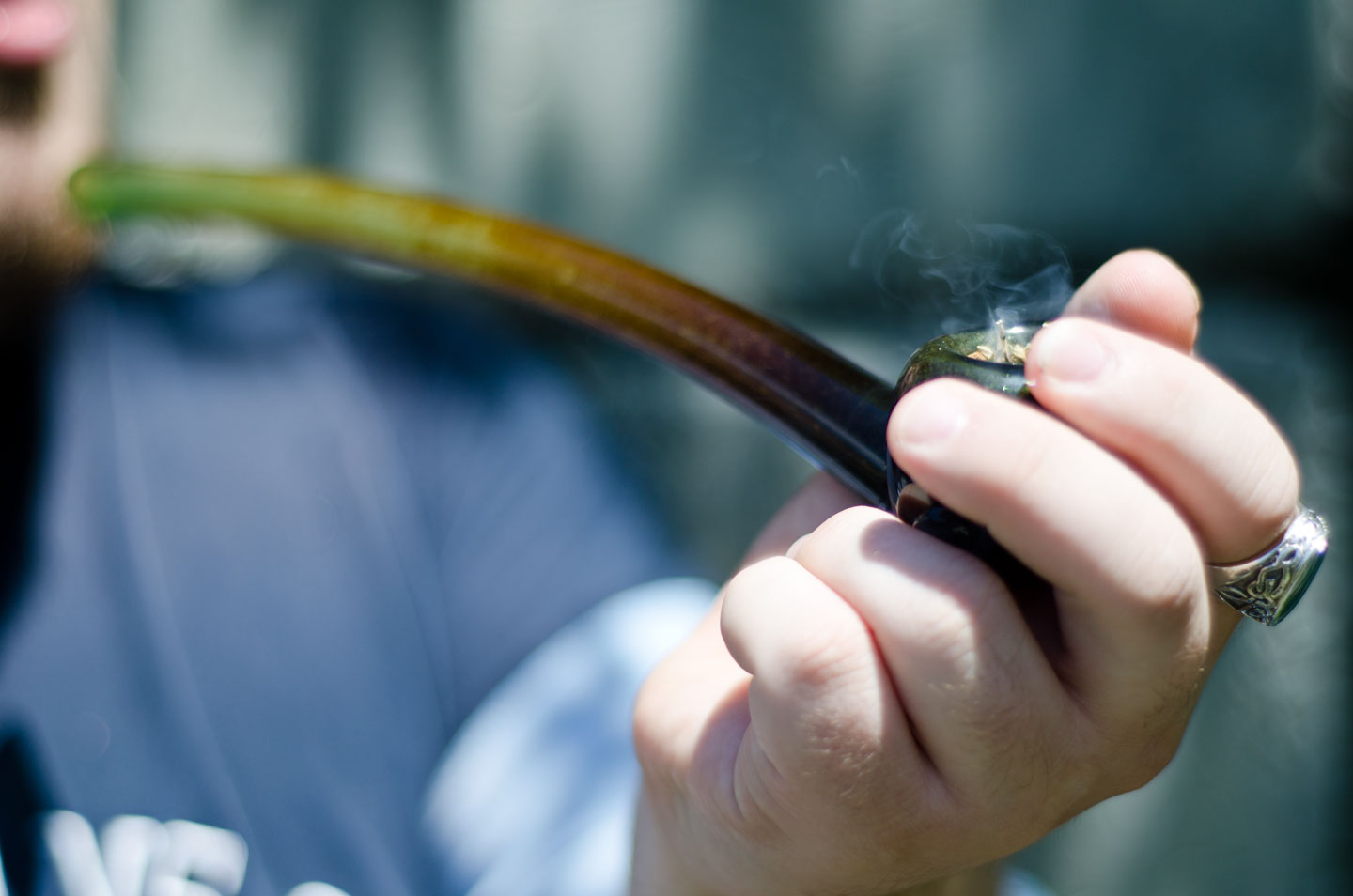
Five chemical strands of synthetic cannabis were banned last March by the U.S. Drug Enforcement Agency, but it didn’t take long for manufacturers to come up with new versions of the drugs that had been sold under names like “K2” and “Spice.”
New synthetic cannabis labeled “mixed herbs” or “herb incense” were back out on smoke-shop shelves in Vermont last week.
According to a Montpelier resident, who wished to remain anonymous: “It’s not the same as (marijuana). You think you’re walking faster than you actually are.”
Though it’s illegal to smoke the synthetic cannabis products, they are legal to sell (minors are not permitted to purchase them). Many retailers in the state sell synthetic cannabis, including M&M Beverage in Montpelier, along with Insane Glass and All Fired Up in Barre.
The strands were initially created in an attempt to regulate appetite, nausea, mood, pain and inflammation, but the chemicals were never scientifically tested on humans, making the effects unknown.
DEA spokeswoman Barbara Carreno said that some of the products sold could have a chemical potency up to 100 percent more than tetrahydrocannabinol (THC).
Despite the DEA’s ban, companies distributing products like K2 are already out as new products with different names. The packages are marked with the warning: “not for human consumption.”
In November 2010, the DEA announced it was putting five chemicals on a temporary banned list of Schedule 1 drugs, a section of the controlled substance act. Other drugs listed on Schedule 1 drugs include popular narcotics such as: Marijuana; MDMA; Acid; Heroin and many more.
The Department of Health and Human Services is conducting a study to determine whether the chemicals are dangerous. The ban began March 1 and extends through February of next year.
According to a K2 website over 52 million grams of the product have been sold and the number is rising quickly. Included on the website is a disclaimer:
“K2 smoke is not a substitute for Marijuana! -**-Anyone, who intends to misuse our products and use K2 herb as a recreational drug or medicinal drug will be denied purchasing privileges!-**- No sales to anyone under the age of 18!”
Many of the packaged products say they contain no DEA-disapproved chemicals, but according to Carreno, it is not a good idea to “bet your business on the word of a liar.”
The “not for human consumption” warning was placed on packages in self-defense by companies that are worried about liability, Carreno said.
“The people who are selling these products, they know the law,” Carreno added.
If the Department of Health and Human Resources determines the synthetic chemicals should be banned permanently, Carreno expects there will be a “chilling effect” on the sale of synthetic cannabis. Under the controlled substance act of 1970, similar drugs or “designer drugs” are also illegal if they mimic a drug illegal under Schedule 1 or 2. The law is only applicable if the drug sold is used for human consumption; distributors have been selling “marked products” through that loophole in the law.
John W. Huffman, a retired professor of organic chemistry from Clemson University, created one of the first chemical strands in 1995; many of the strands banned are named after him. Huffman is now retired and no longer gives interviews, but in a generic email he discourages people from consuming the chemicals.
“I want to stress that these compounds were not meant for human consumption. Their effects in humans have not been studied and they could very well have toxic effects. They absolutely should NOT be used as recreational drugs. These compounds are among many that have been created, by my group and others, in the course of research aimed at understanding the relationship between the chemical structure and the biological activity of substances known as cannabinoids,” Huffman wrote. [ppopup id=”31530″]Read the full text email[/ppopup].
The strands banned in March include, JWH-018, JWH-073, JWH-200, CP-47, 497 and cannabicyclohexanol.
Vermont’s Commissioner of Public Safety Keith Flynn did not respond to numerous calls for comment.
