


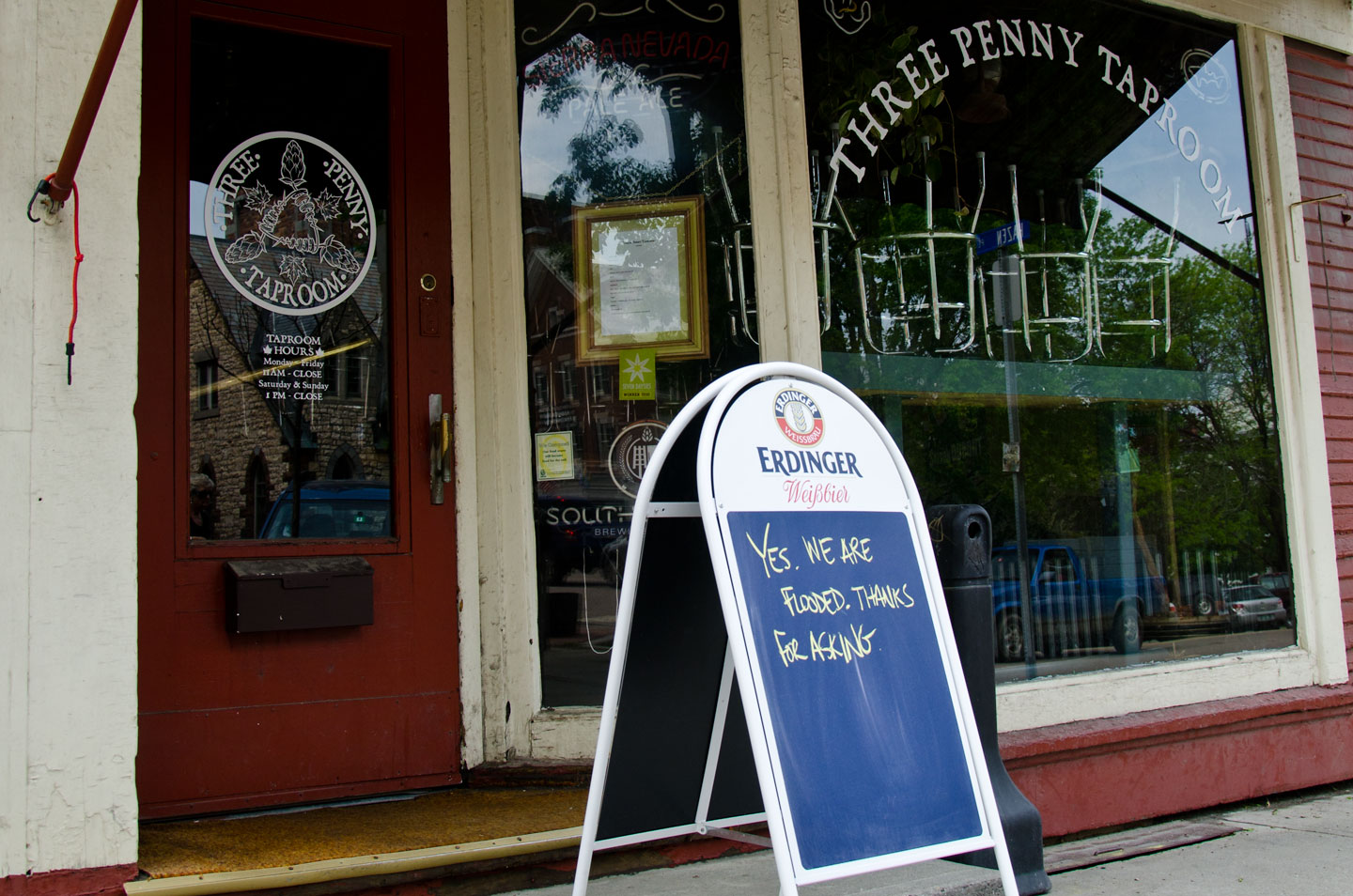
Vermont towns eager to receive federal assistance for the flooding damage that occurred as a result of storms in mid and late May have to wait a little longer.
The recent disaster declaration for several Vermont counties applies only to damage that occurred between April 23 and May 9. Vermont applied last week to extend the incident date to include the later storms.
“What we’ve done is made another request to the White House to extend the incident period to include floods of the 27th,” said Mark Bosma, the public information officer for Vermont Emergency Management.
“If this doesn’t go through, we’ll make an additional incident report,” Bosma said.
The Vermont Department of Transportation is holding four briefings for town officials in eight counties covered under the initial declaration. Towns affected by the later storms are invited to come as well.
“In the event that we get a public declaration for May 9 to 27, you’ll be that much farther ahead if you go to the briefing,” said Bosma.
Alec Portalupi, technical services engineer with the Vermont Agency of Transportation operations division, acknowledged that the number of storms makes the situation confusing.
“A lot of towns with damages on May 20 and 27 are scratching their heads, asking what do they do,” he said. “When a town suffers a disaster like this, they start working on roads and bridges. In some cases they were hit so hard, they literally don’t have the money, and can’t do much.”
“Since they are in limbo and it’s not fair to them, we don’t have a problem with them coming to the applicant briefings,” Portalupi said. The towns can’t submit an application, but they can learn about the process.
Portalupi said that because it is difficult to change an original declaration, he is not optimistic about the extension. He thinks Vermont will have to file for a second declaration to cover the May 20 and 27 storms.
“It’s just delaying the process, starting all over again,” he said. FEMA will have to come back out to do preliminary damage assessments. And additional briefings will be held for towns covered in the later storms.
“I haven’t encountered this before; this is new for us,” he said.
Counties affected by the later storms are Washington, Franklin, Caledonia, Orange, Windham and Essex. Part of the confusion comes from the fact that some of these towns are covered under the already issued declaration.
The Vermont Congressional delegation sent a letter Tuesday to President Obama asking for an extension of the incident date.
The request says:
Many Vermonters who sustained severe damage to their property, however, are still awaiting word on whether or not they will qualify for assistance through the Federal Emergency Management Agency (FEMA).
Some of the most severe flooding damage happened in mid- to late May, when heavy rains fell on swollen rivers, saturated soil, and a lake that was well beyond flood stage.
In Washington County, for example, the rivers overflowed and flooded the cities of Barre and Montpelier. Mobile home parks in nearby Barre Town were left in ruins by rivers that exceeded flood stage by nearly three feet. Further north, in Caledonia County, flash flooding wiped out hundreds of thousands of dollars in public infrastructure. Neighborhoods along Lake Champlain in Chittenden County were severely flooded after the Winooski, the Lamoille and other major rivers emptied flood waters from mid to late May into the lake.
According to the request for the extension sent by Administration Secretary Jeb Spaulding, the weather service measured 128.4 inches of snowfall, third highest since records were kept in 1883. In addition to the snowpack, heavy rainstorms occurred between May 14 and 16, on May 20, May 22-23 and the evening on May 26.
Spaulding describes the May 26 storm: “The Winooski River at Montpelier increased from near 5 feet at 7 p.m. EDT to 10 feet at 11 p.m., exceeding flood stage of 15 feet at 12:45 am EDT before cresting at 17.6 feet at 5 a.m. EDT.” The Passumpsic River rose from 7 feet to 19 feet in five hours.
The afflicted towns saw numerous road closures and damages to businesses and homes. Montpelier, for example, is keeping a spreadsheet of damages. So far, 38 entities are listed.
