


MONTPELIER – As a forester, Phil Stannard Jr. knows something about biomass, Vermont’s bounteous forest resource and the tough job situation in the timber industry.
So he’s baffled that an innovative proposal to build a 34-megawatt biomass energy and wood pellet production plant in Fair Haven is going nowhere, despite strong backing in this town in southwestern Vermont, and from other towns in the Rutland County region and a wide array of local officials.
“We’re all quite frustrated. Basically, we don’t understand why this project isn’t getting more support,” he said Friday.
Stannard took a day off from work and hopped on a bus with 50 other Fair Haven residents, who swarmed the Statehouse to vocally express their support for the plant and buttonhole legislators to get action on the plant, all while prominently wearing distinctive stickers that said “Biomass=Jobs.”
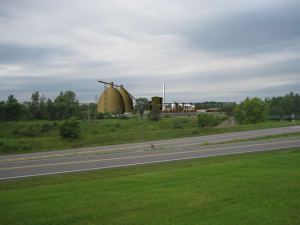
The state-of-the-art, $150 million plant is being proposed by Beaver Wood Energy, a Massachusetts-based firm that has been involved in several other biomass projects, according to Tom Emero, managing director of development and operation and one of the three principals in the company. The plant would be built on Route 4 across from a state welcome center and would also provide heat for the state facility, according to Emero, who went to Vermont Law School and has strong ties to the state.
Beaver Wood, which organized the Friday trip to lobby for the project, says the energy plant would create 50 well-paying permanent jobs, 140 jobs in forestry and 1,000 construction and other jobs during the two years it will take to build. The plant would also provide tax revenues to Vermont of $2.5 million a year and pay $1.1 million in property taxes, 70 percent of Fair Haven’s yearly tax receipts, according to Beaver Wood. And unlike solar and wind, the biomass plant would provide needed baseload power that is always available, which Emero said will be especially valuable if Vermont Yankee shuts down in 2012 and the state’s utilities lose the 200 megawatts Yankee currently sells to them.
Emero said he has been frustrated by delays in getting the plant permitted but remains “very very optimistic” it will eventually be built. The company dropped a similar proposal to build a plant in Pownal, where there was strong opposition.
While biomass energy in general has some critics — they question whether Vermont’s forests can sustainably feed the demand of biomass plants and how clean their emissions are — those are not the issues that have stalled the project for well over a year. According to Emero, the obstacles are in the administrative and legislative arena, especially the issue of how the economic benefits from the plant should be factored in along with the price of power from the biomass facility.
That issue is the logic behind an amendment offered to H.287, a jobs and economic development bill passed by the Vermont House and now under consideration in the Senate. The amendment essentially provides more leeway under the state’s so-called SPEED (Sustainably Priced Energy Development) program to have “direct and indirect job creation and wage gain, additional tax and other revenues to the State and its municipalities, savings or benefits to the State” made part of the consideration of larger renewable power plants.
The state has already contracted for 50 megawatts of renewable energy for projects that are under 2.2 megawatts under the SPEED program, which was enacted in 2009 and which requires Vermont utilities to buy renewable power at premium rates to promote renewable energy.
But Emero said that there needs to be capacity for reliable baseload renewable power under the SPEED program, which the state will need for the future, as well as a broader way of assessing a larger generating plant’s benefits.
The Beaver Wood plant will sell power at 13 cents per kilowatt, considerably less than many of the smaller wind and hydro projects that the state has already approved, but more than other baseload generators. The plant’s backers, such as Fair Haven Selectwoman Claire Stanley, argue that looking only at the power costs ignores the considerable economic benefits for the state and town of 2,900 people.
According to Fair Haven officials, the administration of Gov. Peter Shumlin has been lukewarm on the plant, partly because it wants to see the recommendations of a legislatively appointed biomass panel.”
“It seems to me all of the proposed solar and wind energy project would not generate the number of jobs this one plant would,” she said. With a major highway and rail line nearby, Fair Haven is the perfect place for the plant. And she feels there are considerable benefits to using the state’s forest resource to generate power that will stay in the state, and pay taxes.
The plant would use 350,000 tons of waste wood a year, about 40 percent of which will come from Vermont, a small portion of the 2.4 million tons of forest growth estimated annually in the region, according to Beaver Wood.
“I can’t find anyone that has anything negative to say about biomass,” she said.
Fair Haven resident Wesley Bowen said he heats with wood pellets and would love to have a high-quality local source instead of importing pellets from Canada or Rhode Island, where he discovered his latest bags of pellets came from — and were so worthless he had to return them, he said.
Emero notes that plant will also use the heat generated in energy production to process 110,000 tons of wood pellets a year, displacing 13 million gallons of heating oil. That is roughly enough to heat 27,500 homes a year.
While some critics argue biomass energy production is an inefficient use of the resource, Emero said when the wood pellet operation is included the plant will be 60 percent efficient, which he said is “more efficient than any other (biomass) power plant ever built.” Vermont currently has two other biomass plants in Burlington (50 megawatts) and Ryegate (22 megawatts), but Maine has 12 and New Hampshire six.
According to Fair Haven officials, the administration of Gov. Peter Shumlin has been lukewarm on the plant, partly because it wants to see the recommendations of a legislatively appointed biomass panel.
In a recent press conference, Shumlin said he wouldn’t rule the Fair Haven project out, but he wants the Department of Public Service to complete its comprehensive energy plan before he decides whether it makes sense for the state to support biomass electricity. The plan is scheduled to be released in October.
Sen. Virginia Lyons, (D-Chittenden) chairwoman of the Senate Natural Resources Committee, met with Fair Haven residents and said the groups’ report is due in October — though a recommendation for one new plant is expected to be part of that report.
Emero said the larger issue raised by the administration officials is a broad reluctance to raising power rates in the state.
According to Emero, project backers estimate if the plant comes online in 2014 as planned, it will mean an extra $1 on a $100 electric bill; the administration has estimated the jump in rates would be $2.
Emero argues that notwithstanding that difference, a focus solely on rates is shortsighted for Vermont and all the plant’s economic and forest benefits, as well as its replacement of baseload power from far dirtier sources such as coal, need to be considered.
“It’s too narrow a view. We’re not looking at the ultimate big picture.” he said.
