


President Lyndon Johnson declared war on poverty in 1964, and since then, the federal government has provided funding for an array of programs to help the poorest Americans find food, work, housing, fuel, legal help and transportation.
Until now. Last month, President Barack Obama outlined a budget plan for fiscal year 2012 that includes cutting federal funding in half for the 1,000 community action agencies around the country that offer services to 28.7 million Americans. If Obama’s proposal is approved by Congress, it would go into effect Oct. 1.
The president’s budget plan as it stands would shred the social safety net in Vermont, according to state officials. Community action agencies provide food, shelter and employment services for about 55,000 Vermonters who fall under the federal poverty level — $10,890 for a single person and $22,350 for a family of four.
Dig Deeper
News coverage
- Boston.com: Democrats’ budget toes Obama line
- The Washington Post: Senate Democrats release government funding proposal; votes likely next week
- The Washington Post: Democrats keep misleading on claimed budget ‘cuts’
- The Washington Post: House Republicans: We’ll cut $2 billion a week until Democrats propose spending plan
- The Washington Post: Obama signs short-term spending bill, averting federal shutdown
- The Washington Post: GOP spending plan would cost 700,000 jobs, new report says
- The New York Times: Leaving Children Behind
- The New York Times: The Human Cost of Budget Cutting
- Politics Daily: Obama Cuts Deal to Extend All Bush Tax Cuts, Renew Jobless Benefits
Links
Read Mel Huff’s story from Feb. 22 about the impact on Vermonters of Obama’s budget.
State leaders are taken aback by the president’s plan, but they are even more dismayed by the draconian budget proposed by the U.S. House of Representatives. The GOP-controlled House has put the Community Service Block Grants that fund the agencies on the chopping block for the current 2011 fiscal year budget cycle.
The grants were not targeted in the $4 billion in cuts agreed upon by the president, the Senate and the House as part of a stopgap measure to halt a government shutdown last week. But Vermont agencies and the state are bracing for reductions that could come as part of intense negotiations between the Democrats and the GOP over the House package of $61 billion in proposed cuts. Members of the House GOP leadership threaten to cut $2 billion a week in domestic spending until they reach that target. On Friday, the Senate, which is held by a Democratic majority, came up with $6.5 billion in spending reductions. The Senate is expected to take up the president’s budget and the House package this week.
If the House plan to cut the grants goes through in one of the upcoming budget-slashing rounds pundits say appear likely, funding for Vermont’s community action agencies could be reduced by $1.628 million, or 44 percent. The loss would effectively zero out funding for the state’s five local agencies for the rest of the fiscal year — that is, between now and Sept. 30 — according to Vermont officials.
State officials say both the president’s proposal and the House plan would cripple the community action agencies in Vermont. If the House budget proposal goes through, it would force the agencies to lay off workers and reduce services, effective immediately. The nonprofits rely on the federal money to leverage other grants. For every federal dollar agencies receive, they raise $12 in other funds. The agencies would be forced to lay off workers, slash programs and close satellite offices, according to a fact sheet produced by the agencies. Food shelves would close or reduce hours; 25 Head Start classrooms would shut down; fuel assistance for 11,000 Vermonters would disappear; and housing assistance programs for 5,000 Vermonters would not be available.
The House budget proposal, in particular, has put the community action agencies on high alert because the impacts would be immediate. Liz Schlegel, community outreach coordinator for the Central Vermont Community Action Council, said her agency is preparing contingency plans in the event the reductions are made in the current budget year.
“We’re doing (worst-case) scenario planning,” Schlegel said. Her agency is looking at reducing hours or laying off workers, limiting hours for the food shelf and figuring out how to manage a heavy workload with a significantly smaller staff — just in case. “There are people who won’t be able to stand the agony, even if in the end we do not lose funding. Workers may not be able to handle that ambiguity.”
Shaun Donahue, director of the Vermont Office of Economic Opportunity, which manages federal programs for the poor, said last week’s congressional compromise is only good through March 18.
“What we know is, we have funding through tomorrow,” Donahue said. “It’s a difficult way for people to live. While Community Service Block Grants aren’t major amounts of money, they pay for key infrastructure pieces. Without that funding, it’s crippling. That’s what keeps the lights on, that’s what keeps people employed and makes other funding streams for programs possible.”
For more information about the direct impacts of the cuts, download these PDFs: Community action fact sheet 1;Community action fact sheet 2; Community action fact sheet 3;
Community action fact sheet 4
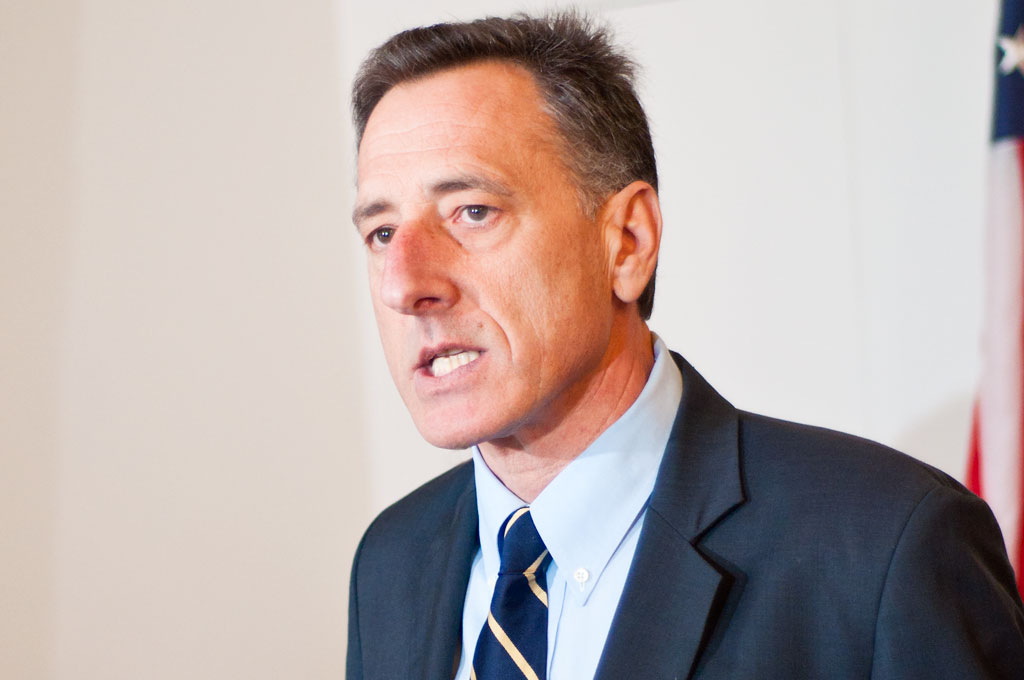
Would the state step in and find the money to keep the programs going? That doesn’t look likely at this juncture. Gov. Peter Shumlin, a Democrat, said in a press conference last week the state doesn’t have the resources to make up the difference. He is hoping the president and Congress can work out a compromise.
The governor said he is working with governors from New England and Midwestern states to oppose cuts to the Low-Income Heating Assistance Program, which would eliminate financial aid to 11,000 residents in the state. Obama originally proposed this cut in his budget as well. Vermont’s Sens. Patrick Leahy and Bernie Sanders and Rep. Peter Welch held a press conference recently to publicly oppose the president’s LIHEAP proposal.
Shumlin didn’t say whether such coalitions might form around programs for the poor, and (he said the state doesn’t have the resources to pick up the slack). “There is no contingency plan that could fill the gap between what they’re talking about, and the financial effects on Vermont would be huge,” he said.
“The bad news is that there is not enough money in Vermont to replace all of the money the Republican Congress is talking about cutting, so we’ve got to work very aggressively to make sure that they don’t pass these budgets,” Shumlin said. “They’re going to destroy Vermont and a lot of other states in this fragile recovery as we try to create jobs.”
Lt. Gov. Phil Scott, a Republican, said the federal cuts would be devastating, and he believes the state would need to help the community action agencies in some way. He plans to meet with Senate Appropriations this week to consult with the chair, Sen. Jane Kitchel. Scott has worked with the Central Vermont Community Action Council on an annual snow tire giveaway for low-income Vermonters.
“I understand we’re in a budget crisis, and I understand the need to cut but we need to take care of the most vulnerable,” Scott said. “It’s a critical need for so many. I think we’d have to prioritize and do what we can to fulfill whatever need is unmet.”
Pat McDonald, the new Vermont GOP chair, said she appreciates the work of the agencies, and she suggested the state’s five agencies need to work with other nonprofits to reduce redundant services. She isn’t sure the state should try to replace the money from the feds if the grants are cut.
“I don’t think it’s a yes or no answer,” McDonald said. “We look at issues in a vacuum. We never step back and look at the whole picture and find out where we can make some adjustments and evaluate priorities.”
How the cuts would hit home
David Yacovone, commissioner of the Department of Children and Families, said the situation is “sobering.” He is concerned about both the president’s budget and the House proposal, but he is particularly worried about the cuts proposed for the current fiscal year.
“Either one will have a serious impact on Vermont’s safety net,” Yacovone said. “It shouldn’t be a sentence to be poor and a sentence of lost opportunity. The cuts really unravel the safety net for adult Vermonters who are poor.”
The impact would be felt by families, too, he said. Under the U.S. House plan, about 300 preschoolers out of a total of 1,500 children would lose access to Head Start preschool programs, and more than 100 staff would be laid off. “It’s such a proven program,” Yacovone said.
Schlegel said if the federal cuts are implemented, the community action agencies will be competing with other nonprofits in the state for donations, and that could have an impact on funding for the arts, for example.
“People need to understand what this means to them,” Schlegel said. She predicts that if the housing assistance program is cut down to one staffer, it won’t be possible for that person to keep up with 90 to 100 calls a day. Some of those people will be evicted at a time when homeless shelters are full. In Central Vermont, Barre’s Good Samaritan House is the only option. The impacts have a tendency to snowball.
“Now a chunk of people are not getting help to solve their problems, and all of a sudden things start looking messy,” Schlegel said.
She said through the recession, demand for services has remained high. On a daily basis, she said, the food shelf the agency runs is empty by noontime.
“If these cuts come down, we’re in real trouble safety-net-wise, and people need to think about what they will do to replace the funding,” Schlegel said.
The national context
How can Congress propose cuts in the current year? It turns out the federal government is operating without a budget for fiscal year 2011. The Democrats in Congress, when they were in charge of the House and the Senate (the party lost the House to the GOP in the November elections) last fall, didn’t pass appropriations bills for the full year. Instead, the Senate and House passed stopgap spending measures for a few months at a time called “continuing resolutions.”
The federal government was set to run out of money on March 4, which would have forced a government shutdown. This week, the House passed a bill cutting $4 billion from spending for fiscal year 2011 for a two-week period that ends March 18. (The cuts include $2.7 billion in unspent congressional earmarks, according to a congressional staffer.)
The president and Senate agreed to the $4 billion in cuts, and politicians bought themselves two more weeks to negotiate a deal. The money runs out on March 18, at which point the specter of a government shutdown will loom — again.
Pundits say this back and forth between Dems and the GOP, with the attendant Russian roulette effect on budget cuts, could go on for weeks.
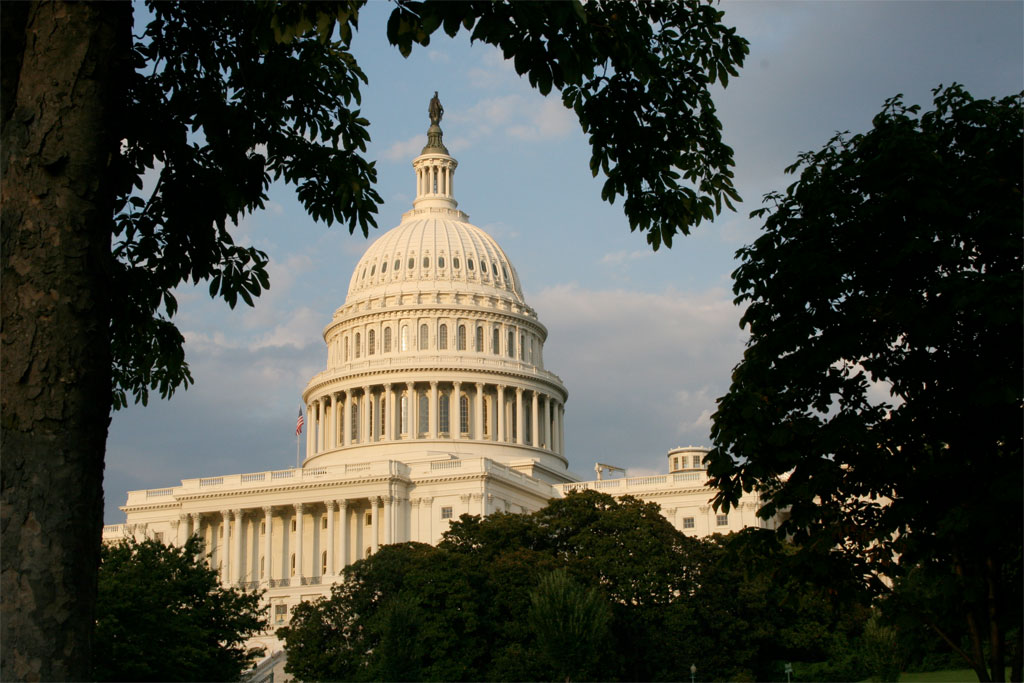
The House is now dominated by anti-government, tea-party-backed Republicans. The leaders of the GOP, including Rep. Eric Cantor, R-Va., majority leader in the U.S. House, say they won’t compromise on the $61 billion target. Cantor said his party plans to cut $2 billion a week from the 2011 budget for seven and a half months, until they hit the mark. ($2 billion is a pro-rated week’s share of $61 billion.)
The Senate and president rejected the proposal. Senate Democrats came back with a proposal that would reduce domestic spending by $6.5 billion on Friday, according to The Washington Post.
The two sides are so far apart that pundits say it could be weeks before a compromise deal is struck.
Vermont’s congressional delegation — Sen. Leahy and Rep. Welch, Democrats, and Sen. Sanders, an independent, oppose the original House GOP budget proposal. Welch voted for the $4 billion compromise last week in order to avert the government shutdown, a member of his staff said.
In a press release on Sunday, Sanders proposed a 5.4 percent surtax on Americans with annual adjusted gross incomes of more than $1 million. The tax on millionaires would raise as much as $50 billion a year, according to the Senator’s office.
Schlegel, speaking as outreach director for Central Vermont Community Action Council, doesn’t see a compromise in the offing. House Republicans are starting with items Obama cut in his fiscal year 2012 budget, including the Community Service Block Grants, in their proposals for fiscal year 2011.
“This is a happy place if you’re a Republican who wants to shrink government,” Schlegel said. In her view, the GOP has set up a Sophie’s Choice situation for Democrats who are now forced to choose between funding for Head Start vs. Planned Parenthood, the Women Infants and Children program vs. Pell Grants for poor college students. “That’s the position they’re putting Democrats in, and it’s working great.”
Shumlin said the deficit gives congressional Republicans an opportunity to weaken or eliminate programs they oppose.
“It’s a way for them to go after programs for low-income Americans,” Shumlin said. “We’re trying to build coalitions with the president so the toughest cuts for Vermont don’t happen.”
The federal government faces a $1.6 trillion deficit. The largest areas of spending in the nation’s $3.73 trillion budget — defense, Medicaid and Social Security — have been taken off the table.
The GOP’s $61 billion target is roughly equivalent to the annual tax breaks ($60 billion) the president and Congress (in a lame-duck session when Democrats still had a majority in the House) approved in December for a two-year period. The deal included $25 billion estate tax breaks for about 6,600 wealthy families — or about $3.79 million in per household.
Mark Zandi, the chief economist for Moody’s Analytics and a former adviser for GOP presidential candidate Sen. John McCain, has said the House cuts would lead to 700,000 layoffs and would reduce the growth of the economy by 0.5 percent.
