


CORRECTION: The top income-earners in Vermont will save $190 million in 2011 alone, not over a two-year period as previously reported.
What does $190 million in tax breaks for Vermont’s wealthiest residents have to do with the state’s yawning budget deficit of $176 million? Not much at the moment, but if two Progressives in the Legislature have their way, income-earners who are in the top tax brackets will have an opportunity make a personal contribution to the budget-gap reduction effort.
In January, the Public Assets Institute issued a report showing that 5 percent of Vermonters — those who earn more than $200,000 a year — stand to save $190 million under the extension of President George W. Bush’s tax cuts. The top 1 percent of Vermont income-earners will see a $100 million reduction in their taxes in 2011, according to the Montpelier-based Institute.

The giveaway to the nation’s wealthiest residents was slated to sunset last year. President Barack Obama and the Congress carried forward the tax breaks through 2013.
Rep. Chris Pearson, P-Burlington, and Sen. Anthony Pollina, D/P-Washington, plan to introduce a bill at a press conference (Thursday) (1:30 p.m. in the Cedar Creek Room) that would raise about $17 million through a small tax increase on the wealthiest 5 percent of Vermonters.
The money, Pollina said, could go toward programs for elderly, disabled and mentally ill Vermonters that are currently under Gov. Peter Shumlin’s budget knife.
By day’s end on Wednesday, 10 House members had signed onto Pearson’s bill. “There is an understanding that most Vermonters don’t support the Bush tax cuts, and we’re in tough budget times,” Pearson said.
The average personal income of those in the top 1 percent tax bracket is about $940,000, according to PAI. Vermonters in the top 5 percent group will see a reduction in federal taxes in 2011 of $150,000 on average as matters stand now.
Under the Pearson-Pollina plan, however, wealthy taxpayers would contribute an additional $10,000 a year on average for income of more than $373,650 a year and an additional $500 a year for Vermonters who earn between $171,850 and $373,650, according to Pollina. The effective rate, Pollina said, would increase 0.8 percent for Vermonters in the highest bracket, and 0.2 percent for those in the next lower tier.
“People have received significant tax cuts on the federal level,” Pollina said. “We’re not increasing taxes. We’re asking the wealthy to take slightly less of the Bush tax cuts.”
The bill will be introduced just one day before the final cutoff for new legislation.
Pollina described the increase as “slight.” Wealthy Vermonters will still be able to buy yachts, he said. “It’s not a broad-based tax,” Pollina said.
Whether the bill will be politically viable is an open question. At a Senate caucus on Tuesday night, Pollina said “the majority of Democrats supported it in their hearts.”
Pollina said the majority of Democrats backed the congressional delegation’s opposition to the Bush tax cut extension when it was first debated. “Anyone who supported Leahy, Sanders and Welch should support this,” the newly elected senator said.
Don’t count on the Democratic leadership, however, to be among them — at least for the time being. Gov. Peter Shumlin, House Speaker Shap Smith and Senate President Pro Tem John Campbell continue to beat the budget-cut drum and oppose broad-based tax increases — despite the “rumblings” in the Legislature about new tax revenues, as Shumlin put it. This rank-and-file discomfort with the budget was to be expected, according to the governor and the legislative leaders.
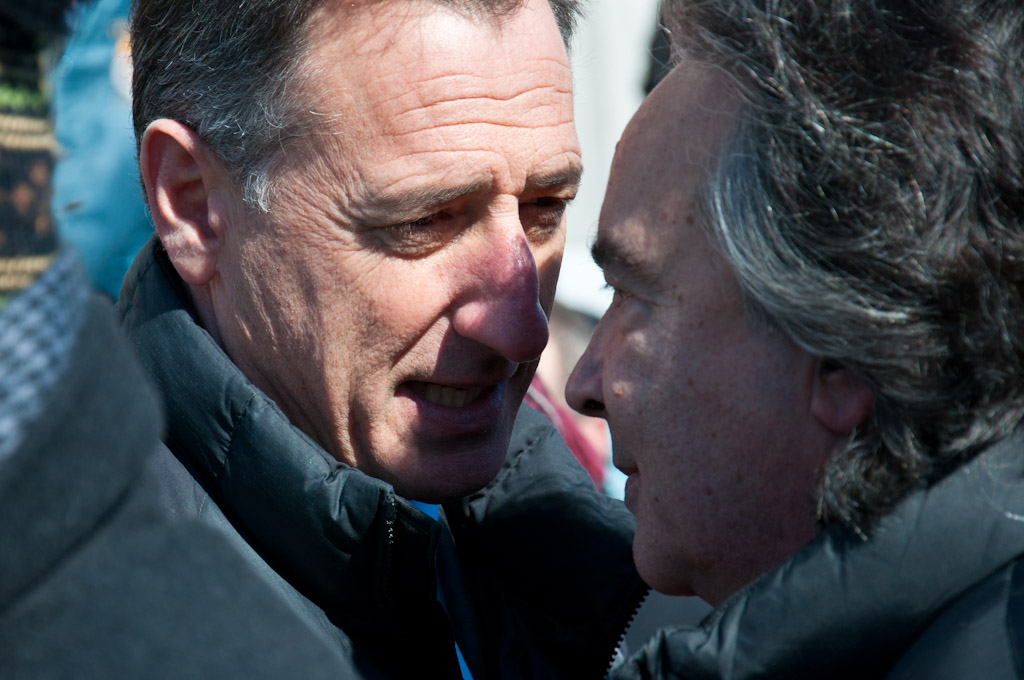
In his weekly press conference, the governor chastised Congress for cuts to funding for the low-income heating assistance program, Head Start, community action councils and Planned Parenthood. “We spend more on bombs than we do on hungry children,” Shumlin said.
The governor then went on to defend his own cuts to programs and reiterated that he would not raise taxes to pay for services for the elderly, the disabled and mentally ill.
Shumlin said the federal government can raise income taxes on the wealthy without fear that they’ll leave the country. On the other hand, he said, states like Vermont are vulnerable to out-migration. (The Vermont Blue Ribbon Tax Structure Commission recently debunked the anecdotal stories about the out-migration notion as “myth” in its January report.)
“We all know Vermont is not an island,” Shumlin said. “We all know people will pay a certain amount of tax on the state level, and when those taxes are disproportionate to those in neighboring states, they migrate.”
Shumlin said wealthy Vermonters already pay higher marginal tax rates (8.95 percent) than their neighbors in other New England states. The federal government should be raising taxes, he said, on the wealthiest Americans “who are paying the lowest taxes in anytime in American history.” The state, however, “doesn’t have the flexibility to do that,” he said, “because we all know New Hampshire is to our East and Florida isn’t far away.
“We all know we have a very progressive income tax in Vermont, and I’m proud of that,” Shumlin said. “I helped write the tax code that keeps it progressive. The wealthiest should pay the most. But when you get up around 9 percent, frankly you start to lose more than you’re making.”
Vermont’s tax rates are tiered. The 8.95 percent rate is applied only to income above $373,500 — taxpayers pay much lower rates on income below that level. The top marginal rate does not include itemized deductions. The average effective rate, or the amount actually paid by Vermonters after deductions, is about 3 percent.
When it was pointed out that the effective income tax rate for wealthy Vermonters is 5.8 percent on average — once deductions such as second homes have been included in the equation — Shumlin asked where the reporter got her numbers and remarked that they couldn’t be right. (The information came from the Tax Department and was promulgated in the Vermont Blue Ribbon Tax Structure report.)
“I don’t buy the argument that they’re paying 5 percent,” Shumlin said. “I happen to have been one of those taxpayers, and I can tell you I don’t know how they pay 5 percent.
“All I can tell you is, New Hampshire has a rate of zero, Florida has a rate of zero; that’s who we compete with,” Shumlin said. “I can take you to any county in Vermont and introduce you to Vermonters who are no longer Vermonters, and we need to find the balance between how we can keep them here and pay our bills. Anyone who tells me we are not close to the precipice in terms of what we can ask Vermonters to pay in income taxes I just think isn’t really looking at the facts.”
Republican Gov. James Douglas made similar arguments over the course of his eight-year tenure in office.
“My predecessor was right about some things,” Shumlin said.
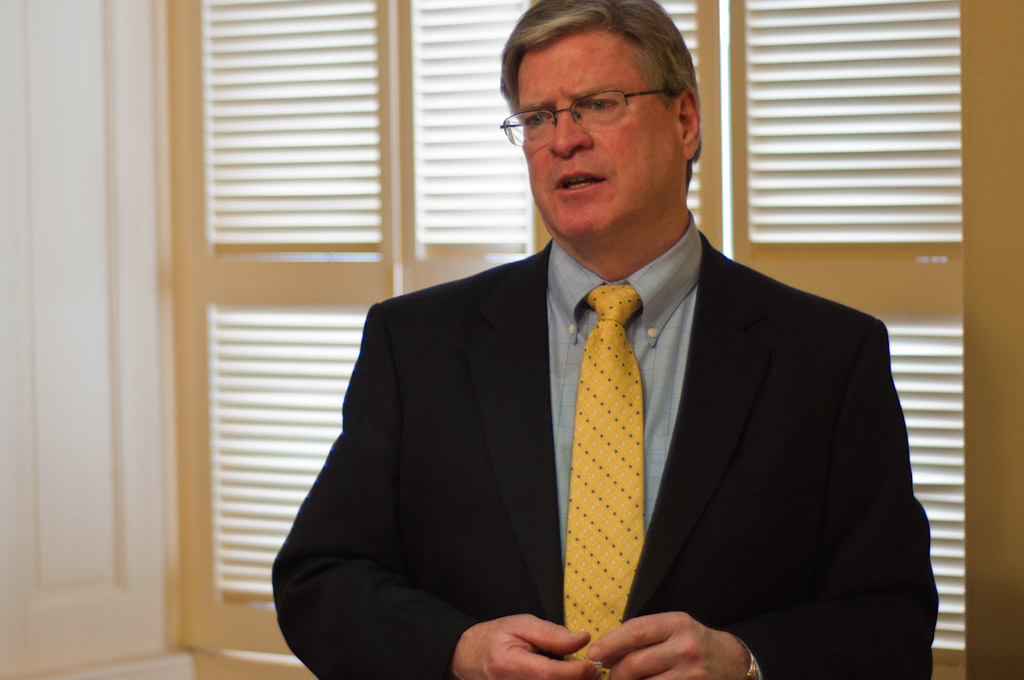
Senate President Pro Tem John Campbell said the Legislature doesn’t have enough information to determine whether it should raise taxes or not. The recently announced federal budget cuts, which, if passed, could go into effect in the last quarter of this fiscal year, would have an impact on how the state moves forward with its own budget. In the context of those reductions in state spending, the senator said, he would consider a tax increase on the wealthy.
“We’re in a situation where we have the federal government abandoning the state when it comes to social services,” Campbell said. “Are we going to let people freeze in the winter and take away care for women?”
As far as the governor’s budget is concerned, Campbell remains committed to putting “everything on the chopping block.”
House Speaker Shap Smith said he isn’t surprised that Pearson has proposed a bill to increase income taxes for wealthy Vermonters. Smith said he isn’t unwilling to consider a tax increase (he supported estate and capital gains tax increases in 2009) but at this point, lawmakers need more time to determine whether that’s necessary this session. “We have been working hard to scrub the budget and find out where the holes are,” Smith said.
