

Editor’s note: This article first appeared in the Barton Chronicle on Feb. 2, 2011.
Members from two Abenaki tribes testifying before a House committee last week said that state recognition is more about authentication than land claims or building casinos.
“We are at a crossroads in history, said Donald Stevens, chief of the Nulhegan Band, one of two Abenaki tribes with petitions before the Legislature seeking recognition.
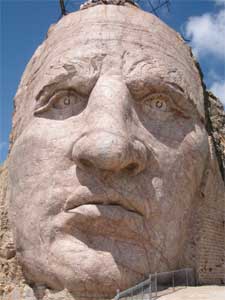
“We deserve the right to our identity,” he added, placing the Indian warrior Crazy Horse on the same historical mantle as Martin Luther King Jr.
Chief Roger Longtoe Sheehan, who testified later in the day on behalf of the Elnu Tribe — the other band seeking recognition, said that in the hierarchy of the Indian world a card is needed to validate one’s identity as a Native American.
“The most hateful thing one Abenaki can say to another is that you’re not an Indian,” he said. “And that is what’s going on now.”
Along with bills for recognition before the House Committee on General, Housing and Military Affairs, the Senate Committee on Economic Development, Housing and General Affairs is also taking testimony on recognition for each tribe.
The bills come to the Legislature as the final step in a process that began a year ago with the creation of the Vermont Commission on Native American Affairs. The commission was empowered by the Legislature to initiate a step-by-step process by which each Abenaki tribe in the state could apply for recognition as Native American.
As defined by the bill, the process would be supervised by the commission and require each tribe to submit documentation, approved by three independent scholars, to validate its claim. Once that had been accomplished, it would be left to the commission to review the claim and petition the Legislature for recognition on a tribe-by-tribe basis.
One of the caveats in the bill that created the process stipulated that if the Legislature did not act on the petitions, a tribe would be recognized two years after its petition was received.
The Elnu provide ample and highly detailed evidence of the presence of antecedent Native people in the Bellows Falls and Windham County area from a wide variety of sources.”
~ Elouis Bell,
Lake Champlain Maritime Museum
Representative Helen Head of Burlington, a Democrat who chairs the House Committee on General, Housing and Military Affairs, said the Legislature should act on the petitions.
“I would rather be pro-active,” she said last month.
For the Abenaki, whose struggle for recognition goes back to the 1970s and includes a rejection by the Vermont Supreme Court, it has been an arduous ordeal.
“I’ll never subject myself to this process again,” testified Stevens, who said that he knows Indian blood flows through his veins, no matter what happens with his tribe’s petition.
According to its petition, the Nulhegan Band is located along the waterways of Orleans and northern Essex counties. As of September 2010, the tribe consisted of roughly 260 members, among whom 96 percent are related to one another.
The commission found that “Chief Don Stevens is related by blood or marriage to at least 160 members.”
In making their case as an enduring community within Vermont, the Nulhegan Band says its presence can be documented by scholarly research, providing examples in its petition like how members harvested fish.
“They formed into a V with the outside canoes named the rattlers for metal nuts on the ends of the lines that rattled, and they moved down a channel between Big and Little Salem Lakes.
“The rattlers scared the walleyes to the center where they could be caught. Local anger about this practice from Euro-American fishermen shows a distinctive identity of the Nulhegan group. If the dominant culture performed this practice, they would not have been so angry.”
The petition also notes that during ice fishing, Nulhegan Abenaki kept perch eyes used for bait under their tongues to prevent the fish eyes from freezing.
One of the scholars on a three-member panel who reviewed the band’s documentation, David Skinas is an anthropologist employed with the federal National Resources Conservation Service. Prior to that he worked for the Vermont Division for Historic Preservation and, according to his resumé, he has been working with the Abenaki since 1988, helping mainly to recover Native American remains.
Skinas told legislators he had spent up to 30 hours reviewing the Nulhegan Band’s petition for recognition. He also said experts on the panel had conducted the review independent of one another, and that its recommendation for state recognition was not the result of a collaborative effort.
Among the conclusions he offered to the committee, Mr. Skinas said he “felt very strongly” that the band has an historical cohesiveness and that its presence in Vermont has a “demonstrated continuity.”
A second scholar, testifying on behalf of the Elnu Tribe — located in southeast Vermont, said the criteria set up by the commission allowed experts to return to the historical records and examine them in depth.
A “repeating priming of the pump” has provided the Legislature a view from different angles, said Eloise Bell, a folklorist and curator with the Lake Champlain Maritime Museum.
Bell said the Elnu Tribe had met all the criteria laid down by the commission, and recommended recognition.
“The Elnu provide ample and highly detailed evidence of the presence of antecedent Native people in the Bellows Falls and Windham County area from a wide variety of sources: archaeological evidence, historical documents; citations from numerous academic and local histories, and oral traditions from families within the kinship group,” she said in a written evaluation submitted to the Legislature.
“The combination of evidence from these various sources, presented chronologically in a timeline which spans the 16th through 20th centuries, indicates the continuity of community presence in this region by the Abenaki families from whom the Elnu are descended.”
No direct dissenting testimony came before the committee during last week’s hearing. But there were indications, some outside the committee’s hearing, that recognition has become a divisive political issue among some of the Abenaki tribes.
Stevens told the House committee that the Abenaki in Odanak, located in Quebec, oppose state recognition for the Nulhegan Band. He said he was not going get caught up “in all this craziness,” presumably stemming from challenges over whether the Vermont Abenaki are really Native Americans.
Stevens went on to attribute the allegations to a competition over land claims, saying that Odanak Abenaki want to claim the Northeast Kingdom as part of their tribal territory, with an eye toward operating a casino.
A couple of days prior to his testimony, Stevens contacted the state’s Department of Public Safety by email to alert them to the possibility of violence at the State House from at least one opponent of recognition. He asked police to intervene and prevent the individual from stepping on State House grounds.
No signs of violence ever materialized during last week’s testimony, but Sheehan told the committee that there was little to be gained by trying to define who is really an Indian.
“I really don’t think there is a full-blood Abenaki out there,” he said, pointing to the interracial marriages that have occurred over the last 400 years.
Recognition, he added, might cut down some of the infighting among tribes and lead to a healing of old wounds.
“If anyone asks who you are, say French-Canadian,” testified a woman, speaking of the time she left a reservation in Oregon and moved to Los Angeles.
Charlene McManis has since moved back to Vermont, and last week she told legislators that there might be no such thing as a racial identity.
“What is an Indian? Believe it or not, even us Indians question it,” she told the committee. “It’s so diverse.”
She said her grandmother once told her that her identity as a Native American came from the heart rather than the blood. What is odd, said Ms. McManis, is “to have to get recognition from the government.”
According to testimony, recognition will allow the tribes to apply for federal grants toward education, and enable tribal members to sell their crafts as Native American products.
Such a label, explained Mr. Sheehan, will put more money in the pockets of Abenaki craftsmen, as a Native American basket is far more marketable than one lacking the label.
It’s like Vermont maple syrup, he said, noting that it’s the brand of choice among consumers.
Testimony before the committee repeatedly recalled how long the fight for recognition has been going on.
“People have fought this battle longer than I have been alive,” testified Luke Willard, the 30-something-year-old chairman of the commission.
