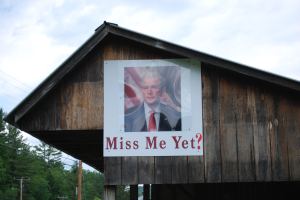
No more peace in the happy valley
And so it begins.
Three days after the Aug. 24 primary election, Republican Lt. Gov. Brian Dubie’s campaign sent out a press release predicting that his opponents would launch a “wave” of negative ads “to distract voters from their own anti-jobs records.”
Corry Bliss, Dubie’s campaign manager, wrote: “Look for our opponents, working with outside groups, to do everything they can to mislead voters about the Lieutenant Governor.”
But the first strike in the General Election came from the GOP camp – not with advertisements (yet), but with an e-mail blast on Tuesday addressed to Vermont Republicans about presumptive Democratic nominee for governor Peter Shumlin.
As Dubie launched his 26.2 hour marathon-man campaign tour, GOP operatives served up a nastygram to Republican supporters on the lieutenant governor’s behalf titled “Ethics 101: Shumlin Skips Class.”
The e-mail from GOP executive director Erik Mason declares that Shumlin’s “ethical lapses just got longer.” Mason takes Shumlin to task for the actions of David Blittersdorf, a staunch financial supporter of the Democratic nominee (he gave Shumlin a total of $8,000 for his campaign, individually and through two companies he owns). Shumlin, in his role as Senate President Pro Tem, appointed Blittersdorf to the Clean Energy Development Fund board last year. In July, Blittersdorf received $4.3 million in tax credits from the fund for wind energy projects in Vermont, just two days after he resigned from the board. (The GOP e-mail erroneously states that his wife, Jan, supported Racine; she actually donated money and time to the Markowitz campaign.)
Read the Associated Press story.
Read the July 8 letter from Shumlin asking Blittersdorf to step down from the board.CEDF letter from Shumlin to Blittersdorf
Tom Evslin, chief technology officer for the Douglas administration, is quoted several times in the AP report. In an interview with Vtdigger.org, Evslin said his reason for bringing attention to the conflict-of-interest issue had nothing to do with politics. He said he has not decided who he is going to vote for, and he has not donated money to Dubie’s campaign.
Evslin said it was a mistake for the CEDF board to approve $5.4 million to Feed In Tariff projects — $3.6 million to Blittersdorf, who has a vested interest in obtaining tax credits for his company NRG Systems, and $1.8 million to real estate developer Ernie Pomerleau (a large donor to Brian Dubie), because power
generated under the FIT costs twice as much — 30 cents a kilowatt hour – as net-metering projects, which are paid 15 cents a kilowatt hour. Giving the smaller net-metering projects the go-ahead first would have saved ratepayers $600,000, Evslin said.
He also said the Legislature’s governance for the fund was problematic. There was nothing, he said, to preclude renewable manufacturers and developers from sitting on the board. Robert Dostis, an executive with Green Mountain Power also sat on the CEDF board until recently.
“When you set up a board with a financial stake in the outcome, you can’t avoid conflict,” Evslin said.
Alex MacClean, campaign manager for Shumlin, defended her boss’ decision to put Blittersdorf on the board. She said he wanted to appoint board members with expertise. She claimed Evslin and, by extension, Dubie had put an unfair spin on the tax credit matter.
“David was given tax credits to create jobs for Vermonters,” MacClean said. “Would the Republicans not want these jobs to be created?”
The Blittersdorf snafu is just one of many “ethical lapses” Mason alleges in his e-mail blast. He includes Shumlin’s well-documented leap onto a VPRIG Vermont Yankee float at a parade in Burlington (nonprofits are not allowed, by law, to support political candidates); a WCAX story in which the senator was videotaped flashing his Senate ID at a cop to avoid a ticket; and a March 17 piece in the news weekly Seven Days that, based on a small sampling of responses, determined that Shumlin was “Most Ethically Challenged.”
Mason’s missive strike ends with: “When it comes to ethics, it (sic) clear that Peter Shumlin has a lot to learn. Hopefully, he won’t play hooky anymore.”
Todd Bailey, executive director of the Vermont League of Conservation Voters, said it’s unfortunate that “GOP surrogates have chosen to go negative even before we have the recount finished.”
In his view, the attacks are standard operating procedure for the Republican Party. “We’ve had three election cycles where we saw Jim Douglas go negative with Peter Clavelle, Scudder Parker, Gaye Symington and Anthony Pollina. Now the stakes are that much higher; why wouldn’t we expect the same team to take it up a notch?”
Kevin Ellis, a friend of Shumlin’s and a partner with the lobbying firm Kimbell Sherman Ellis, said the attacks were expected. He compared them with the Swift Boating of John Kerry. Kerry didn’t respond to the negative ads, Ellis said, and “it killed him.”
“If Shumlin lets the attacks pile up, they will have an effect,” Ellis said.
Shumlin made a pledge, in an interview with Vtdigger.org last week, not to engage in political attacks. “I have no intention or interest in running a negative campaign, and I’m going to ask Brian Dubie to do the same,” Shumlin said.
But Shumlin’s surrogates were also on the march on Tuesday. The Vermont Democratic Party sent out a press release claiming, “Brian Dubie’s so-called economic development plan wouldn’t pass basic math and would lead to unprecedented deficits.”
Dubie beats Shumlin in polls
The New York Times has just published a composite poll developed by Nate Silver, the pollster behind fivethirtyeight.com, a polling analysis Web site, and derived in part from Rasmussen data from March and June of 2009.
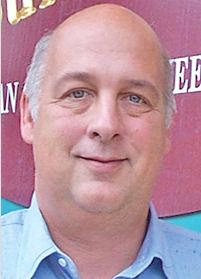
Since that time, no outside polling has been conducted.
The fivethirtyeight analysis shows a close race. Silver predicts Dubie will win 50 percent of the vote and Shumlin will attain 47.5 percent, with an 8 percent margin of error. He gives Dubie a significant advantage in the percentage chance of winning: Dubie has a 66 percent chance of winning, while Shumlin has a 34 percent chance, according to the New York Times charts.
Read the graph http://elections.nytimes.com/2010/forecasts/governor/vermont
Scott Rasmussen’s polling methods (he uses automatic calling service instead of live telephone operators) have been widely criticized. He has also been accused of holding a right-of-center bias.
Read the analysis story in Vtdigger.org.
News organizations have not announced whether they will sponsor polls prior to Election Day.
Tencher to lead the coordinated campaign
Paul Tencher, the campaign manager for Secretary of State Deb Markowitz, was chosen this week to take over the Democrats’ “coordinated campaign.”
Tencher, according to political insiders, ran a “textbook” campaign for Markowitz, relying on paid staff to organize volunteers, canvas and run phone banks.
Markowitz, who raised the most money in the Democratic gubernatorial primary, finished third in the nearly dead-heat finish, about 500 votes behind Sen. Doug Racine and 700 behind presumptive winner Sen. Peter Shumlin.
The director of the coordinated campaign is a key position in any party that is typically overlooked. Tencher, as the effective general of the on-the-ground troops, will run the field offices for the Democratic Party, get-out-the-vote and voter identification efforts, develop campaign messages and provide regional support for statewide races and local bids for House and Senate seats. The
coordinated activities help multiple candidates, and they are subject to as many campaign finance rules.
Hiring Tencher is a way for Shumlin to reach out to other campaigns and supporters, according to one political operative.
Bailey said Tencher is a good pick. “He’s a pretty skilled guy,” Bailey said. “I think he’ll do a decent job. He’s got what is needed to do that type of work. He’s straightforward; he’ll stick to the message and plug along.”
The decision, however, leaves Amy Shollenberger, campaign manager for Racine, out of the loop for now. Shollenberger, who helped her candidate beat out Markowitz with half the campaign funds and a large bank of volunteers, said she is focused on the recount for the time being.
Money, money, money
Is the Democratic primary recount for Vermont governor hurting Dems’ ability to fund-raise? That’s the one million dollar question. Dems need to raise at least that much to stay in the game between now and Election Day, according to political analysts.
Vermont’s General Election cycles have traditionally lasted about two months. Until this year, primaries were held on the second Tuesday of September with the General Election held on the second Tuesday of November. This year, however, the Democratic Legislature moved up the primary three weeks
to Aug. 24; the original date was Sept. 14.
To recap the rather complicated Democratic primary results so far: Sen. Peter Shumlin won the top slot by 197 votes. Sen. Doug Racine, the second-place finisher, called for a recount on Aug. 27. Secretary of State Deb Markowitz, who came in third, is not expected to regain enough votes to win.
Meanwhile, it’s possible the certified vote won’t be available until Sept. 20, election officials said last week.
Though Racine has told donors to write checks to Shumlin until the recount is finalized, according to Montpelier lobbyist Kevin Ellis, donors need to rally around a front-runner, and quickly.

Alex MacLean, Shumlin’s campaign manager, said the “added complication” of a recount “hasn’t helped.”
Ellis is less than sanguine about the impact the delay will have on the Dems’ chances against Republican candidate Lt. Gov. Brian Dubie in the General Election. Ellis said a recent fund-raising unity event at Halvorson’s Upstreet Café in Burlington was heartening, but it wasn’t enough to inspire confidence among some large donors.
“Unity is good and powerful, but I do think the recount is freezing fund-raising for Shumlin,” Ellis said. “That’s good for Dubie and bad for Shumlin.”
On the other hand, he says, that’s the conventional wisdom. “We’re always surprised in this business,” Ellis said. “It’s possible that after the recount, a “wall of energy will be behind this dam and Dems will get excited and money will start pouring in.”
Another event held the same evening as the Halvorson’s party raised about $20,000, according to Paul Bruhn, who hosted the $1,000-a-plate donor soiree at his home in South Burlington. More than 40 people attended.
Part of the issue is emotional for donors, according to Chris Graff, a business executive and the former Vermont bureau chief for The Associated Press, who has been providing media analysis for the 2010 campaign.
“People are getting their heads around the idea that Shumlin’s the nominee,” Graff said. “It would just change the feeling if he’s not the nominee at this point. Everybody’s warming to the idea they think it’s over, and they’re getting used to it. It would be harder if the nominee were Doug or Deb. It’s human instinct to accept what they think the reality is. Everybody has their arms around the idea that it’s Peter.”
Graff said he doesn’t think the nominee is going to have a problem raising money once the recount is resolved.
Under Democratic Party guidelines, whoever wins the Democratic nomination for governor will need to contribute $50,000 to the Vermont Democratic Party’s coordinated campaign.
On to the General Election
Dubie has a running start: he didn’t face a challenger in the Republican Party primary, has the support of popular Gov. Jim Douglas, has raised more than $1 million and has already received support from the Republican Governors Association in the form of an advertisement and the $160,000 Green Mountain Prosperity PAC. Not to mention the fact that a Democrat hasn’t had a strong showing in a gubernatorial campaign since 2002.
Graff says the Democrats, however, start with a bigger voter base. Dubie, by comparison, has a smaller foundation of GOP support. Douglas for the last eight years has been able to capitalize on luring independents. And in this election year, the independents will rule the day again, he says. “I think the Democrats will unite behind the Democratic nominee,” Graff said. “The Dems’ strength comes through the coordinated campaign, identifying the voters and getting them to the polls. The fight is for the
independents.”
Leahy’s war chest
Speaking of donors, Sen. Patrick Leahy, D-Vt., made a point of handing out checks to the statewide Democratic nominees for auditor, secretary of state and lieutenant governor at the unity rally in Burlington a day after the primary.
Just how much Leahy gave to each candidate won’t be known until the next campaign finance report comes out on Sept. 25.
Leahy said he would also be giving out money to the winner of the Democratic gubernatorial primary, though it’s not clear whether he’ll be dipping deeply into his own war chest for the coordinated campaign.
Leahy’s campaign bank account had a balance, as of early August, of $3.2 million, according to the Web site opensecrets.org.

Carolyn Dwyer, Leahy’s campaign manager, said the senator will help the nominee work with donors and campaign on the candidate’s behalf, but he won’t be making significant financial contributions to the gubernatorial race.
“At this point he’s focused on his own campaign,” Dwyer said. “Sen. Leahy has never taken an election for granted. Money from his campaign is for his campaign.”
Leahy is one of the most senior members of the Senate with 36 years in office. In the Aug. 24 primary he trounced his Democratic challenger, Daniel Freilich (a newbie politician, physician and former Navy officer), with 89 percent of the vote.
Freilich raised about $70,000 for his campaign. Freilich will go on to challenge Leahy as an Independent in the General Election.
Check out the map of election results from Politico. http://www.politico.com/2010/maps/#/Senate/2010/VT
None of the remaining six opponents in the General Election is a household name.
Leahy will face Stephen J. Cain, an independent; Peter Diamondstone, a perennial candidate, who is running on the Socialist or Liberty Union ticket; Cris Ericson, representing United States Marijuana; Johenry Nunes, another independent; and Rick Russell, who is on the new Working Families Party ticket.
The most prominent candidate running against Leahy this year is Republican Len Britton, a businessman from Taftsville, who has raised about $97,000 for his campaign.
Rep. Peter Welch, too, has plenty of money to run on, compared with his closest contender from the Republican party, Paul Beaudry. Welch has $801,000; Beaudry has raised about $15,000.
Graff said he expects Leahy will help with the coordinated campaign. He said it’s likely he’ll support voter identification efforts and joint advertising.
“There was no reason for him to do a mailing, urging voters to go to the primary on Aug. 24,” Graff said. “He did that for the good of the party, and he’ll do that for the November General Election. It may not be overt, but you’ll see him do things that support the entire ticket.”
There is no limit on how much Leahy could contribute to the coordinated campaign, according to the Federal Elections Commission. Matt Levin, a Democratic campaign consultant and a member of state Democratic Committee, said historically Leahy has been the single most important element of the Democratic Party’s fund-raising success and strategy. “Nothing will happen without the active involvement of his campaign,” Levin said. “There is no question their involvement will be critical.”
Welch is the wealthiest member of Vermont’s congressional delegation
The nonprofit, nonpartisan Web site LegiStorm released an update on congressional staff salaries and the personal financial disclosures of U.S. senators and representatives last week. Senators and members of Congress all earn $174,000 a year, plus benefits. Here’s a link to the salary data page.
Members of Congress are required to disclose their assets and liabilities, they are not, however required to release their IRS tax forms, and so assets, for example, can range wildly. In the case of Rep. Peter Welch, for example, his assets range between $2.4 million and $8.9 million. If members hold stock, they must fill out a form that indicates how much money they have invested in various entities.
Of the three members of the congressional delegation, Welch, a partner in a personal injury law firm, has the most material wealth. According to opensecrets.org, his net worth in 2008 ranged between $2.4 million and $8.9 million. Welch holds stocks in Wells Fargo, McGraw Hill, Proctor and Gamble, Target, UPS, Cisco, Verizon, General Electric, Dow Chemical, Utility XLU, Brazil, J.P. Morgan and USX China (common stock held in businesses located in China).

Welch, financial profile:
http://www.opensecrets.org/pfds/CIDsummary.php?CID=N00000515&year=2008
Download Welch finance disclosure
Welch spent about $933,000 on staffers last year, and for the first half of 2010, he paid $487,000 on employee salaries. District Director Patricia Coates earned $83,000 last year, and Bob Rogan, who is listed as a congressional staffer, made $162,000.
Leahy, by contrast, had a net worth of between $49,000 and $210,000 in 2008. He holds investments in Shearson, Lehmann Brothers Growth Portfolio, life insurance policies, and an account with Merrill Lynch, according to his 2010 financial disclosure forms.
Leahy, financial profile:
http://www.opensecrets.org/pfds/CIDsummary.php?CID=N00009918&year=2008
Download Leahy finance disclosure.
Leahy spent $2.4 million on staffers in 2009. For the first half of 2010, he paid $1.234 million in employee salaries. Press secretary David Carle made $150,000; Chuck Ross, who is listed as a congressional staffer, earned $135,000; and Ed Pagano, chief of staff, made $167,000 in 2009.
Read the link on LegiStorm: http://www.legistorm.com/member/62/Sen_Patrick_Joseph_Leahy.html
Of the three members of the congressional delegation, Sen. Bernie Sanders, I-Vt., is the lowest man on the wealth totem pole. In 2008, his reported worth fell in the category between $20,990 and $459,998. He holds liabilities of $100,000 to $350,000 on a condo in Washington, D.C., and a house in Burlington. His investments are in TIAA-CREF, he owns a rental in Burlington, and he has IRAs in Chittenden Bank (now People’s United Bank), according to his 2010 financial disclosure forms.
Sanders, financial profile: http://www.opensecrets.org/pfds/CIDsummary.php?CID=N00000528&year=2008
Download Sanders financial disclosure.
Sanders spent $2.245 million on his staff last year; for the first half of 2010, he’s spent $1.089 million. His chief of staff, Stanley Gutman, made $141,000, and outreach director Phil Fiermonte earned $86,000 in 2009. Read the link on Legistorm: http://www.legistorm.com/member/460/Sen_Bernard_Sanders.html
Departures
Jim Saudade, a deputy secretary for the Agency of Commerce and Community Development, was laid off recently, according to Kevin Dorn, the agency secretary.
Dorn said the agency had to cut about $500,000 from its budget this year, as mandated by the Legislature, and three positions were affected, including Saudade’s. Other cuts were made to marketing expenditures and the Vermont Training Program. The regional development corporations and regional planning commissions lost about $1 million in funding.
Since the recession began, the agency has lost 25 positions and now stands at 80 employees.
“He and I have made tough decisions over the years,” Dorn said.
Dorn described Saudade as an “extraordinary professional” and a “gift to government.” Dorn said Saudade was in agreement that his position should be cut.
Tom Evslin, the chief technology officer for the state of Vermont, is retiring from state government on Sept. 15. Evslin, 67, first served in state government as the Secretary of Transportation in 1981-1982 under Gov. Richard Snelling. He took the job after he lost a bitter GOP primary fight for the U.S. Senate in 1980.
Evslin studied history and literature at Harvard University, and went on to become an engineer and computer programmer, though he had planned all along to use his tech skills to support his novel-writing efforts. (After an illustrious career in the tech industry, Evslin, who holds eight patents, wrote “hackoff.com,” a self-published novel.)
Over the course of his long career, he worked for Union Carbide, Equitable Life, Microsoft and AT&T. He also founded several of his own high-tech enterprises, including Solutions, an automated transaction program for banks. He left Microsoft for AT&T in 1994 “after a disagreement with Bill Gates over the future of the Internet.”
“AT&T put me in charge of their Internet strategy; and I led the development and launch of their first ISP, AT&T WorldNet,” Evslin wrote in his blog, “Fractals of Change.” “We popularized flat-rate … dialup Internet access at $19.95/month.”
Evslin returned to state government to serve in the Douglas administration in March of 2009 to oversee the distribution of federal stimulus funds. Later, he became the administration’s point man for the Challenges for Change restructuring effort. Evslin worked for minimum wage and then returned the money to the state.
In case you missed it
Former Speaker of the House Rep. Michael Obuchowski, D-Rockingham, and Claire Buckley, a lobbyist with Kimbell, Sherman, Ellis, tied the knot at the Grafton Inn in July.
Signs of the times?