


Our Three-Day Trek from Florida to Vermont
Is there a more maligned species than the snowbird, that fair-weather Vermont resident who flees in winter and returns in the spring? Watch them skedaddle at the first sign of snow, Vermonters say. Snowbirds may be flighty, but they’re tough old birds, twice yearly braving I-95, just named most dangerous road in the U.S. by the National Highway Traffic Safety Administration.
I-95: Drive It If You Can. As drives go, we always knew it was a killer! I-89 can’t really compare.
And the dubious distinction of most traffic fatalities–1.73 deaths per mile from 2004-2008–goes to the 382-mile stretch that traverses Florida. This is no surprise in a state where the posted speed limits might as well say “suggested,” and it’s open season on cars with Vermont license plates. We snowbirds seem to get it coming and going.
Now, the Florida Highway Patrol blames the high fatality rate on motorist distractions such as texting and even the GPS. Equally responsible, we’d wager, is the “Daytona 500 Effect”–as in Florida motorists think they’re driving in it. They have the need–the need for speed–making 95 a wheel-clenching, adrenalin-pumping, heart-pounding event.
Adding to the anxiety as we make our way back north to Vermont on our three-day, 1,500-mile-plus slog is our aged Ford truck.
Crammed into its front seat, sans extended cab and even GPS, we’re hauling behind us a Danish rustbucket of a horse trailer that resembles a covered wagon, adding to the Wild West ambiance of I-95. Our “Brenderup” is just as often “Brender-down”– high-maintenance to say the least.

Migrating birds know when it’s time to get out of Dodge, and so do snowbirds. Vermont in winter is not conducive to hours outside tending equines when your increasingly arthritic fingers, artificially enhanced arteries and compromised lungs allergic to horse hair (horses very hairy in winter) don’t function in below-zero temps. Forget personal trainers, we need personal paramedics.
But after four months, Florida becomes uninhabitable, turning positively reptilian once the humidity of May descends and the evening chorus of Aristophanes’ frogs commences–”Brekekekex, ko-ax, ko-ax.” Accompanying the cacophony is the dense air traffic of flying insects and, underfoot, fire ants, slithering snakes, prehistoric-looking lizards and iguanas–all making outdoors miserable for man and beast alike–horses included. So, it’s back north we flee, ceding the riding paths by the canals to the alligators.
In our world, it’s all about the horses–the comfort, care, fitness, health and happiness thereof. Mostly because, as Winston Churchill once said, there’s something about the outside of a horse that’s good for the inside of a man. So our lives are organized around our ponies, and lucky for us, as writers and editors our jobs are eminently portable.
Fortunately, we are not hauling our own small herd. Our aerodynamic European rig barely accommodates one horse, never mind three big-boned beasties. We are merely the support vehicle–a modern-day chuck wagon, transporting all their stuff, leaving a day early to get a head-start on the shipper. We are permitted a bag or two, important papers, essential technology, maybe a few changes of riding britches and a good selection of funky cowboy hats. But mostly, we’re packing their feed and treats, saddles, bridles, blankets, boots, supplements, documents, meds, lotions and potions, whips and chains (kidding). Preparing to relocate horses, even if you’re not hauling them yourself, is a time-intensive, complex endeavor.
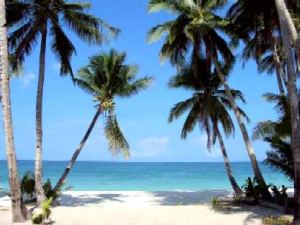
But the ponies like Florida. In winter they plunk down in the sandy pasture and sunbathe, needing only an umbrella, shades and festive libations (“Hair of the Horse” and “Palomino Punch”) to complete the picture. And though the grass is empty calories—the veritable junk food of pasture, compared to the lush Vermont greens–it’s better than no grass at all, an icy field for turnout, and a winter of teetering around on snow-packed horsie high-heels.
When we get there in January: Ah, Florida, where “schlock and awe” prevail; the wildlife is splendiferous; the neighbors are eccentric, except for Al and Teneka; and the highest point above sea level is the landfills with their scenic flocks of turkey vultures sailing the air currents, preserving their energy for scavenging. Happy to get there, and happier to leave in spring.
Visible from the interstate, the first five hours of our trip back north, are the outskirts of town after town with the word Beach in them (Vero, Cocoa, New Smyrna, etc.) and the occasional “Bay” (Palm Bay) for comic relief. Not very original, those native Floridians, now passing us at high speed, on the left AND on the right. You need both hands on the wheel. Never mind text and die—doing anything but driving, and sometimes even talking is impossible–especially when you’re the Clampetts, we of the decrepit, pokey truck and trailer.
Somewhere past Daytona, we begin to wonder aloud exactly when our “Check Engine” light will cry wolf. Once we drop our overloaded trailer at home, the light will promptly go out again. On the trip home, it’s usually around Jacksonville. Our crotchety “check engine light” has a right to complain with 175,000 miles under its belt.
Forget even a new truck, you’d need a tank–make that a whole squadron of them–to feel secure negotiating the fearsome traffic and speed of the Florida Interstate.
Flattened, totally wrecked cars lie by the side of the road, a caution to other motorists. The road is lined, too, with makeshift memorials that say “drive safely” marking some horrific crash, the name of the deceased emblazoned across the top. In quintessential good Florida taste, these are decorated seasonally. (Happy Halloween, Dearly Departed! Pass the Candy Corn.) There are also cheery billboards that say “After you die you WILL meet God.” The State should consider combining these with a public safety message: “And it may be sooner rather than later, the way you’re driving.”
It’s not yet hurricane season, but Florida has other natural disasters in its repertoire, such as wildfires around Daytona if it’s been an unusually dry winter. Negotiating these is an exercise in asphyxiation. Too close to 95 and the road is closed, re-routing traffic off the Interstate into yet another Florida traffic nightmare.
This can easily add hours to the trip, especially if you get disoriented by all the smoke, get back on 95 and wonder why there is a certain deja-vu quality about the exit signs. Then you begin to laugh and wonder what idiot put “Miami, 200 miles” on the I-95 North segment of the interstate. Once you see the Miami signs for the second time you realize just who the idiot really is, because you’ve just driven 40 miles the wrong way. (We may never live this one down.)
But there’s lots of good billboard reading on the way to keep you busy–you know, those eyesores we don’t have in Vermont. “Land Shark Beer: Let the Fin Begin.” An advertisement for “Bruce Rossmeyer’s Daytona Harley-Davidson,” supposedly the largest in the world, followed by one for the “Daytona Pig Stand.” Sharks, hogs and pigs, oh my….

Things you’ll see only in Florida–J’ai alai signs; giant gummi gators and “Bite Me” T-shirts with pictures of alligators; surf shops; the World Golf Hall of Fame (zzzzzzzzzz); and the “Space Coast.” But space cadets can be found all over the state: Ground control to Major Tom?
Except for the site of a forlorn great blue heron feeding her gawky, speckled baby on the apron of a 95 exit, there is not much sign of the splendid wildlife that is so abundant here, unless you count the amorous “love bugs” having one last fling before expiring on your windshield.
Once we leave the congestion of Jacksonville and cross into Georgia, the lack of sprawl is refreshing, but billboards abound here also. An ad for a chicken place off the interstate pictures a herd of cows urging motorists to “Go the Extra Mile for Chik-in.”
Now, to the uninitiated, driving up the entire east coast smacks of adventure, with so many great destinations off 95—Amelia Island, Fla., Charleston, S.C., Amish Country in Pennsylvania….
It does cover 16 states–if we confer statehood on the District of Columbia, long overdue–all the way from Miami to Maine. But we are always in a race against time to beat the horses home and ready the barn. And when they do arrive in the middle of the night, they need to be carefully monitored for signs of “shipping fever.” The journey is arduous for both man and beast. The horses will take several days to recover.
Despite the drudgery of the drive, once out of the Florida badlands, there is time to talk. With no other distractions, you remember the lost art of conversation, hijacked by the pseudo-intimacy of Facebook, Twitter and the like.
Finally in South Carolina, we are about to encounter a real conversation-stopper in the guise of a tourist trap called South of the Border–or SOB, for short. The first signs for this spectacularly tacky venue appear about 180 miles away.
“Best Kept Secret on I-95” boasts the first of the billboards for the shops, restaurants, miniature golf, flea market, wedding chapel and Reptile Lagoon that comprise SOB. Not secret for long as you go bump, bumpity, bump-bump along the poorly maintained interstate, cursing Mark Sanford, the famously AWOL governor, every step of the way. Driving the Appalachian Trail would be smoother.
“Fill your Trunque with Pedro’s Junque,” implores SOB’s cliché mascot in his oversized Sombrero, pictured in every ad. “Virgin Sturgeon and Unused Bagels,” screams a sign for Pedro’s deli, and
“Break Now, Fast Later” for yet another diner. “Weather Report: Chili Today, Hot Tamale.” Corny rules.
Is this a tax dodge, we wonder? On every trip the Wild Mouse is always grounded, the parking lots empty at the shops and eateries.
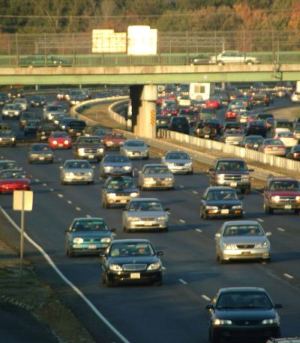
Once past SOB, we are now blessedly north of the border. North Carolina means three states down and only six more between us and Vermont.
Now, it’s absurd to think you can learn anything about a state never really leaving the highway. But if aliens arrived from another planet, their airship landing here, what would 95 on its own, as it morphs on the way north, tell them about the special character of each state?
Anybody?
Make something up: There’s not much else to do on a three-day drive when books-on-tape make you groggy and reading makes you carsick.
Stopping at a travel mart in what we dub PraiseJeezus, N.C., with its portrait of Lincoln in the window, we are reminded of the Civil War. Almost as noteworthy on a mind-numbing three-day drive is duct tape for sale, desperately needed to secure our snap-on truck-bed cover come seriously unglued in the 95 wind shear. They’re also selling Krispy Kreme Donuts. Somewhere around day two, no matter how healthy your typical diet, the insidious need for junk food kicks in–readily available, much to the chagrin of the food police.
I keep track of my husband’s intake once the urge strikes for one-too-many glazed donuts; the local variety of hostess cupcakes; giant gum drops; pre-packaged cheese-and-crackers a cheesy orange color not occurring in nature; and other assorted offenses against nutrition.
Also noted in N.C.: The Mad Italian Pizza and Pasta House–an apt name, wonder if I’m related! We pass an ad for the Auto Train (sounding good about now) that hauls people and their cars from Sanford, Fla. to Lorton, Va., (you’re on your own the rest of the way) for about $800 a pop. Don’t need no stinkin’ auto train after all.
Passing us on the left is a giant life-sized horse, being hauled by a mysterious “Sudan Temple Horse Patrol” truck and flatbed. I miss our horses, even though this is the only three-day break I’ll get from mucking and chores for the next six months.
But the high point of North Carolina for me, literally, is the first hill on 95, near Gaston and Garysburg, at which point I realize that it’s all uphill to Vermont from here. After a winter stranded at sea level, any hill is a good hill.
Virginia historically marks the spot on day two of the drive when we recount every time we broke down here. Make the trip enough times, and sooner or later it will happen, we have discovered.
A few years back, we blew a trailer tire in a looming thunderstorm during rush hour just outside Richmond, only to be informed that AAA did not also cover our trailer.
Two hours later, we resumed our journey and a mere 60 miles later our alternator blew. We barely limped off 95 to a Quantico gas station, where we were forbidden to leave our rig for the night, even though it would be repaired directly across the street in the a.m. So much for Southern hospitality.
Once jump-started (AAA would not tow us once again) and finally legally parked for the night, it was off to find shelter with our large sheep dog. Neither hotel in town would accommodate us. So I did what any intrepid, former travel writer would do when she ran out of patience four hours ago. I put my head down on the reception desk, and before the hotel clerk and God, pitifully cried. We got a room.
Happily, there are no such technical difficulties on this trip, as we sail through Virginia, only to come to a screeching halt just outside Alexandria. Every year, like moths to a flame, we are mysteriously drawn to the metropolitan D.C. area on a Saturday night, having miraculously developed amnesia from the year before. How can there possibly be so much traffic on a weekend night, we wonder annually? The new Wilson Bridge, under construction since the Civil War, it seems, is finally finished.
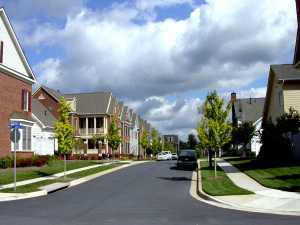
So……what? Multiple wrecks on the outer loop of the beltway and 95 South this time. We monitor traffic radio as we sit and wait, the wrecks taking forever to clear, due to rubbernecking–next to politics, the Redskins, and switching lanes without signalling, the fourth most beloved pastime of Washingtonians. We should arrive in Baltimore just in time for the Preakness traffic–crack planning, once again.
Pity the souls who face this traffic daily. It’s the worst of the trip–worse even than Florida sans wildfires, worse than the traffic around the New York/New Jersey metropolitan area. As Vermonters, we don’t know from traffic.
Once through the Harbor Tunnel, Maryland is rural and peaceful.
But here the trip begins to take its toll, literally. All of the tolls on the journey are packed into the tri-state area of Maryland, Delaware and New Jersey. With a trailer, we pay for multiple axles–double, sometimes triple. Our axle count is open to interpretation, depending on how many cocktails the toll-booth attendant downed before work. In Maryland, it costs us $30 to go about six miles. At this six-mile rate, chartering a private jet for us and the horses would be cheaper! There is no apparent rhyme or reason to the tolls–you pay only one way going over the Delaware Bridge, but they seem to sock it to you extra at the next toll booth after your freebie.
The New Jersey Turnpike, the next leg of our trip, has been transformed in the past few years. The ride is smooth, the drivers polite and skillful and the rest stops are named after literary figures such as James Fenimore Cooper and Joyce Kilmer (“I think that I shall never see, a poem lovely as a tree”), a genteel touch. Though he was drummed out of office, we like to think that John Corzine’s near fatal encounter on this road may have prompted a total turnpike-ectomy.
We pass Newark Airport with planes landing almost in the passing lane and menacing us overhead, a la “North by Northwest.” For us, this is the “Sopranos” section of the road: It’s impossible to pass the oil refineries without thinking of James Gandolfini’s smirking face on his drive into the “Joisey” suburbs. And the pollution, the pollution….I once remember driving in the springtime from Washington D.C. to New York City in a convertible, miserable with allergies, only to have my beseiged nasal passages clear once we got to Newark’s polluted air–oh, joy!
This is also where you begin to glimpse the Manhattan Skyline—a feast for my hyperactive imagination.
The city skyline always brings to mind Woody Allen’s old black-and-white movies, and the whole vibrant cultural life of the city–Cafe Carlyle and Bobby Short (gone, sadly) crooning Cole Porter, the theatre, opera, museums, shopping, delis and diners.
Ah well, that was another lifetime ago, before horses.
Once into the Hudson Valley, we see the very first Albany and New York Thruway signs. We pass Woodstock (I didn’t go), and at Newburgh, N.Y., I remember fondly my trip to Stewart International Airport, where I first met my horse, Bailey, newly arrived from Denmark.
In the Hudson Valley—“History Made Here,” say the signs at the rest stops–I love the old stone houses and walls and the rolling fields with horses grazing. You can easily imagine riding to the hounds. And can you drive through the Catskills without thinking about the “Legend of Sleepy Hollow” or imagining the little people bowling, as my husband used to do on train trips to Ohio in the summer decades ago?
But my favorite, of course, is passing the exit for the “Rocking Horse Ranch: Are We There Yet?,” a dude ranch. I like to fantasize about the joys of carefree horsing around: “Dude–They’re not my problem!
There is also the first Montreal sign–300 miles–and just south of Saratoga we pass semi after semi hauling horses. We’re feeling more at home already.
Once we encounter the first Vermont exit off the Northway to Route 17N , what my husband calls the “Glens Falls Black Hole/Fake Vermont Exit” it won’t be long now. You may get to Vermont eventually this way, but you’ll go by way of Robin Hood’s Barn, he likes to remind me.
At the Whitehall exit near Lake George, the gas prices suddenly spike, probably in keeping with the arrival of local summer residents. A girl in full riding gear–boots and britches, spurs and helmet–is waiting in line at the Dunkin’ Donuts. She should have just gone through the drive-thru with her horse.
It’s a windy drive to Whitehall, our first time going this way since the demise of the Champlain Bridge, and then, finally, we’re in Vermont.
Now we’re on 22A, just past Devil’s Bowl, and it’s the wide, wide open spaces–as green as green can be–all green all the time. After the claustrophobia and congestion of West Palm Beach, here’s our chance to revel in the nothingness! Vermont–an agoraphobe’s nightmare! Not a house in sight, not another car on the road, and even the cows are tucked into the barn for the night.
Here in Vermont, we got plenty of nuthin’, and nuthin’s plenty for us.
Barbara Ann Curcio is a former reporter and syndicated columnist for The Washington Post.
