

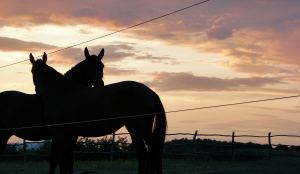
Learning to ride horses later in life, I have always been an anxious rider, but somehow managed to persevere—until I began having panic attacks while riding. After I was diagnosed with a clinical problem–Post Traumatic Stress Disorder–and was told by a psychiatrist to stop riding, in desperation I turned to mindfulness for help. I had tried other talk therapy, read endless books on sports psychology, and even flirted with hypnosis–all to no avail.
Now, riding with an anxiety disorder is not only challenging but downright dangerous, pairing a flight animal with a human whose fight or flight response is on constant overdrive. A horse, of course, mirrors the rider’s emotional state–terrified rider in, panicked horse out.
Because of the mind/body dissociation that helped me survive childhood abuse, I had a difficult time feeling my body on a horse. But with work, I began to realize that the fear I felt when riding was the
same feeling of being trapped and in peril I had felt as a traumatized child. Ironically, I felt like a prey animal: Now I knew why I had always identified so strongly with my horses.
One of my major challenges with riding was to stay in the present. Having had more than my share of falls, I was convinced that it wasn’t a matter of if, but when my horses would misbehave. I obsessed about what they might spook or shy at around the next corner, and remembered all the places they had run away with or dumped me in the past–all of which distracted me from what they were actually doing now, even if they happened to be behaving. Once I began to breathe, I could actually feel what was happening without all the emotional baggage, projection and self-torture. Could I really expect my horse’s attention to be on me, if mine was not really on him? And since horses live in the moment, this is where they can be ridden most effectively.
Using a combination of therapy, yoga and mindfulness meditation, I turned my riding into a practice where the goal was not perfection, but feeling my body and the horse’s. With my husband’s support,
doing what amounted to exposure therapy–a physically and emotionally painful process–I learned to accept the anxiety and even ride with it.
With the help of my mindfulness and meditation practices both on and off the horse, I came to understand that my anxiety followed a definite pattern. First I would feel tense and stop breathing, then came stress, then feelings of panic if the first two went unaddressed. So I had an early-warning system that could recognize the first sign of trouble before it became full-blown terror.
Having these skills has become especially important in the past year when one of my horses lost an eye and suddenly saw the world much differently (having lost half of his normal 320-degree field of vision). I needed to put his insecurities first and communicate reassurance and clear direction with my body language–and I could. It was the ultimate test of mindfulness.
