

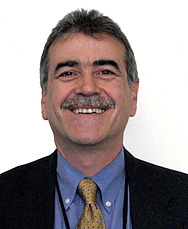
Editor’s note: This commentary is by Armando Vilaseca, the Vermont commissioner of the Department of Education.
Education spending is a perennial hot potato in Vermont. But a recent study proves that some of the best things our schools can provide children don’t cost a dime.
Recently the department released this study, “Roots of Success: Effective Practices in Vermont Schools,” which examined what it takes for schools—and therefore students, particularly low-income students,—to succeed. The report includes large-scale surveying and intensive site visits, combined with assessment and demographic data of Vermont schools that have bucked the trend regarding outcomes for low-income students.
The study demonstrates clearly that the attitudes and expectations educators and administrators have for all of their students have a significant impact on student achievement.
While a third of Vermont ’s students come from low-income households, these schools in some of the poorest parts of the state prove that demographics are not destiny. With leaders taking responsibility for every child’s success, and with educators not allowing a single student to be written off, stigmatized or ignored, regardless of his or her home life, students in the schools studied exceeded expectations.
This research proves that all students, given the right learning environment, can excel. We must no longer accept that some children, particularly those from low-income backgrounds, cannot succeed in school. With conviction and passion, the schools and staff profiled in this report implore us to abandon that antiquated assumption.
While schools across Vermont can tout success with the majority of their students, I want to ensure that this does not translate into attitudes that ignore the silent minority of students who need to be held to the same standard as their peers. The three schools studied in-depth in this report come from towns with some of the highest unemployment rates in the country. These schools do not have a magic bullet or deep pockets that make these achievements happen. The administrators and educators and communities of these schools made these changes because they held themselves responsible for each and every student who walks through their door. They do the few things that really matter, such as supporting each student, each other and families, really well. All our schools should do the same.
None of the findings are new or groundbreaking. In fact, they support the large body of national research that already exists on effective schools. Helping all students achieve at high levels, especially those who struggle, requires hard work and dedication on multiple fronts and a systems orientation. These schools prove that it can and does work.
Expectations and attitudes don’t cost money, but making assumptions about students is costly to their future and to the future of our state. Collectively, we must harness the power of these findings to improve outcomes for all Vermont students. Our charge now is to implement successful systems, like the ones profiled in this report, in each of our schools. If we do so, we have the potential to narrow long-standing, stubborn achievement gaps and improve outcomes for all students. As one principal said, “We’ve got the information. What we need is the will.”
Armando Vilaseca is the Vermont Commissioner of Education.
