


ODANAK, Quebec — Jacques Watso took the turns fast as he drove through the narrow streets of Odanak, a First Nations reserve in Quebec his family has called home for generations. As music belted from the radio, he leaned out the window to point out houses where his friends and his sister and her friends live: “This is Caroline, this is Eddie … there’s Kim…”
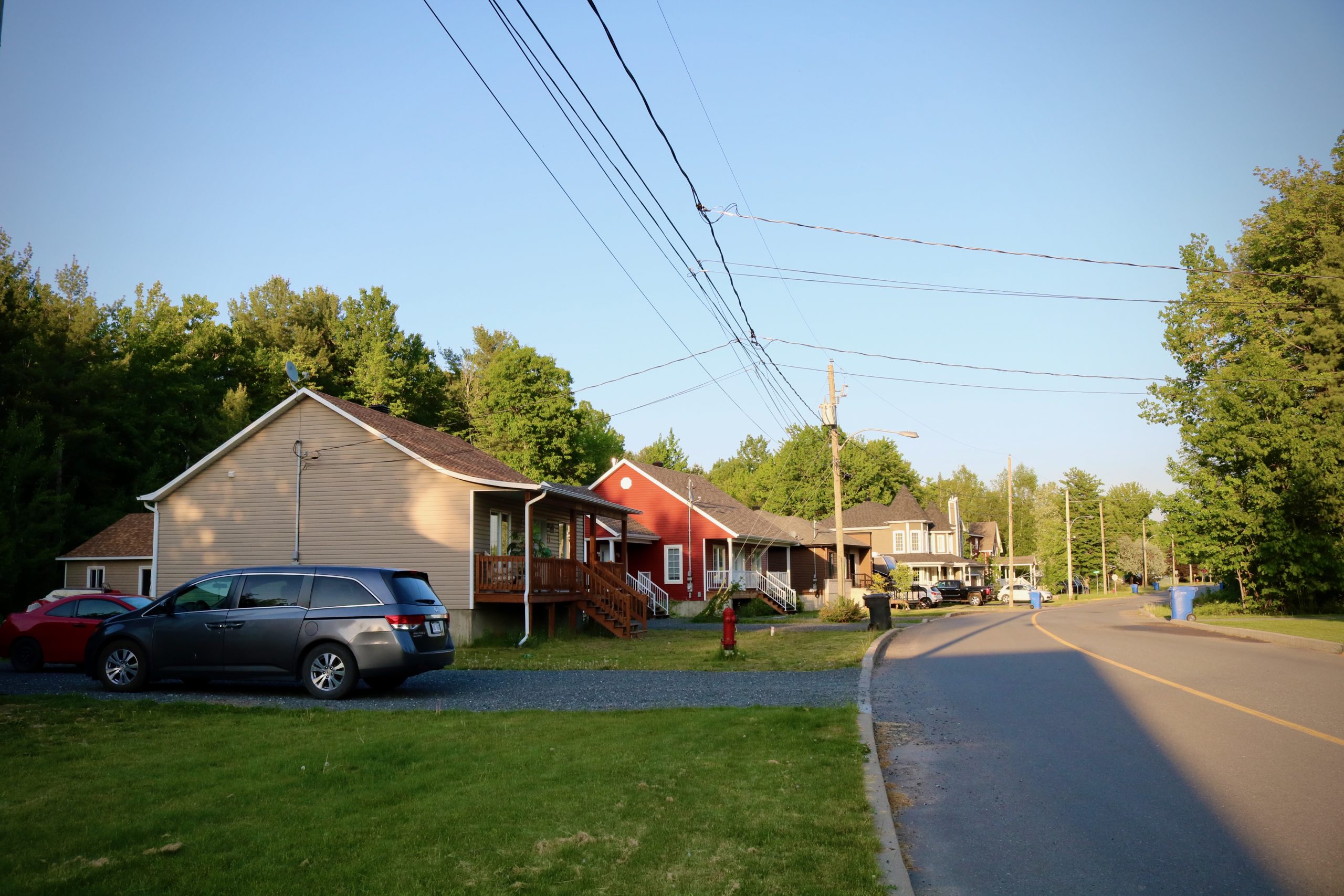
Home to about 350 Abenaki band members, Odanak is perched on the banks of the St. Francis River, with modest houses fanning out around a church and a village green. All over the community, there are subtle indications — such as the stop signs, which read in French, English and Abenaki — that this is an Indigenous reservation.
Watso pulled up to the Musée des Abénakis, where the First Nation has chronicled its history, and walked over to a small plaque on a rock that bore carvings of two animals, each representing a different historic tribal clan. Watso held up a necklace he wore with a pendant embroidered with a bear paw — for his family’s clan.
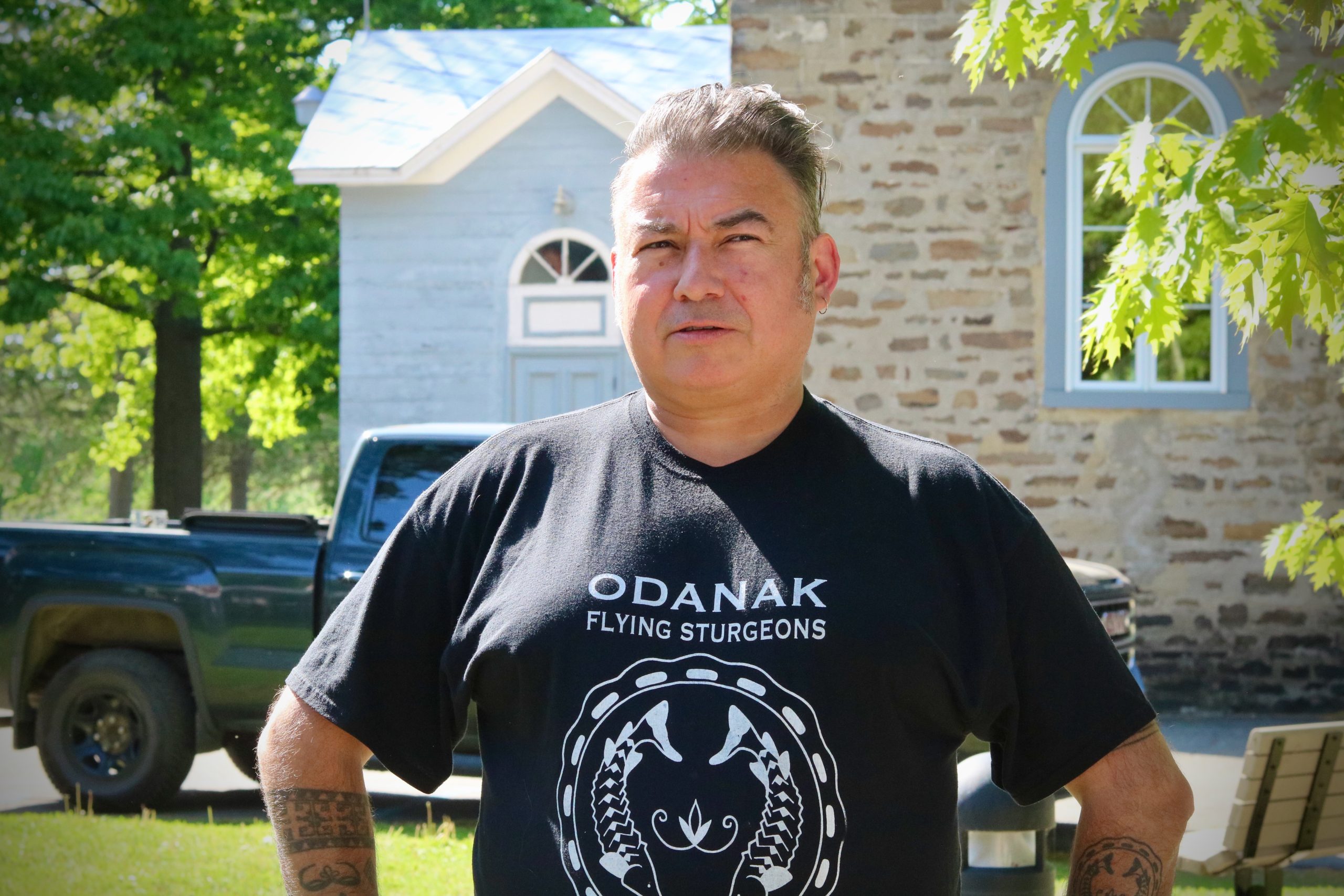
As a tribal councilor, Watso has his hands full on the reservation, which is about an hour and a half north of Montreal. But in recent years, he and other Odanak First Nation leaders have turned their attention south, across the U.S.-Canada border, and waged an increasingly pitched battle over identity with four groups recognized as Abenaki by the state of Vermont.
Those Vermont groups — the Elnu Abenaki, Nulhegan Abenaki, Koasek Band of the Koas Abenaki Nation and the Abenaki Nation at Missisquoi — share culture and, at least recent, history with Odanak First Nation. But Watso and other Odanak leaders assert that many members of the Vermont groups are not Indigenous and, instead, are appropriating their identity.
Research from scholars on Indigenous communities in New England and Canada — as well as reports from the Vermont and U.S. governments — have concluded that there is little evidence to support the existence of Abenaki tribes in Vermont with ties to historic groups.
“It’s a false narrative,” Watso said, characterizing the history of the Vermont groups. “But you teach that to your kids, and your grandkids, and then they believe the story.”
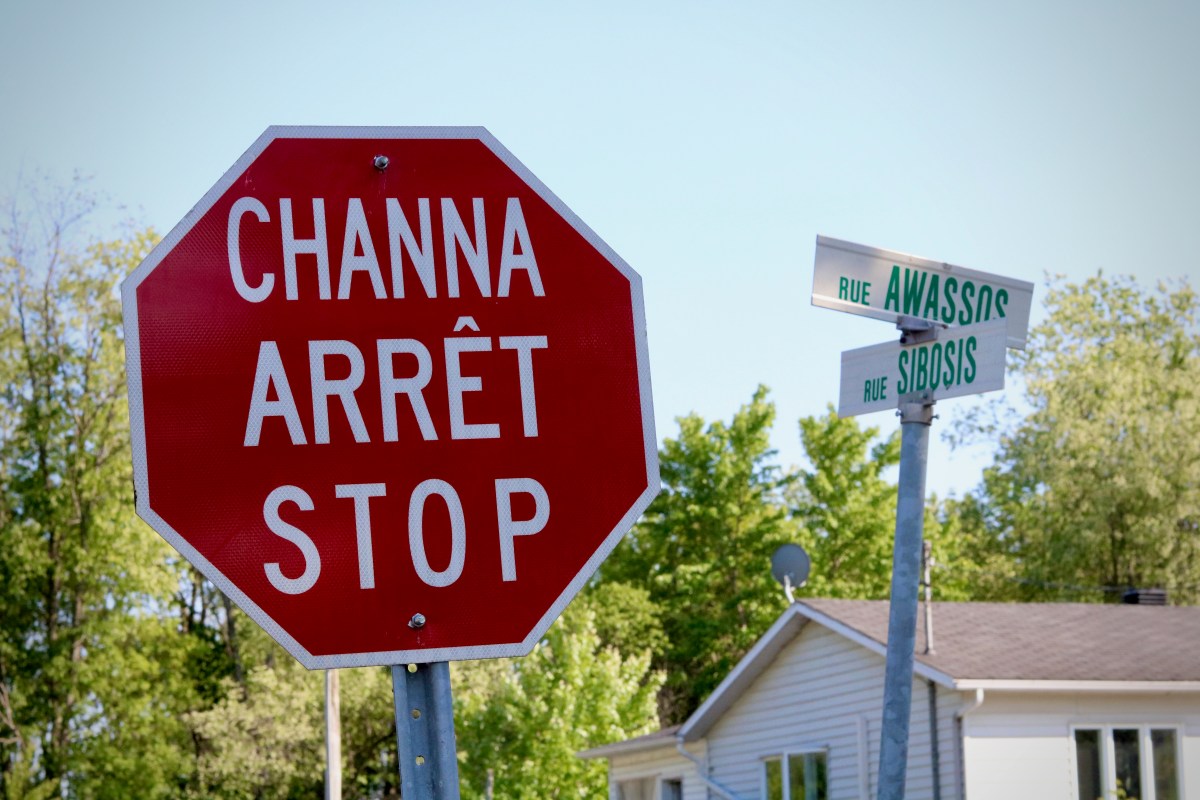
As Watso and others have made their case ever more forcefully, it’s raised questions in Vermont about the definition of Indigenous identity, complicated by an international border crafted by colonial powers. Odanak leaders have asserted that Indigenous identity is built on acceptance from other Indigenous groups — in this case, Abenaki — that the groups in Vermont don’t have.
Odanak representatives made this clear in no uncertain terms at a contentious presentation at the University of Vermont last year. And in June, the First Nation’s leaders followed up with a letter to three dozen housing, environmental and conservation groups across Vermont urging them to stop working with the four state-recognized tribes. Instead, they wrote, these organizations should work only with Odanak band members.
“We are the sole guardians of Abenaki citizenship,” the tribal leaders wrote. “They are not Indigenous.”
Leaders of the state-recognized tribes in Vermont have scrambled over the past two years to, as they tell it, defend their culture. In letters to the media and at press events, they have assailed Odanak First Nation’s views as anti-Indigenous.

These Vermont leaders have formed an “Abenaki Alliance” and advanced unproven theories about Odanak First Nation’s motivations, asserting that questions about their own legitimacy have essentially been moot since the state formally recognized them more than a decade ago.
“We are who we say we are,” said Rich Holschuh, an Elnu band member who lives in Brattleboro and chairs the Vermont Commission on Native American Affairs, the state panel tasked with supporting the four groups. “I don’t know how else to put it.”
‘Serious questions’
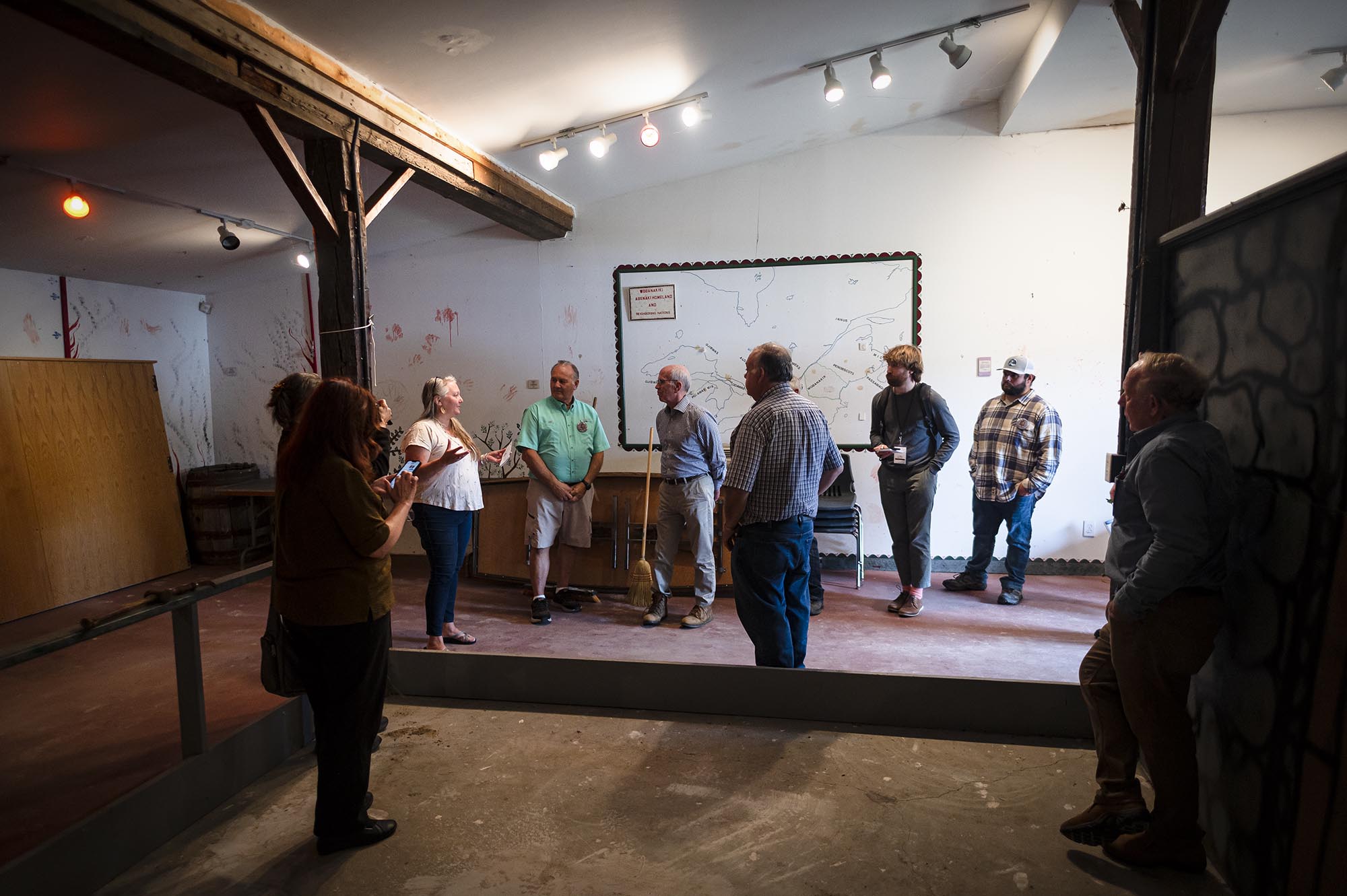
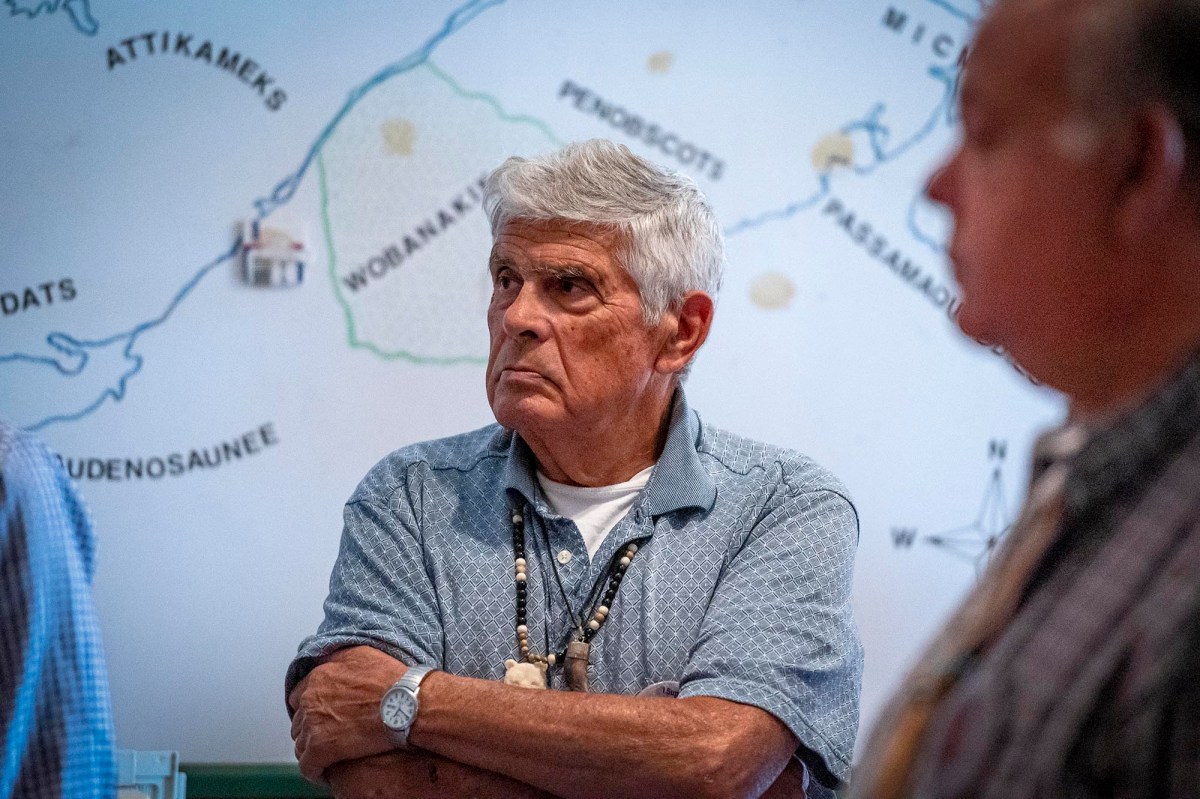
Abenaki people have inhabited modern-day New England and Canada for thousands of years. A map at the Musée des Abénakis shows the nation’s “Ndakinna,” or homeland, stretching from the St. Lawrence River in the north to what’s now Massachusetts in the south, and the Lake Champlain valley in the west to the Atlantic Ocean in the east.
By the 18th century, though, wars between England and France — and the decimation that their colonizing societies wreaked on Indigenous nations — forced many Abenaki people to flee north, from modern-day New England to modern-day Quebec.

The current cross-border dispute comes down to who can claim legitimate descendency from these original Indigenous peoples, who were left largely without a homeland.
According to a recently published paper by Darryl Leroux, a French Canadian scholar of race and identity, many Abenaki people settled along the St. Francis River at the site of a Jesuit mission — the village of Odanak — which became “the center of Abenaki cultural and political life.”
Leroux writes in the July paper that, in the early 1700s, a “significant” Abenaki village was created in modern-day Swanton that had close ties to the Abenaki community at Odanak. But it is “widely acknowledged,” Leroux continues, that its residents moved north to Odanak in the decades following the American Revolution.
Daniel Nolett, executive director of the Odanak First Nation’s tribal government, noted that some Abenaki families with ties to Odanak continued to live in U.S. communities into the 19th and 20th centuries — and still live there today — including around Albany, New York and in the Adirondacks and parts of New Hampshire.
Today, several Indigenous nations that allied with Odanak First Nation and other Abenaki people during European colonial wars are recognized as sovereign nations by the U.S. federal government. Those include the Penobscot, Passamaquoddy, Mi’kmaq and Maliseet nations, which are based in present-day Maine.
Odanak First Nation has federal-level Indigenous recognition in Canada, as does a nearby Abenaki nation — Wôlinak — that is considered to be its sister community. This recognition allows the nations to access greater levels of federal funding and resources, as well as, critically, the ability to claim pieces of land as sovereign territory.
No state-recognized band in Vermont had any organized government until the 1970s, when Homer St. Francis of Swanton organized a tribal council at Missisquoi, according to Fred Wiseman, a Missisquoi citizen and longtime researcher of Abenaki culture.
Other families in Vermont that identified as Indigenous saw what was happening in Franklin County, and some traveled north to participate in cultural events there, Wiseman said. When others saw that Missisquoi families had “come out of the closet” as Abenaki, he said, it encouraged them to do the same in other parts of the state.
About a decade later, the Missisquoi group began to pursue formal federal government recognition, which would grant the group access to additional resources and funding.

About 570 federally recognized tribal nations exist across the country, according to the U.S. Department of the Interior, including about a dozen tribes in New England states. Federally recognized nations have a government-to-government relationship with the U.S. and provide services to their citizens, such as law enforcement and education.
Eleven states have also recognized more than 60 Indigenous tribes using their own criteria, which vary from state to state, according to the National Conference of State Legislatures. Some groups have both state- and federal-level recognition. The process is disparaged by some federally recognized tribes. Oklahoma, the state with the largest proportion of the U.S.’s Indigenous population, has barred state recognition due to opposition from local tribal governments, according to Leroux.
In Vermont, the state Commission on Native American Affairs vets applications for state recognition before issuing a recommendation to the Legislature on whether or not a group should be recognized as an Indigenous tribe. The nine-member panel is tasked with protecting the heritage of Native Americans in Vermont and advocating for changes to state laws and policies that would benefit members of Native American tribes.
Commissioners are appointed by the governor, with priority given to applicants who are members of the four state-recognized tribes.
To be recognized, a group has to show that “a substantial number of the applicant's members are related to each other by kinship and trace their ancestry to a kinship group through genealogy or other methods,” according to standards adopted in 2010.
That’s a different — and less stringent — standard than the federal government’s recognition requirements, which provide that, among other stipulations, an applicant must have been identified as Native American “on a substantially continuous basis since 1900.”
The Abenaki Nation at Missisquoi — which has more than 3,500 enrolled members today and is based in Swanton — obtained state recognition from Gov. Thomas Salmon in 1976, but Salmon’s successor, Gov. Richard Snelling, promptly rescinded it.
The Missisquoi went on to apply for federal recognition in the 1980s. In 2007, the U.S. Bureau of Indian Affairs, which is tasked with adjudicating those applications, denied the request in almost unequivocal terms. (It is not unusual for the government to take years, or even decades, to review an application for recognition, according to experts).
The government found that of Missisquoi’s 1,171 members at the time, just eight — less than 1% — could show descent from an Abenaki ancestor, and those eight members were not associated with the others before the 1990s. There was no available proof, the bureau wrote, that any other member descended from any “historical Indian tribe.”
“Instead, the available evidence indicates that the petitioner is a collection of individuals of claimed but mostly undemonstrated Indian ancestry with little or no social or historical connection with each other before the early 1970’s,” the bureau wrote in its report.
Around the same time, the Vermont Attorney General’s Office also studied Missisquoi’s application for federal recognition. It concluded in its own report that the group could not be federally recognized, having found “serious questions about the existence of a tribe of Abenakis in Vermont who are a continuation of the historic Abenakis.”
The lack of historical record for any such group from the 1790s to the 1970s, the office wrote, “was so complete that historians, anthropologists and census takers were unable to locate it.”
‘The right thing to do’
Several years later, however, Vermont officials returned to the matter. And in April 2011, then-Gov. Peter Shumlin signed legislation granting state recognition to the Nulhegan and Elnu Abenaki groups. He did the same for the Missisquoi and Koasek groups the following year.
The tribal government that oversees Odanak and Wôlinak has sharply criticized the state process leading to that decision, and it has urged Vermont lawmakers to reconsider recognition of the four groups as recently as last month, when it issued a press release to that effect.
“When their (federal) claim was rejected, we thought that they were done,” Nolett, the Odanak First Nation executive director, said in a late May interview at his office in the tribal headquarters, a bright and spacious room overlooking the Rue Sibosis below. Watso, sitting nearby, nodded in agreement.

Over several hours that afternoon, Nolett took calls on all sorts of topics — including one about a young boy who had just failed a shooting test and was seeking reassurance that he could take it again soon. When talk turned to Vermont’s four state-recognized tribes, both men became animated, leaning forward and gesturing with their hands.
Nolett and other Odanak First Nation leaders take issue with how the state permitted factors other than genealogy to be considered, saying that this allowed groups with many members who are not actually Indigenous to be recognized as such. (Both Odanak and Wôlinak require genealogy to be submitted for band membership.)
Don Stevens, chief of the Nulhegan Abenaki, disputes that argument. In an interview, he asserted that he and other band members in Vermont submitted genealogical records to the state as part of the recognition process. But, he said, that information was kept confidential from the public in order to protect people’s privacy, and to protect members of the groups that were applying for recognition from “personal attacks.”
Attacks on the state recognition process came from a small but vocal group of critics who were not from Vermont, Stevens said. He and other leaders have also said that the criticism comes not from ordinary Odanak First Nation citizens, but from politicians.
Rep. Tom Stevens, D-Waterbury, served on a Vermont House committee that took testimony on the applications for state recognition in the early 2010s. He said he thought it was important, from a privacy perspective, to restrict access to people’s family records.
Moreover, Stevens said it was not lawmakers’ goal to prove, or disprove, the Indigenous identities of members of the groups that were applying for state recognition. He said lawmakers relied on the groups that were applying to determine who was on their band lists. Rep. Stevens said he does not think the state should have done anything differently.
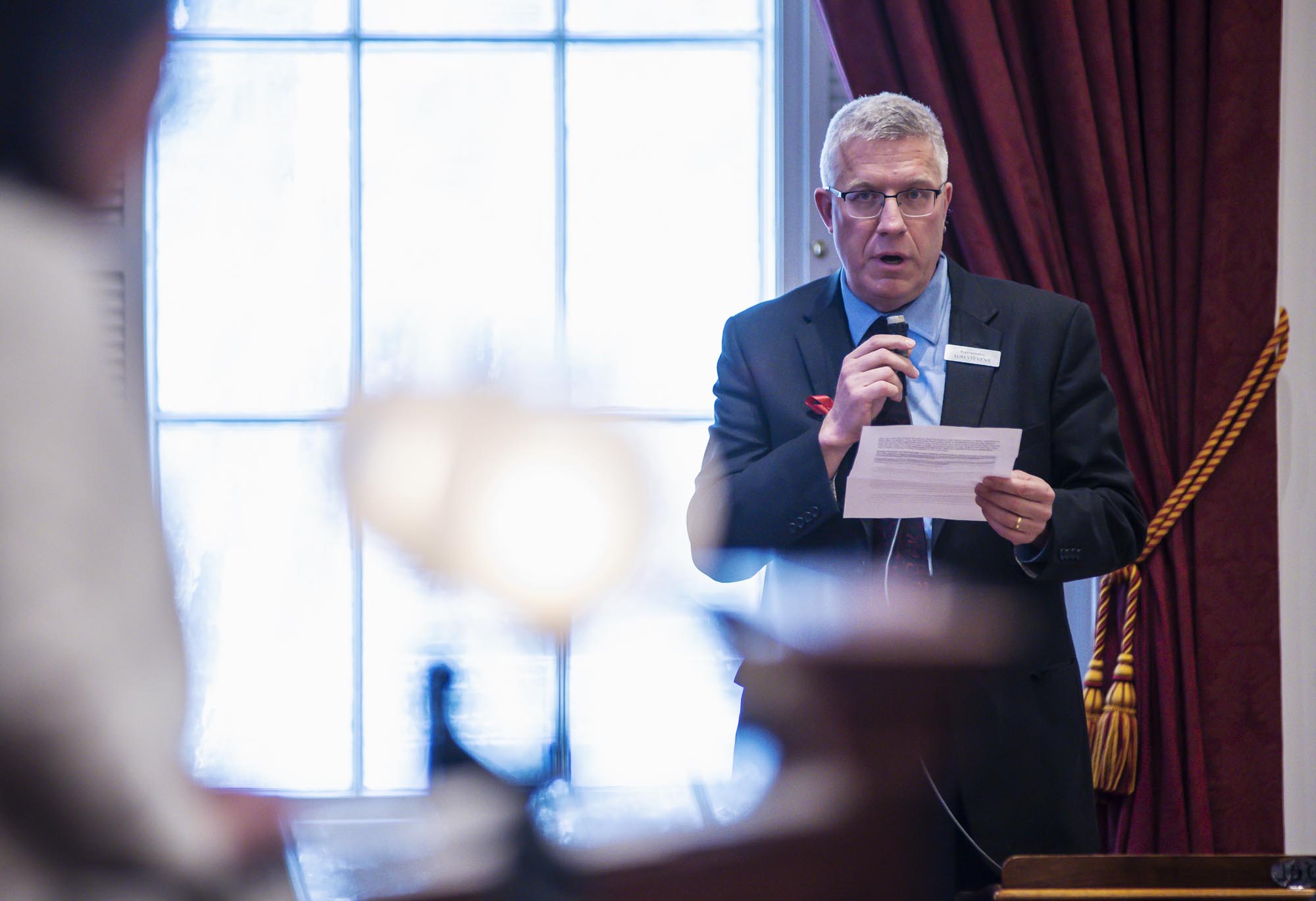
Among the members of the tribes that were applying for state recognition, he said, “there is a mixture of blood,” referring to both those who are Indigenous and those who are not. Lawmakers knew this, he said — “but there’s a mixture of blood for everybody.”
“We kept ourselves at arm’s length from determining, say ‘Rich is an Indian or not,’” Rep. Stevens told colleagues during a House committee hearing earlier this year, referring to Holschuh. “From a governmental perspective, that is a terrible place to be.”
Former state Sen. Vince Illuzzi, R-Essex/Orleans, also helped manage the recognition process. Illuzzi said he thought lawmakers’ best move was to trust the testimony they received, including from the members of the groups that were applying. He said he “saw no downside to state recognition — zero,” adding that it seemed like “the right thing to do.”
“Like anything else, the Legislature’s like a jury. Somebody comes in and makes their case and you choose to believe them or not,” said Illuzzi, who has also served as Essex County state’s attorney for 25 years. “And you know, we chose to believe them.”

But Odanak First Nation leaders contend that lawmakers didn’t hear from all sides. Watso said much of his distrust for Vermont’s state recognition process stems from the fact that he and some other Odanak members were rebuffed when they asked to testify before Vermont lawmakers. He recalled being asked to leave the room during one legislative hearing at the Vermont Statehouse.
Lawmakers only took testimony from Vermont residents, according to Rep. Stevens. He acknowledged that the question of who could testify was thorny, especially given that Abenaki citizens live outside of Vermont. But he said that lawmakers had to draw the line somewhere and felt that they were still able to consider all perspectives.
Watso has a different view: “They kept us real Abenakis from testifying,” he said.
Several Vermonters associated with Odanak did testify, according to Watso and Illuzzi. Illuzzi also noted that anyone was allowed to submit written testimony — which some people associated with Odanak First Nation said that they did — though Watso said he and others did not think that was as effective as testifying in person.
Christopher Roy, a professor at Temple University who hails from Franklin County and, for a period of his life, identified as a member of the Missisquoi group, said he sees a conflict of interest in the state recognition process because members of the commission tasked with vetting applicants for state recognition were also members of the groups applying to be recognized. Roy renounced that Indigenous identity decades ago, he wrote in 2012, after “disproving one family story of aboriginal ancestry and learning enough about Abenaki history to no longer consider the other such story credible.”
In an August interview with New Hampshire Public Radio, Leroux echoed this concern.
“Really what has happened is the state of Vermont has set up a situation where members of these groups can pick each other to be on the commission. And of course, they have decided that their own tribes are Native American,” Leroux told NHPR.
(The commission this year came under fire from within, with one member claiming that other members had fraudulently claimed to be Indigenous, and resigning in protest.)
While state legislators refrained from probing the Abenaki ancestry of individual Vermonters, Holschuh, the Native American Affairs Commission’s chair, openly discussed his own during an interview in June.
Sitting on a balcony in Brattleboro overlooking the Connecticut River, he noted that, just below the surface nearby, archaeologists have found petroglyphs that are associated with Abenaki settlement in the area dating back several thousand years.

Holschuh, who’s been a leading voice educating people about the carvings, told a reporter he has “kinship relations” with other members of the Elnu state-recognized tribe. That’s allowed him to be accepted into the community, he said, and head up an Abenaki cultural education nonprofit associated with the tribe called Atowi.
He said he has ancestral ties to the Mi’kmaq nation — which today is based in Presque Isle, Maine. But he has found no direct ties to the Vermont groups.
“I do not have any Abenaki blood,” he said.
‘We believed their stories’
On a sunny morning in mid-May, Holschuh and a half-dozen other members of Vermont’s state-recognized tribes held a press conference at a waterfront office building in downtown Burlington.
“Vermont is Indian County,” an invitation read. “Yet little more than a decade after the four resident Abenaki tribes achieved political recognition, there remains a measure of confusion about the unique and elegant Vermont Abenaki cultural-historic experience.”
Over about an hour, tribal members stood up and recounted memories and stories that, they said, showed they have taken part in Indigenous traditions. Chris LaFrance, a Missisquoi citizen, showed photos of his family and the Abenaki ash baskets they have long made. Another Missisquoi citizen, Steve Wheeler, wrote in remarks read at the presentation that he and his family have long used Abenaki gardening techniques.
Others recalled being told by their parents and grandparents that they needed to “hide” their family’s Abenaki identity, out of fear they would be subject to racism and discrimination. Some linked this concern to a fear of being considered for sterilization during a state-sanctioned eugenics survey in Vermont in the 1920s and 1930s.
“In my house, we grew up knowing, from my dad, that we were Abenaki. And he knew from his dad,” LaFrance said. “But he said, ‘Don’t talk about it outside of the house.’”
Band members also took turns holding up heirlooms — including ash baskets, knives and articles of beaded clothing — and posing so that reporters could snap pictures.

These stories are, themselves, proof, Holschuh said later, as the press event was winding down. Without their own sovereign land — something that could come with federal recognition — the Vermont groups instead draw an identity from shared, cultural memory, he said.
(Holschuh was adamant that the state-recognized tribes are no longer interested in pursuing federal recognition, citing both the financial and time investment required.)
According to Wiseman, the Missisquoi scholar of Abenaki history, prior to the 1970s and ’80s, many people in Vermont — especially in the Swanton area — were likely raised with Indigenous cultural practices, even if their parents never said anything about it.
“These families were actually ‘operationally’ Native, a lot more than they were ‘identity’ Native,” he said, speaking at his home in Swanton. “It was just ingrained in there.”
Nolett, in an interview, praised Wiseman’s work. The latter’s name is even credited in the short movie shown to visitors at the Musée des Abénakis in Odanak. But Nolett also said he thinks it’s “a red flag” when people “discover” an Abenaki identity later in life, as opposed to those, like himself, who are raised in an openly Indigenous community.

Wiseman and other members of what are now Vermont’s state-recognized tribes have traveled up to Odanak in the past. For decades starting in the 1970s — around the time Missisquoi organized its tribal government — members of both groups went back and forth across the U.S.-Canada border, exchanging stories and cultural practices.
On its website, the Elnu band cites an example: the Abenaki Round Dance, for which Odanak First Nation leaders helped Vermonters “fill in the gaps” in the 1990s.
Odanak and Wôlinak First Nation leaders issued two resolutions in the 1970s stating that they recognized the Missisquoi band as a legitimate Abeanki tribe. In 1976, then-Odanak First Nation Chief Walter Watso — who is related to Jacques Watso — was on hand as Gov. Salmon signed his short-lived recognition of Missisquoi.
“At the time, we believed their stories. We’re not denying that,” said Nolett, who has traveled to Swanton many times and knew St. Francis personally. He said he attended St. Francis’ funeral and an early Abenaki powwow that the Missisquoi group hosted.
But certain discrepancies — Nolett recalled seeing at least one ritual at the powwow that he did not recognize, for instance — raised suspicions among leaders from Odanak First Nation. Nolett said the First Nation’s leaders started “asking more questions” about who the Vermont groups’ ancestors were and did not get satisfying answers.
“We started getting labeled as racist for asking,” Watso recalled. “They’d deflect and say, ‘Well, you're awakening my trauma.’ I was like, ‘No — keep that for the white folks. You're talking amongst other Natives, so why don’t you tell me where you’re from?’”
Watso said he feels particularly betrayed by this claim of trauma because he and his ancestors in openly Abenaki communities have experienced racist policies imposed by the Canadian government — such as limits on where they could travel in public — but members of the state-recognized tribes have faced no equivalent in Vermont.
By 2003, Odanak First Nation leaders said, their tribal government had reversed course and published a resolution saying they did not recognize any groups in Vermont as Abenaki. The resolution also called on the Vermont groups to send Odanak First Nation leaders genealogical evidence of their Indigenous ancestry. But members of the Vermont groups have refused to provide sufficient evidence of this, Nolett said.
“We want to meet, and we want proof,” the tribal director said.
Stevens contended that the state-recognized tribes “already showed that we are who we say we are” through the Legislature’s recognition process. He went so far as to suggest that he, or other leaders of Vermont’s state-recognized tribes, could be mistreated or arrested by Odanak’s tribal police if they went up to visit and talk more explicitly about their ancestry, as Odanak First Nation leaders have asked them to.
“That may sound like a conspiracy theory,” he said, trailing off. “I don’t know.”

A New Hampshire Public Radio report earlier this year said the outlet commissioned a review of Stevens’ genealogy and found no evidence he is Indigenous. Stevens did not return requests for an interview for that story but, according to the outlet, furnished documents he said “come from the Vermont State Archives” and “describe some of his family members from the 19th century as presumed to be ‘Indian.’ He showed the same documents to VTDigger during an interview in June at his home in Shelburne.
Asked about the NHPR story, Stevens said the news outlet cherry-picked scholars to prove a point, and he maintained that he is Abenaki. Asked which scholars a reporter should talk to instead, Stevens wavered, saying, “I don’t know. I haven’t sought them out.”
Questions about his and other Vermonters’ identities are a racist double standard, he told VTDigger. “Nobody's going to walk up to an African American person and say, ‘Let me see that you're from Africa,’” he said. “We're being put under a microscope for things that other races don't have to be put under.”
‘A widely-embraced myth’
Scholars of New England and Canada’s Indigenous histories have also questioned the legitimacy of the Vermont groups’ stated ancestry. Leroux, the French Canadian researcher, asserts in his recently published paper that most members of the state-recognized tribes actually have white, French-Canadian ancestry.
“In the case of Vermont’s state recognized ‘Abenaki tribes,’ a few thousand white Americans with no known Abenaki ancestry have captivated the state with their peculiar brand of pan-Indian performance,” Leroux wrote in the peer-reviewed paper.
Leroux also notes that Odanak First Nation has shown a willingness before to extend tribal membership to others who are not part of the Vermont groups but who have demonstrated Abenaki heritage through genealogical evidence.

Leaders of Vermont’s state-recognized bands have assailed Leroux’s work and dispute its accuracy. They have also maintained that many of the families that make up these four groups hid their Indigenous identities during the 20th century in an effort to protect themselves from being targeted by a state-sanctioned eugenics program.
State records show that 256 people were sterilized in Vermont in the 1920s and ‘30s, according to Richard Witting, a UVM graduate student researching eugenics in the state. At the time, UVM zoology professor Henry Perkins and several assistants surveyed thousands more across in an effort to identify those with supposedly socially undesirable traits, including disabilities and mental illnesses.
But Witting said in an interview that, contrary to a widely accepted narrative in Vermont — one that has been presented as fact by news outlets including VTDigger — neither he nor any reputable scholar he knows of has found evidence that Abenaki people, specifically, were identified for sterilization during the eugenics survey.
Both Witting and the 2002 report by the Attorney General’s Office came to a similar conclusion: that it’s more likely that a person was listed in the survey because they were poor, not because they were Abenaki. Witting said Vermonters may have seen the state’s French-Canadian immigrant population at the time, many members of which had working-class jobs that brought in little income, as inferior.
“The survey may have included some persons with Indian descent, and especially two families that intertwine with others of Indian descent. However, there is no documentation that these people were Abenaki,” the attorney general’s report states.
Roy, the Temple professor and former member of the Missisquoi group, told VTDigger that there is evidence that Abenaki people openly traveled throughout Vermont around the time researchers were conducting the eugenics survey. Roy pointed to one family, for instance, camping in North Hero in the ’20s and ’30s.
“These Abenaki were no strangers to northwestern Vermont,” Roy said in an email.
Roy has collected newspaper clippings that described known Odanak families visiting and camping in the state to sell baskets and other arts and crafts they had made — including at least one member of Watso’s family.
Watso recalled this example in an interview, too. “If he were so scared of being sterilized, why would they have come down to Vermont?” he asked a reporter. He and Nolett said they could not recall ever hearing that their ancestors were concerned about being targeted for eugenics in Vermont.
Moreover, they said the narrative that Abenaki people “hid” their Indigenous heritage in the 20th century disregards — and disrespects — the thousands of registered Odanak and Wôlinak band members who lived openly as Abenaki at that time.
Research by David Massell, a professor of Canadian Studies at UVM who helped organize last year’s panel, also backs up the Odanak First Nation leaders’ claims.
“No reputable scholar has seen or shared any credible historical evidence to support the theory (now a widely-embraced myth) that Vermont's eugenics campaign had any interest in, or in any way sought to target, the Abenaki,” Massell said in an email. “None.”
‘The other side of the story’
This academic research helped underpin a presentation at UVM held in April 2022, where the debate about Indigenous identity in Vermont reached a fever pitch.
Over nearly four hours, Watso, Nolett and other Odanak citizens shared historical accounts of their ancestors and — for the first time publicly on U.S. soil, in no uncertain terms — disavowed Vermont’s four state-recognized tribes. They said members of these groups — including Stevens, whom they called out by name — were “pretendians,” or people who inaccurately claim Indigenous ancestry.
Massell emceed the event at the school’s Dudley H. Davis Center and read remarks prepared by Roy, who was sitting onstage.
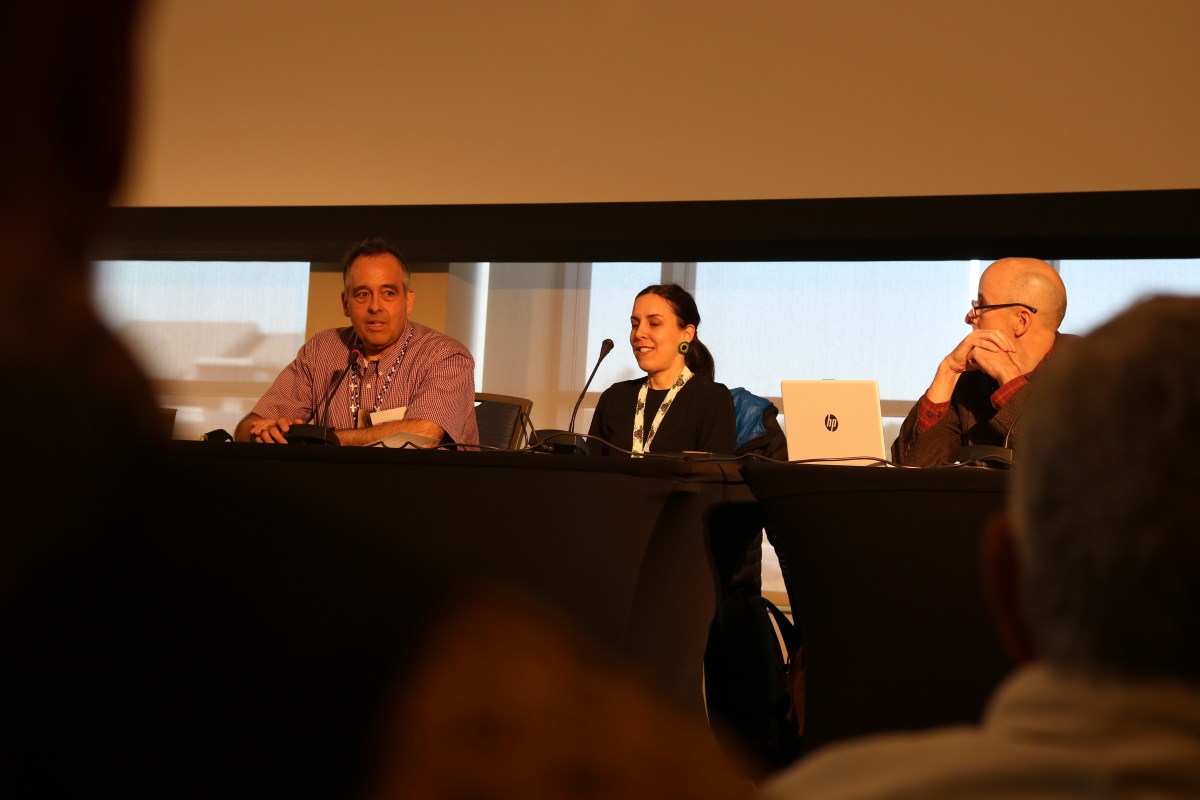
The speakers were in no shabby company: Several hundred people attended in-person with more tuning into a live stream online. Among those on campus for the event were Rodger Cuzner, the Canadian government’s Consul General in Boston, and Marie-Claude Francoeur, delegate to New England for Quebec’s provincial government.
Leaders of Odanak First Nation consider the event a major step toward correcting the record in Vermont. Nolett keeps a framed copy of the poster advertising the panel — “Au-delà des frontières,” his French version reads — prominently displayed on his large, wooden desk at the Odanak Abenaki government headquarters.
In Vermont, “the four tribes that went for state recognition are the only ones being listened to,” Watso said during the presentation, urging the audience instead to “listen to the other side of the story.”
But the panel faced backlash before it even started: Then-Missisquoi chief Richard Menard wrote a letter to Vermont legislators asking them to speak out against the event and branding its intentions problematic and anti-Indigenous. And in the following weeks, news outlets, including VTDigger, published a flurry of opinion pieces that both praised and condemned it.
Since then, news outlets in both Vermont and Canada have published stories examining Odanak First Nation’s arguments and the identities of the Vermont groups.
At a meeting of the state Native American Affairs Commission in February of this year, UVM provost Patricia Prelock “apologized for the harm” the panel caused, according to meeting minutes, and said that the school would “do better” in the future.
Two months later, another panel took place in the same room — addressing similar themes. It did not discuss any of Vermont’s state-recognized tribes, but was titled “Indigenous Sovereignty, Race-Shifting, and University Responsibility.” The subtext was clear.
Kim Tallbear, a citizen of the Sisseton-Wahpeton Oyate in South Dakota who spoke on the panel, said that people who claim false Indigenous identities — who race-shift — are “stealing actual Indigenous people's stories of trauma and disconnection.”
“They conflate their exaggerated and fabricated claims with the struggles of actual Native people,” said Tallbear, a professor at the University of Alberta, during the panel. “Self-indigenizers — in good colonizer fashion — denigrate our efforts as they seek to replace us as Indigenous upon the land.”
Beverly Little Thunder, an enrolled member of the Standing Rock Sioux Tribe, shared brief remarks at the outset of the UVM event. Little Thunder resigned from her seat on Vermont’s Commission on Native American Affairs earlier this year. She accused other members of sexism — and of being “pretendians.”
“The commission is staffed with, in my estimation, a whole room full of white men pretending to be Native,” the Huntington resident told WCAX after the event.
The impact of the two events continues to reverberate in the state.
On a crisp evening in early May, leaders of the four state-recognized tribes convened a meeting with a panel of UVM administrators at a church in Swanton. The purpose, according to a meeting handout: continuing attacks on the Abenaki community.
Stevens, Holschuh and others were joined by about two dozen residents who identified themselves as members of an Abenaki tribe. Many spoke up to share largely the same message with the UVM brass: that the panels caused their communities harm, and they would no longer feel safe having their children attend events or classes at the school.
Several people who identified themselves as Abenaki said they had attended the UVM panels and felt unsafe, with some recalling personal confrontations with people they alleged were associated with Odanak First Nation. Stacey Gould, a Mississquoi member, said one of these interactions left her young daughter “traumatized.”
Brenda Gagne, who runs a Mississquoi cultural enrichment program for youth in Swanton and Highgate, said she was upset that UVM — as an institution that played a role in eugenics — would allow two events questioning Indigenous heritage.

UVM administrators at the meeting apologized for how the panels made members of the state-recognized tribes feel but defended the university’s right to host them, saying that it was important to air different perspectives in order to foster academic freedom.
Gagne and others pushed back, accusing the university of allowing hate speech.
“If I was an Indigenous person from any other part of this country and saw what was happening at UVM, why would I want to come to UVM?” said parent Keiona Fulton.
Prelock promised to investigate the parents’ concerns with the panel, though it’s not clear specifically what steps the university has taken in the months since. A UVM spokesperson did not respond to a request for comment for this story.
“We need to reflect on, how can we make sure this doesn't happen again?" Prelock said at the early May meeting. "And how do we reaffirm to you that we recognize the (state-recognized tribes) and we want to operate from a place of good faith?”
Odanak First Nation leaders, meanwhile, said they would not be opposed to holding more presentations in Vermont, if that’s what it takes to make their voices heard.
“If there is a third one next year, we’re going to have triple the number of people from our community in attendance. I can tell you that,” Nolett said. “The more we talk about this issue, the more awareness we’re raising.”
‘It’s done a lot of damage’
Members of Odanak First Nation have drawn a distinction between the culture many members of Vermont’s state-recognized tribes practice and the culture of the Odanak and other tribes in the region — saying the former is, essentially, appropriated.
Speaking at last year’s UVM panel, Mali-Agat Obomsawin, an Odanak First Nation musician and community organizer, said she and others were bringing their message to U.S. soil out of necessity. Leaders of Odanak First Nation regularly hear that they have “bigger things to deal with,” Obomsawin said, and she agreed that “we do have bigger things to fight.”
“But these fake people who are stealing our identities are getting in the way of us addressing bigger issues, because of all of this confusion,” she said. “I want to make that really clear: Vermonters are misrepresenting us and what it means to be Abenaki.”
“When other people that aren't from the community that don't have cultural continuity claim to speak for us,” she added, “our information and our teachings are diluted and they're inaccurate.”
As examples of appropriation, Obomsawin pointed to members of the state-recognized tribes speaking the Abenaki language, hosting cultural education events and serving in organizations as Abenaki community representatives. VTDigger is among the outlets that have covered these happenings, quoting members of the Vermont groups as representatives of Abenaki people.
Several other members of Odanak and Wôlinak First Nations told VTDigger they’ve felt harm from seeing Vermonters adopt their culture.
Yves Landry, 70, lives on the reservation at Wôlinak, which is about half an hour up the St. Lawrence River from the reservation at Odanak. Landry was visiting Odanak for the day in late May and sat at the end of a long table in the tribal community center, eating a corn and barley soup that Watso — who also runs a catering business — had just made.
“It’s done a lot of damage,” Landry said. “For me, being Abenaki means a connection to the territory … and it means family.”

Standing nearby was Isaak Lachapelle-Gill, 23, who lives at Odanak. Lachapelle-Gill said he gets frustrated when he goes online to read about Abenaki history but sees maps and articles come up that include the state-recognized tribes in Vermont.
“I'm angry at them,” he said. “For some of them, it’s not their fault. They grew up in this world and thought that since their parents were ‘Abenaki,’ they would be raised in that culture. They didn’t know it was actually fake.”
For Lachapelle-Gill, being Indigenous means “the community accepting them, and holding them up as their own,” he said.
Part of the reason Odanak First Nation leaders have grown more vocal about their objections are recent changes to Vermont law that have granted members of the four state-recognized tribes some benefits other Vermonters don’t have.
Members of the state-recognized tribes get free hunting and fishing licenses and some property tax exemptions from the state. They also qualify for certain federal benefits, including the ability to label arts and crafts they make as “Indian produced.”
In Vermont, these benefits have been characterized by lawmakers and in the press as important progress toward mending a colonial-era government’s rule over land that originally belonged to Abenaki tribes. But Odanak First Nation leaders don’t see it that way, arguing if anyone should be getting those resources, it’s their band members.
Nolett said he has been motivated to reach Vermonters’ ears recently because Odanak First Nation leaders also are concerned about Vermont’s Truth and Reconciliation Commission as its work gets underway. The panel is tasked with collecting testimony on ways that state policies have historically harmed marginalized communities, including Indigenous people, and ultimately recommend how best to correct those wrongs.

Opponents of the legislation setting up the commission, which passed last year, argued that it would pave the way for Vermont to pay reparations to certain groups — even though the text of the law says nothing about reparations, specifically.
Nolett said he worries future Vermont taxpayers may have to foot the bill for reparations to groups that, in his view, do not have legitimate claims to a marginalized identity. Rick O’Bomsawin, the Odanak First Nation chief, said earlier this year that he wants to make sure any such Vermont reparations go “to the right people,” Vermont Public reported.
Meanwhile, Vermont’s state-recognized tribes continue to benefit from support at the local, state and federal levels. In early October, a Stowe woman donated 350 acres of land to a nonprofit, Abenaki Helping Abenaki, that is associated with the Nulhegan group.
Around the same time, U.S. Sen. Peter Welch, D-Vt., visited the Missisquoi group’s headquarters in Swanton to laud a $500,000 grant from the Northern Border Regional Commission to a nonprofit associated with the state-recognized tribe, called Maquam Bay of Missisquoi. The federal funding has been designated to renovate an adjacent building for new use as a community center and food shelf.
Speaking to a reporter after the event, Welch said he was aware of the questions that had been raised about the Abenaki identities of the groups in Vermont but that he did not want to comment on the issue. Then he turned around and walked away.

‘There’s no boundary, right?’
Back in Brattleboro, Holschuh stood up and started walking down a trail toward a mass of trees, forging a path that eventually led down the banks of the river. As he walked, he sketched out what he and other leaders of the state-recognized tribes in Vermont say they really think is the motivation behind Odanak First Nation: power and access to U.S. land.
“They are the aggressors here,” he said, speaking of Odanak. “It’s not Vermonters.”
Holschuh is one of three leaders — along with Stevens and Vera Longtoe Sheehan, a citizen of the Elnu state-recognized tribe — of the recently formed Abenaki Alliance, which has been advocating for the state-recognized tribes in recent months. The group has hired a public relations firm based in Charlotte, called Junapr, to help manage its communications and pitch stories to reporters about the four groups.

Through the public relations firm, the alliance provided a five-page document alleging that Odanak First Nation leaders could be leveraging a consulting agreement the First Nation has with Hydro-Quebec — a large public power company based in Montreal — to expand the First Nation’s influence in the U.S. as Hydro-Quebec acquires infrastructure along the Connecticut River, which forms Vermont’s border with New Hampshire.
A spokesperson for Hydro-Quebec did not provide answers to written questions from VTDigger about the Abenaki Alliance’s assertions.
Stevens said he had no proof for this claim that the First Nation and the power company were collaborating for that purpose but said he thought it was “very suspicious and raises a lot of interesting questions.” He urged a reporter to investigate it further.
Any effort by Odanak First Nation to assert its influence over Vermont, or infrastructure projects in the state, violates the state-recognized tribes’ authority, Stevens said. The Canadian group, he said, should “stay out” of the affairs of the Vermont groups.

According to Nolett, when historic Abenaki people migrated north, they moved the center of their culture up to Odanak, where it is today. But Odanak First Nation still claims all of the Ndakinna as its unceded territory, including the state of Vermont.
“We didn't leave the country per se, because in our traditional territory, there's no boundary, right?” Nolett continued. “It's the white people that created the boundary.”
He said Odanak First Nation is interested in making a claim to land on the U.S. side of the border but acknowledged any such claim would almost certainly be a longshot. Asked in an email about the Abenaki Alliance document on Hydro-Quebec, Nolett called it a “smoke screen,” as opposed to additional evidence of Indigenous ancestry.
Pitched discussions about “pretendianism” are fairly new to many people in the U.S., but they’ve long been a fixture of Canadian national politics, according to Kevin Bruyneel, a professor at Babson College and member of the Native American and Indigenous Studies Association. He said he wasn’t surprised, then, by the debate centering on Vermont.
“A lot of Indigenous communities and citizens and academics and political leaders are having a little more of an eye on who's really Native,” Bruyneel, who is Canadian, said in an interview. “Who's claiming this? Who's trying to get some sort of benefit from it, either in cultural capital, or in claims to benefits through the state or through fellowships?”
Bruyneel, who is not Indigenous, noted that there are generally two parts of the process by which Indigenous groups are recognized: recognition by a government and recognition by other Indigenous groups. “There is no ‘right’ way, no accepted way to do it,” he said, adding that one has to ask individual tribes and First Nations how they define themselves.
Several leaders of Vermont’s state-recognized tribes said they want Odanak First Nation to be willing to work together with the Vermont groups. Sheehan, of Elnu and the Abenaki Alliance, said that especially in the Abenaki arts community on both sides of the border, there continues to be good communication and cultural cross-pollination.

“There’s this political piece, and then there's this ordinary citizen piece,” Sheehan said in an interview, adding that the former “completely ignores all the love, all the family and all the friendships across the border.”
But Nolett pushed back on the notion that disagreement across the border was a bad thing, suggesting that Vermont’s leaders were really concerned about upending a status quo that has allowed them to serve in powerful advocacy roles with little scrutiny.
Asked about Stevens’ suggestion that Odanak First Nation stay on its side of the border, Nolett let out a deep sigh. He leaned forward in his chair at the Odanak tribal headquarters and raised his voice.
“If they were real Abenakis, they wouldn’t be talking like that,” he said.
Editor's note: Savannah Maher, a member of the Indigenous Journalists Association's board of directors, served as a contributing editor of this story.
