


A former top employee of Higher Ground, the South Burlington music venue and production company, has accused its owners of fostering a climate hostile to women and tolerating abusive behavior.
In an Instagram post in September and in interviews with VTDigger, former general manager Laura Keating made a series of allegations against the owners, including that they failed to address sexual harassment, sexual assault, and the verbal abuse of women and nonbinary employees.
VTDigger spoke with four other ex-employees who corroborated elements of Keating’s account.
Among the allegations that Keating made in her post, which went viral, was that one of the owners made jokes about rape and slavery and the other owner tolerated the jokes. Two other ex-employees said they witnessed one of the events or heard about it shortly thereafter.
“When it’s the top tier that’s making these inappropriate jokes, how can you change that behavior?” asked Susan Norton, a former box office worker at the club.
The ex-employees say the abuse they witnessed and experienced is emblematic of sexism across the music industry, but they said it was important to call it out close to home.
“Concert production has a boys’ club kind of mentality that really keeps women and nonbinary people on the fringes,” Keating said.
When she decided to settle down in Burlington in 2012, Keating had six years of experience touring with bands, including the Dresden Dolls and Amanda Palmer.
For three years, she said, she tried to get a job at Higher Ground. She said it was not until she volunteered for the Waking Windows festival in 2015 that she got noticed. She said she was first asked to work a couple of shows a month, then more shows for $10 an hour. It was not until 2017 that she was offered a full-time job as a production manager.
After a stint as production manager, Keating was promoted to general manager later that year.
“It was my dream job,” Keating said. “I really did love Higher Ground. I love what it represents to the community.”
Keating said she took being in charge very seriously.
“Becoming the leader of that was definitely a challenge. There are definitely a lot of folks who didn’t take me that seriously and that don’t take anyone who doesn’t look like them seriously,” Keating said. “In order to get a foot in the door, even, you have to be one of the boys. You have to be able to laugh at those jokes, like the jokes that one of the owners made.”
Higher Ground has two owners: Alex Crothers, a cofounder of the venue, and Alan Newman, who bought a stake in the company in 2016. Newman is a fixture in the Chittenden County business community, having helped found Magic Hat, Seventh Generation and Gardener’s Supply.
Neither Keating nor the other ex-employees who were interviewed were willing to publicly name the owners whose actions they had described. VTDigger, however, has been able to identify the actions of each owner based on interviews and a review of internal Higher Ground emails.
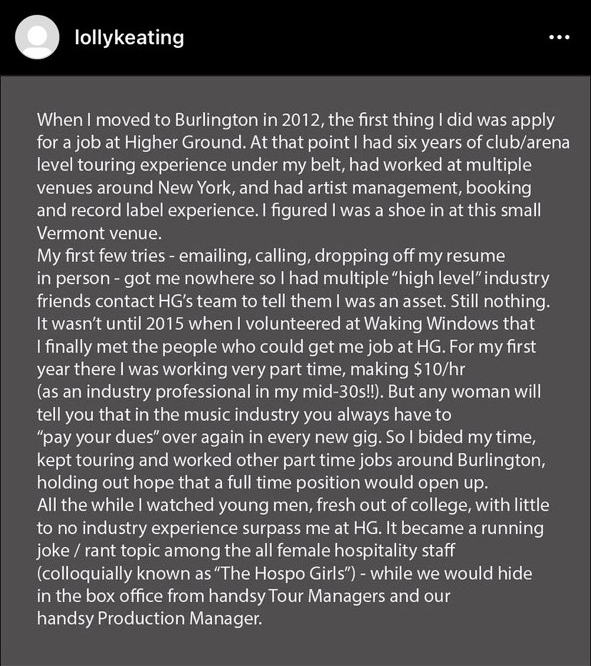
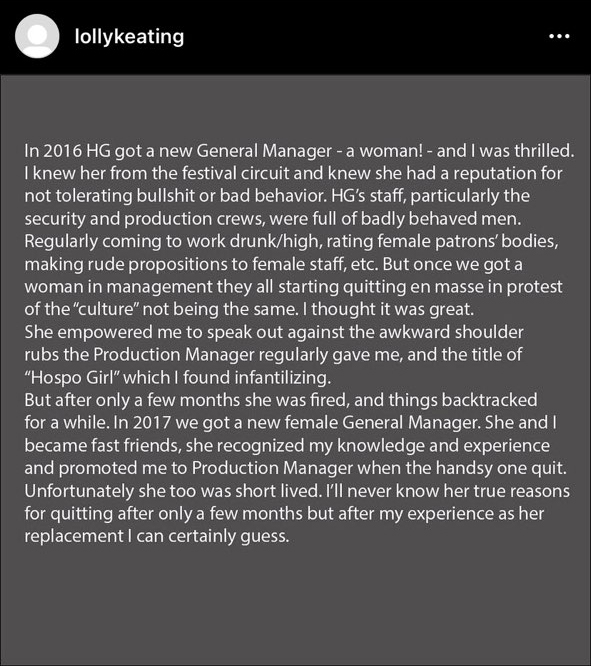


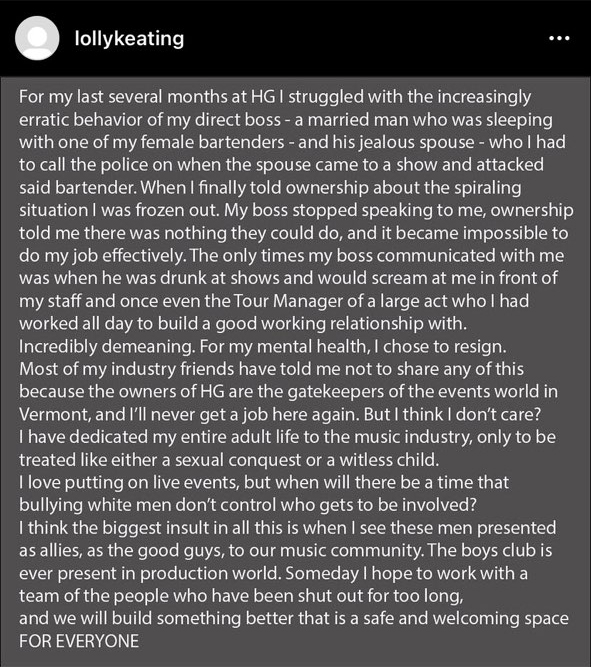
In her Instagram post last month, which has since been made private, Keating said that in her first week on the job as general manager, she attended a dinner with the owners of Higher Ground in Portland, Maine.
Keating told VTDigger one of the owners made a rape joke about an 8-year-old girl. VTDigger has identified that owner as Newman. Keating remembered that the conversation turned to Florida. She said the owner said something along the lines of if he got caught raping an 8-year-old, it would be worse punishment to be sent to Florida than to be sent to prison.
“I’d rather go to prison than Florida,” Keating remembered him saying.
As the men laughed, Keating, who had an 8-year-old daughter at the time, said she lost her appetite and did not remember much of the rest of the evening.
Another person at the dinner — who asked not to be identified out of fear of retribution — confirmed that the owner made a rape joke. The witness recalled that the dinner was at Scales, and that Keating was unable to eat the simple salad she had ordered, and remained quiet for the rest of the evening.
Norton, who was working in the Higher Ground box office at the time, did not witness the event but said she heard about it soon thereafter from Keating.
“She did tell me about the rape joke after it happened,” Norton said. “It was appalling, not surprising. Misogynistic jokes and language was just the order of the day, and not just with this club, but industry-wide. But the fact that it was our boss was pretty, pretty outrageous and it made us feel entirely powerless.”
A few months later, Keating said, she was at a charity auction at Higher Ground. At this auction, donors could bid on a drive with Newman. She said that the owner who had made the rape joke, whom VTDigger has determined was Newman, made another joke comparing the auction to a modern-day slavery auction in front of the roomful of donors.
Another former employee, who asked not to be identified out of fear of retribution, said he remembered being told an account of the joke, although he was not present at the auction.
In her Instagram post, Keating said she confronted the owner as soon as he walked off stage and he accused her of being defensive and overly sensitive.
Keating told VTDigger that she immediately contacted the other owner, who VTDigger has determined to be Crothers.
“He had me come to his house and we sat at the dining room table and talked about how (the other owner) is old and doesn’t understand that you can’t say things like that anymore,” she said.
In an email to VTDigger, Crothers said Higher Ground would not grant interviews on the issues Keating raised in her Instagram post.
“We are disheartened by the Instagram post by our former general manager [in September],” Crothers wrote. “While we understand that her feelings are real, we do not believe the situation she describes exists today.”
Newman also said he had nothing to add to Crothers’ email. The business manager at the time did not respond to a request for an interview.
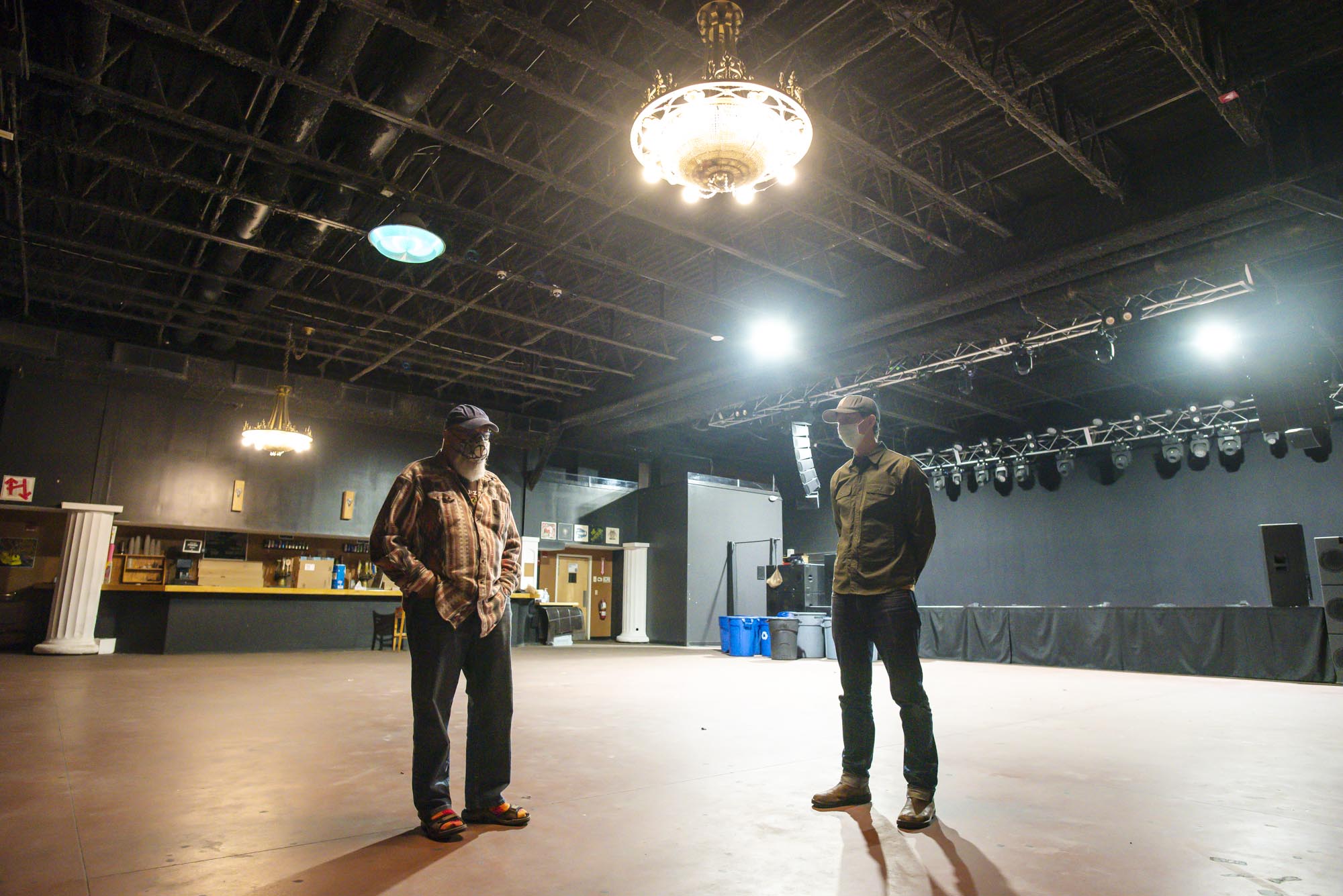
Keating said Higher Ground and other venues divided women into two groups.
“I’ve seen this all over the country, where the girly girls are the bartenders and the dressing room attendants and the women who can ‘hang’ are in production and security,” Keating said. “And I think that that system is created to just further divide those who are already marginalized.”
Keating said men and women were treated differently.
“It’s very often that I saw young men who had little to no experience getting promoted based on potential, where women — and this is true across the industry, this is not specific to Higher Ground at all — women have to prove themselves,” Keating said.
She said that is true no matter how many years of experience women have or what positions they have held.
“There are just so many times that I was not given the opportunity to learn and grow,” Keating said. “There is just this kind of perpetuating ‘you remind me of me’ mentality that is pretty common in the music industry. Because that just perpetuates that boys’ club culture.”
After that rocky beginning in 2017, during which she objected to two jokes made by Newman, Keating managed Higher Ground for three years. During that time, she said, she rocked the boat.
She said she persuaded the straight white men in management to revive First Fridays, a monthly drag dance party. She said she fired a male security guard for slapping a female bartender on the buttocks.
She said she asked that a contracted stagehand who she said was constantly trying to grope women be removed because no women wanted to work with him.
Keating said one of the owners, who VTDigger determined was Crothers, told her he would not step in because the production person’s behavior “wasn’t that bad because it didn’t affect his job performance.”
“We live in an age when men like [this] are a liability, a harassment lawsuit waiting to happen,” Keating wrote in an email to Crothers and the business manager in 2019. “I refuse to put Higher Ground, myself and future female team members at risk by employing a known harasser.”
Another former employee, who worked in production at Higher Ground events, informed Keating that they had been sexually assaulted by the same stagehand. The former employee, who is not being named because they are a survivor of an alleged sexual assault, told VTDigger they did not want to describe the nature of the incident any further.
“Laura was always on my side when I was sexually assaulted by one of the people who worked there and they didn’t do anything about it,” the former employee said.
They have left Higher Ground and now work in New York.
Ace Ziobro recounted being sexually harassed by the same stagehand.
“I was sexually harassed by a production person,” said Ziobro, who identifies as nonbinary but presented as a woman when working at Higher Ground. “It’s following me outside of work. He’s harassing me on Facebook, asking me out on dates. This man is like 60 years old. I was 23 at the time.”
Keating eventually promoted Ziobro to assistant production manager. Ziobro has left the music industry to work in tech in New York.
“If I was working in music, you wouldn’t be speaking with me right now,” Ziobro said. “I will never be able to go back to Crothers.”
Keating said she thought that, as general manager, she had the power to get rid of the stagehand. When Crothers told her she did not, she realized that she would not resolve another problem that was now preventing her from doing her job.
In her Instagram post, Keating said that two years ago, her direct boss, the business manager, froze her out. She said he would not speak to her except to scream at her in front of her staff.
In interviews with VTDigger, Keating elaborated, saying her direct boss would get drunk at shows and yell at her, but would ignore her in meetings and would roll his eyes when she spoke.
Keating said she realized that when (Crothers) chose not to take action on the stagehand’s behavior, then her attempts to get him to address her direct boss’s behavior towards her would never be dealt with in an appropriate fashion.
“That was the day I knew the only way to get out of [her direct boss’s] path of rage would be to resign,” Keating said. “[Crothers] was indifferent to all of it.”
Keating resigned last year. She said it took her a while to be able to tell her story, but said it needed to get out.
Keating said she is aware that, because of her experience as general manager of the biggest club in Vermont, she became a role model for a lot of young women. She said if telling her story makes it safer for people to tell their own stories, then she will have lived up to her status as a role model.
“First and foremost, I’d like to accomplish change,” Keating said. “I’d love to hear a statement from the owners of Higher Ground on how exactly they plan to actively address these issues within their organizations, because Higher Ground is not the only organization that they own.”
Newman owns ArtsRiot, a restaurant and live music venue in Burlington where he plans to build a distillery, and is part owner of Camp Meade, a mix of commercial buildings in Middlesex that includes an art gallery and outdoor space for live performances.
Crothers is co-owner of Portland’s State Theatre, Port City Music Hall and Thompson’s Point.
“We see this as an opportunity to improve the culture of our business,” Crothers said in his email to VTDigger. “We are looking into various ways to help us better understand what has happened in the past within Higher Ground and what’s happening today. We have met with our team to ensure that the management and staff know how to report unacceptable behavior and that such behavior is not welcome nor tolerated.
“We are aware that gender inequity is an issue within the music industry. We pledge to do our best to be part of the solution. We promise this to those who work with and for us, our customers, the musicians and performers we work with, our community, and ourselves.”
Keating saw an irony in the obstacles she said she faced as a woman at Higher Ground.
“People think of the music industry as being fun and being led by progressive people,” Keating said. “So how could they be abusers? They liked all this music about lifting people up.”
Correction: A previous version of this story misstated Susan Norton’s position at Higher Ground.
