


[H]undreds of families that receive Reach Up benefits will take a cut next month.
The Department for Children and Families is in the process of notifying about 860 families that their monthly benefit will decrease by $125 if an adult member of the household receives federal disability benefits.
Under the new policy, which was passed by the Legislature earlier this year, part of an adult family member’s supplemental security income (SSI) will count as the family’s total income.
Lawmakers adopted the new policy as part of the fiscal year 2016 budget, as part of an effort to close a $113 million gap between projected state spending increases and tax revenues. The cut is part of a package of $53 million in reductions.
The Joint Fiscal Office estimates that the change in policy could save the state $1.7 million.
According to DCF Deputy Commissioner Sean Brown, who heads the economic services division, the change in policy brings Reach Up in line with the department’s other benefit programs.
Until now, he said, Reach Up was the only program that did not count SSI as income in the eligibility calculation.
If a child in a family receives the federal disability benefit, there will be no reduction to the household’s Reach Up income.
Across Vermont, there are some 5,200 households that receive Reach Up benefits. The range for Reach Up benefits varies, but tends to average between a low of about $434 monthly for a household outside of Chittenden County in which only one child is eligible for the benefit, up to a high of $841 for a family of five in Chittenden County.
Under the previous policy, family members that receive the federal disability benefit are not counted toward the monthly Reach Up benefit. For instance, if one person in a six-member household is on SSI, Reach Up counts five members in the household. That policy will continue, with the additional reduction of $125.
Brown said Reach Up households that also get an SSI benefit tend to have more financial security than families that do not.
“For the families that have SSI income, they do have this extra household income, plus they were getting the full Reach Up benefit,” Brown said.
Ken Schatz, the commissioner of the Department of Children and Families, said the new SSI calculation obviates the need for broader cuts to the Reach Up program.
“Given the state’s tremendous budget pressures, the governor and Legislature decided this change would impact vulnerable families less than an across-the-board cut to benefits for all families,” Schatz said in an email statement.
Sarah Launderville, executive director of the Vermont Center for Independent Living, said SSI recipients rely on the federal money to pay for expenses that are associated with a disability.
“It costs a lot more money to live with a disability,” Launderville said. A blind person may use it to pay for a driver to get to and from work, for instance.
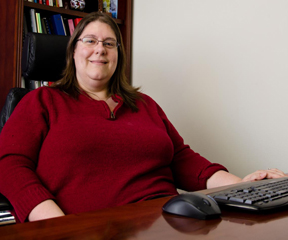
Many of the people the Vermont Center for Independent Living works with are single, Launderville said. For households on Reach Up and SSI, $125 can make a big difference, she said.
“We’re not talking about extras, we’re talking about basic living,” Launderville said.
Brown said that DCF has publicized the impending SSI reduction. Notices will go out to all affected households by July 20, he said.
Christopher Curtis, an attorney with Vermont Legal Aid, is concerned that recipients will not have enough time to prepare for the cut.
“My concern is that many low income Vermonters will not see this coming,” Curtis said. “They’re going to be put in positions where they don’t have time to adapt to what is a very detrimental cut to their income.”
According to Curtis, the SSI reduction amounts to a “tax” on Vermonters who have already fallen on hard financial times. Taking a percentage of someone’s unearned income is akin to a tax, Curtis said.
“A lot of families are really struggling and we cannot afford to sacrifice the poorest families on the altar of austerity,” Curtis said.
Curtis urged people who receive notices that their Reach Up will be reduced to appeal the determination, in case the notice was sent in error or in case they are exempt for some reason.
Clarification: This article originally stated that a single person outside of Chittenden county receives an average of $434 per month. It has been corrected to clarify that a household in which only one child qualifies for Reach Up receives an average of $434 per month.

