

Congressional Republicans have introduced a bill that would block states from regulating genetically engineered ingredients. Opponents of the bill say it would undermine Vermont’s GMO labeling law, which is to take effect in 2016.

Rep. Kate Webb, D-Shelburne, who was a lead sponsor on the Vermont law, testified Wednesday at a U.S. House subcommittee hearing on the Food and Drug Administration’s role to regulate genetically engineered food. She urged lawmakers to drop bill H.R. 4322.
“I was the lead sponsor on Act 120, a law that simply gives consumers the right to know if the food they purchase in Vermont is genetically engineered,” she told the subcommittee of the House Committee on Energy and Commerce. “The law is at risk should H.R. 4322 become law.”
Members of the Vermont Right to Know Coalition hosted a news conference at the Hunger Mountain Co-op in Montpelier on Wednesday to oppose the federal bill, known as the Safe and Accurate Food Labeling Act. Supporters of state labeling requirements have dubbed the bill the DARK Act, which stands for to Deny Americans the Right to Know.
Vermont’s law would require manufacturers to label certain products containing genetically modified ingredients. Trade groups sued Vermont this summer, alleging the law is unconstitutional and places an undue burden on producers and retailers.
The Congressional panel also heard testimony from the head of the Snack Food Association, a trade group joining in the lawsuit to overturn Vermont’s law. The group seeks to stop mandatory labeling and prefers a national approach over a patchwork of regulations.
Rep. Mike Pompeo, R-KS, the lead sponsor on the legislation, agrees. He said his bill would not block consumer choice because some manufacturers may choose to label their products for a marketing advantage.
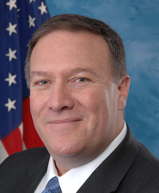
“There is nothing in this legislation that denies any consumer, any capacity, to know precisely what it is they are eating. If any willing provider deems it appropriate, and finds customer demand to provide information to their customers about the nature of that product, no one’s right is being impinged today nor would it be if this bill became law,” he said.
Tom Dempsey, CEO of the Snack Food Association and former president of UTZ Quality Foods, Inc., said nearly all staples used in snack foods, like corn, soy and sweeteners, are genetically engineered.
He said said the “balance of the products” on the shelves contain GMOs, therefore, manufactures should label non-GMO foods voluntarily, just as they do for organic products.
“We do not put non-organic on the balance of the products,” he said. “So it seems to me that forcing a mandatory labeling law onto products that are the predominant ones on the supermarket shelves goes against common sense and goes against convention and practice that we already have in the food industry,” he said.
However, Webb told the subcommittee state lawmakers considered the impact of a non-GMO certification on small businesses.
“The cost for a small business to go through the Non-GMO Project (certification) is prohibitive for them, which is why we were looking for the expense to go to the larger industry,” she said.
Pompeo’s bill calls for a voluntary label unless the FDA determines genetically engineered foods are harmful to human health. But a senior official with the FDA and a professor testified before the subcommittee and stated GMOs are not scientifically proven to be more harmful than non-GMO foods.
Alison Van Eenennaam, a scientist on animal genomics and biotechnology at the University of California, Davis, said there is clear consensus among the world’s leading scientists that consuming genetically engineered foods is not a risk to human health. She said the consensus is stronger than the consensus around global warming.
“There are no unique risks posed by this particular breeding method,” she said. But, she added, “We’re talking about a label of how it was produced.”
Some foods are genetically engineered to withstand heavy applications of herbicides. Since companies began selling herbicide-resistant genetically engineered crops in the 1990s, herbicide use has also increased. A 2013 study found nearly half of U.S. producers reported herbicide resistant weeds on their farms in 2012.
So-called super weeds can force farmers to spend more on herbicides, labeling proponents say.
But Stacey Forshee, a fifth generation farmer and regional director for the Kansas Farm Bureau, told the committee she farms 2,000 acres of corn, soy, alfalfa, wheat, and other feed crops for her 700 cattle. She said she uses biotechnology save up to 40 percent on fuel, fertilizer and pesticides. She supported the bill because she does not think GMOs are harmful.
Forshee joined several lawmakers who preferred a national solution. Rep. Morgan Griffith, R-VA, a member of the committee, called for uniform labeling.
“I’m convinced that we need to have a national label,” he said. He said among his top concerns is the confusion consumers may feel that they are buying two different products in two states based on the mandate.
But labeling proponents turned to states and localities because Congress has not yet acted to pass any labeling legislation. “To date, neither the current [Obama] administration nor this Congress has acted to inform and protect consumers with this labeling,” Webb said in her testimony.
The bill was introduced in April this year. Of the 37 sponsors, only two are Democrats.


