

Vermonters are telling the state they can’t find work, yet employers report they can’t fill open positions, officials said Wednesday morning.
That disconnect between jobs and job seekers might point to a second gap — one between jobs programs and the workforce needs they’re intended to address.
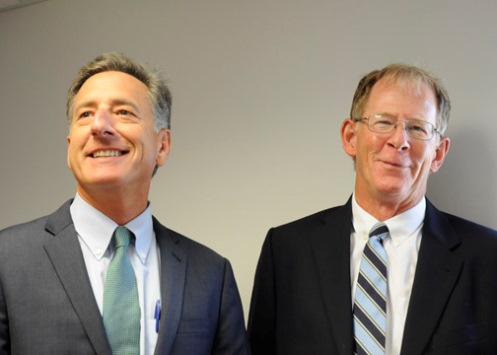
Vermont Gov. Peter Shumlin and Labor Commissioner Annie Noonan announced Wednesday morning that the state had received two federal grants totaling more than $1 million to assist with workforce development efforts.
Speaking at the Cabot Creamery administrative offices in Montpelier, the two were flanked by legislators who underscored a deeper need: The state must unify and coordinate its many workforce development efforts in order to be more effective for both job seekers and hiring managers, and to be more accountable to the taxpayers who foot the bills.
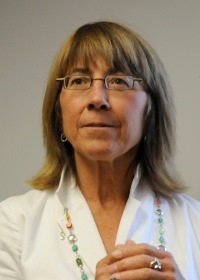
Rep. Michele Kupersmith, D-South Burlington, described the conversations with constituents that motivated her to take on workforce development: “People say, ‘We hear about these jobs, but every time we apply we’re told we don’t have the experience or the skills to do it, and we get shut out. What are the portals for opportunities for me?’
“Vermonters are saying that loudly,” she said. And at the moment, the answer to their question is hard to explain.
Coordinating efforts — again
“There’s a lot of both private and public money that we spend to ensure that we’re training and retraining workers,” Shumlin said. “How can we better coordinate those efforts, to make sure that we’re spending the dollars on jobs and skills that we actually need?”
To that end, Shumlin signed S.155 into law on June 7. Act 81 created a Workforce Development Work Group, charged with inventorying all the public and private workforce education and training programs in Vermont and figuring out a way to evaluate their effectiveness.
Shumlin heralded the plan as unprecedented.
“S.155 … allows us to ensure that for the first time, we take an inventory of all the private and public sector opportunities that we have in Vermont to help us train and retrain workers for new jobs, and ensure that we’re matching the skills of our workforce with the jobs available that our job creators have,” he said.
While broader in scope, it nonetheless has a familiar refrain.
In March 1993, Gov. Howard Dean created the Workforce Development Council for many of the same reasons and with a similar roster of responsibilities, according to a short history of the WDC prepared by its former director. In short, the goal was to turn a diverse and uncoordinated bunch of programs into a comprehensive system to train Vermonters for the types of jobs Vermont companies were creating.
“The Workforce Development Council is definitely in need of revitalization,” said Kupersmith, one of the legislators credited with crafting the bill that created the new work group.
Jim Pratt, senior vice president of operations at Cabot Creamery and chair of the council, said in a phone interview that the executive director of the Workforce Development Council retired a couple years ago, and the position remains vacant due to resource limitations. Pratt will coordinate the council’s efforts with the work group’s activities, but he does not sit on both bodies.
Pratt said the council serves primarily as an advisory board to recommend the best ways that different workforce development programs can manage their own limited resources.
The new work group’s umbrella, he said, is broader. In addition to all levels of public and private programs Shumlin described, Pratt said their inventory may also include some education funding that can flow directly to institutions or government agencies.
Kupersmith said the work group is “determined to get very clear” about the various workforce development initiatives and to understand where they may overlap and what they may miss.
Her colleague Rep. Bill Botzow, D-Bennington, echoed Kupersmith’s call for greater efficiency. “We really need to have not a series of programs,” he said. “We need to have a system.”
And the opportunities within the system should be apparent to the people they’re designed for, Kupersmith said. “Everybody talks about training and retraining,” she said. “But people want to know: Where’s that door for me to knock on?”
In the meantime: New funding for more programs
While the new work group gets started — by statute, it started last June and must meet “not more than eight times” — the programs they’re trying to wrangle are under way and growing.
A federal grant announced Wednesday morning will provide about $50,000 to fund one-on-one entrepreneurship mentoring for up to 50 Vermonters among the state’s long-term unemployed — meaning people who have been unable to find work for more than 26 weeks.
Qualifying would-be small business owners will receive counseling through the Small Business Administration. The small pool of funds will allow mentors to connect potential entrepreneurs to additional resources they can leverage in starting a business.
A second, much larger grant is an encore performance, Noonan said. The state previously received $1 million in federal funds for Vermont’s Re-employment Eligibility Assessment program, which directs the Department of Labor to set up three one-on-one sessions with people collecting unemployment insurance benefits. The staff first review the unemployment system, then focus on the individual needs and goals of the claimant.
The first round of REA reduced participants’ period of unemployment by 30 percent, Noonan said — a success rate they calculated by comparing the length of participants’ unemployment to those of individuals in a control group that did not get the counseling.
Noonan said the U.S. Department of Labor is directing other states to emulate Vermont’s program, and the second $1 million grant will allow her department to continue its progress toward reducing UI claims by getting people re-employed more quickly.

