

Lawmakers and state corrections officials are struggling to deal with a surge in detainees in Vermont’s prison population, which is causing ripples throughout the system.
Roughly 420 people are currently detained in Vermont prisons, awaiting trial, and about 520 Vermont inmates are housed out of state.
Those two figures are linked: When the number of detainees grows and in-state prisons are at full capacity, the Department of Corrections is forced to displace inmates with long sentences to out-of-state facilities.
While some lawmakers are exploring ways to tamp down detention, others — Rep. Suzi Wizowaty, D-Burlington, in particular — are trying to tackle the impacts on prisoners sent out of state, as well as on their families.
On Friday morning, the House Institutions and Corrections Committee pondered how to keep detainee numbers in check. Later in the afternoon, former inmates and their relatives urged the committee to stop housing people out of state. The testimony was prompted by a bill Wizowaty introduced, which would give the state a three-year deadline to end out-of-state prison housing. House Speaker Shap Smith said he supports the proposal.
Detainees are people who have been arrested and are awaiting a verdict or other judicial processing. They are housed in correctional facilities when they are ineligible for or can’t afford to make bail.
The current detainee population of 420 is not only higher than normal, but far exceeds the benchmark of 300 that the Legislature set back in 2011. The commissioner of the Department of Corrections (DOC), Andy Pallito, and Vermont’s chief administrative judge, Amy Davenport, say it isn’t a surprise that this goal remains unmet — it was ambitious to begin with. But both have told legislators they did not anticipate detainees to number in the 400s.
Home detention — an arrangement in which people await trial at an approved residence while under electronic monitoring — could help the situation, but the DOC and the court system have been at an impasse, and, as a result, “utilization has not been robust,” as Pallito put it.
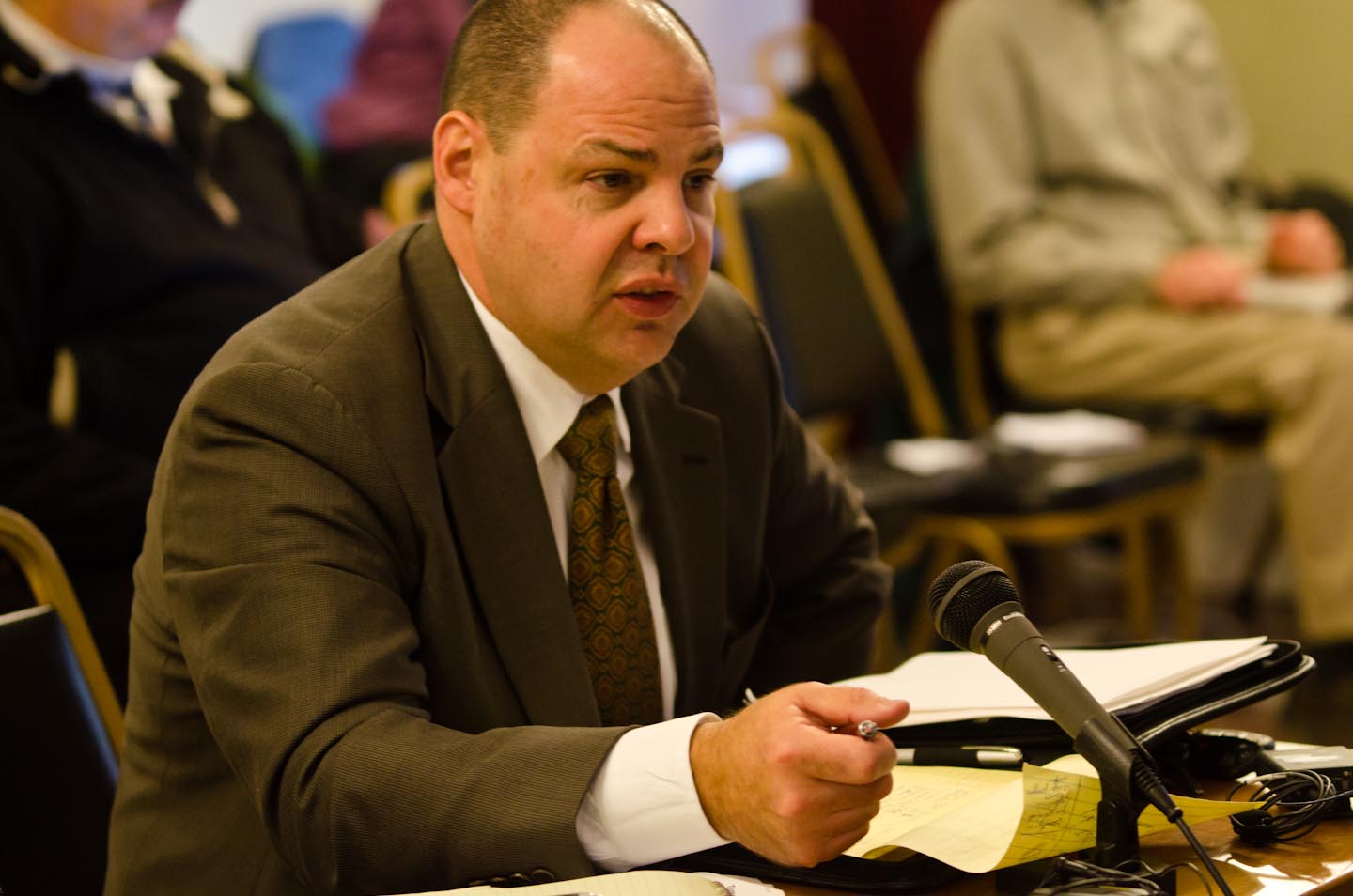
The state’s Defender General, Matthew Valerio, said the problem with home detention boils down to an across-the-board aversion to risk: “Who is going to take the political heat when someone is released and something bad happens?”
There are currently only three people in home detention; at the program’s peak, there were just 10.
The problem, according to Davenport, is that judges have been reluctant to clear people for home detention because the DOC hasn’t had the resources to provide 24/7 electronic monitoring. Davenport said requests to the court for home detention, which can be made by either by the department or a defendant, have slowed to a trickle. The department has never made a request, according to Davenport, and attorneys became frustrated at being turned down.
“They had a lot of nos, and eventually you stop asking,” she said.
Matthew Valerio, Vermont’s defender general, said the problem boils down to an across-the-board aversion to risk: “Who is going to take the political heat when someone is released and something bad happens?”
Valerio offered the committee a solution that would saddle the Legislature with the possibility of political backlash.
“If people are really serious about forcing home detention,” he said, the Legislature should designate the number of detainees it wants in home detention and leave it up to the Department of Corrections to choose the least risky candidates.
Later in the day, members of the Institutions and Corrections Committee turned to their attention from people awaiting sentences to those serving lengthy stays in jail who are transferred out of state.
Vermont currently sends inmates to private prisons in Kentucky and Arizona; both are run by the Corrections Corporation of America.
Wizowaty’s bill would prohibit housing Vermont inmates in private prisons as of July 1, 2014, and the legislation would bring all out-of-state prisoners back to Vermont within three years. It requires the corrections commissioner to draft a plan.
Wizowaty says the bill wasn’t a response to any specific occurrences at the two private prisons. She said it’s important to end a practice that amounts to the state subsidizing “a private industry that makes a profit off of incarceration.”
Wizowaty, and all five of the inmates and relatives who testified, told the committee that the Kentucky prison, and private prisons in general, have high levels of staff turnover and violence among inmates and staff is frequent. The private prisons cut costs by offering little in the way of employment, treatment or other types of programming, they said.
Tim Burgess, who was formerly incarcerated at the Lee Adjustment Center in Beattyville, Ky., told lawmakers he was physically assaulted frequently: “I can’t tell you the number of times.” Medical care was “horrendous,” Burgess said, and his heart condition went untreated throughout his time there.
Dave Burge, who has served 15 years split between prisons in Vermont, Virgina and Kentucky, negatively compared the conditions in Beattyville to those in Vermont. In Kentucky, Burge said, “the drugs are more plentiful,” and he had no access to programs.
“We were sitting on the back burner, just doing dead time,” he said. He described the prison as a free-for-all “frat house,” where guards make no attempt to maintain order.
“We were sitting on the back burner, just doing dead time,” the former inmate said. He described the Kentucky prison as a free-for-all “frat house,” where guards make no attempt to maintain order.
Stephanie Jackson, whose son has been in Kentucky since September, said she is unable to visit him both because she has been fighting cancer and because she can’t afford the trip. Jackson said her son, who has mental health problems and a drug addiction, was wrenched away from the Newport correctional facility just after being admitted to the employment program there and just before he would have entered a drug treatment program.
He has had no access to drug treatment in Kentucky, Jackson said.
Another couple also testified that they have been unable to see their son since his transfer to Beattyville because of health problems they face.
Wizowaty said she thinks the corrections department is making solid progress in finding “creative alternatives to incarceration,” but her bill would “provide some extra support for that effort by urging a timeline to bring everyone back.”
Pallito called the goal “achievable,” but said the three-year time frame is “optimistic.” The state will have to make systemic changes for it work, Pallito said, with a focus on its detention policy.
Mandating home detention for certain cases and giving the corrections department the authority to release nonviolent offenders before they’ve served their minimum sentence would help the state start down the route outlined in Wizowaty’s bill.
Pallito was less supportive of the all-out ban on private prisons.
“I think it’s ideal but not realistic. Putting barriers on where we can house people is somewhat artificial at this point,” he said.
The state has had better luck with Corrections Corporation of America than it had with municipal prisons in Virgina and Louisana, Pallito said, and he’d like to preserve his capacity to “pick the best place regardless of who owns it and who runs it.”
