

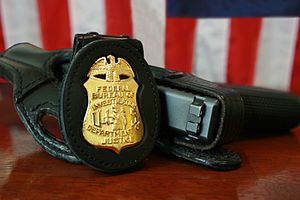
Ben was not surprised when he heard that two agents from the Albany regional office of the Federal Bureau of Investigation turned up at his apartment last Thursday.
“If you are an activist, it’s expected at some point that they’ll come to your door,” he said.
Ben, whose real name is being withheld at his request after word began circulating of the FBI’s visit, said he wasn’t home at the time. His housemate Jo Robin said the federal agents told her they wanted to interview Ben about planned protests of the Conference of New England Governors and Eastern Canadian Premiers in Burlington on July 30.
Jo, who prefers to use an assumed name, considered the visit a form of intimidation aimed at chilling political speech. In a story posted at privacysos.org, she wrote, “It isn’t appropriate, and I want the federal government to know that we are not intimidated.”
A Facebook update for Occupy Boston described the encounter this way:
“FBI agents visited the apartment of an activist in Vermont today (7/26/12) in advance of the planned regional Occupy gathering in Vermont on the weekend – see the report, as well as advice for YOU should you receive such a visit, namely, take their card and say your lawyer will contact them. Never lie to a federal agent, that is a felony.”
But why that apartment, and why now? Ben, Jo and a third housemate, Thomas (whose real name has also been withheld for fear of reprisals), are three of hundreds of protesters gearing up for events in response to the official bi-national gathering.
The protests, known online as the BTV Convergence, could become the largest direct action in opposition to the tar sands expansion to date in New England, according to 350.org, a group dedicated to heightening awareness of climate change.
The three activists in question have been involved in previous protests, and in response to heightened government surveillance, the activists have sought to protect their anonymity. Thomas has been participated in other local Occupy events, Jo was questioned previously while organizing in New York, and Ben was an activist in Indiana before relocating to the Burlington area.
The agents knew exactly where to find Ben, but they apparently did not know what he looked like. They asked Thomas if he was the one they wanted.
“It’s not pretty remarkable,” Ben told VTDigger. “It doesn’t blow my mind. But it does get my goat that it’s not unusual.” His activist work is legal and nonviolent, he points out. “I just make phone calls, work on housing and do spreadsheets,” he said. At some protests he has engaged in civil disobedience.
“If the FBI is showing up at my neighbor’s door just to ask questions, just to conduct surveillance, that’s ridiculous,” Ben continued.
After the incident, Ben and other protest organizers came to the conclusion they didn’t want to make it “too big a deal.” “We want to make it known, but it’s not the story of this weekend,” Ben said.
The objectives of the action, according to the Governors’ Conference Welcoming Committee, a group of Vermonters organizing logistical support for activists from across the region, are to confront conferees at the Hilton, create a regional dialogue on the issues, and strengthen ties that “build our capacity for a prolonged culture of resistance.”
Avery Pittman, a media coordinator for the Welcoming Committee, said in a statement that FBI visits have occurred, “but I think it really highlights the lack of transparency and tolerance for dissent that surrounds conferences such as these, We mobilize as people affected by a failing economic system, by the impacts of these energy infrastructure projects, as migrants and citizens affected by border policies that prioritize moving money over our families and friends, and we deserve a voice at the table. That we as organizers expected police investigation underscores how participation is discouraged.”
The Albany FBI office did not respond to phone inquiries Saturday afternoon about its agents’ activities in Vermont. At the Burlington Police Department, Lt. Scott Davidson, on duty for the weekend, said he had heard nothing, “but the FBI doesn’t always tell us.”
Mike Kanerick, an aide to Burlington Mayor Miro Weinberger, said city officials were not aware of FBI activity related to the protests, and “therefore, cannot comment on it.” Kanerick said the mayor “welcomes peaceful protesters to the city and appreciates their efforts to bring attention to a range of important environmental and labor issues.”
According to the bureau’s website, Burlington’s Joint Terrorism Task Force operates as a satellite of the Albany JTTF. When “special events” occur – things like mass protests at a gathering of New England governors, Canadian premiers, ambassadors, and business leaders – the Albany JTTF is supposed to bring together local, state and federal resources to “proactively identify threats.”
Asked about security preparations in anticipation of the protests in Burlington, Lt. Davidson said that local police plan for any special event, but he knew of no special alerts about this one.
Since 2005, the FBI has listed “ecoterrorism” as the top domestic terror threat. A 2009 FBI press release placed “highly destructive ecoterrorists” above “hate-filled white supremacists,” “violence-prone anti-government extremists,” and “radical separatist groups.”
According to a NYU-Fordham study released last week, police and FBI scrutiny of protest activity has increased since 2011.
Last fall University of North Texas student Ben Kessler, a Marine veteran and fracking activist, spent months avoiding FBI phone calls. Kessler works with Rising Tide, a network of environmental groups that sometimes uses civil disobedience as a tactic. In February, an FBI agent and Dallas police officer came to campus to question one of Kessler’s professors.
Last week journalist Will Potter released documents that show the FBI “creating reports and maintaining files about the writing, interviews, and lectures of journalists who are critical of the government’s repression of political activists.” The files included Potter’s work.

