

In This State is a syndicated weekly column about Vermont’s innovators, people, ideas and places. Details are at http://www.maplecornermedia.com/inthisstate/.

The small packages still arrive at Ross and Joyce Bell’s home at Wake Robin in Shelburne. They come unsolicited from around the world, from researchers and museums and collectors, even though Ross Bell has problems with his eyesight and he retired in 2000 from a 45-year teaching career at the University of Vermont zoology department.
“A box showed up in the mail yesterday from Florence, Italy … they come from anywhere, people just send them,” says Joyce in a tone that implies amazement and perhaps a touch of vexation.
But as the song in the movie “Ghostbusters” says, “Who ya gonna call?”
When it comes to any small, wood-burrowing ground beetle in the rhysodidae family, the answer is Ross Bell. It’s been that way for decades. He’s a world expert, credited with having identified and classified 260 new species of the odd, reclusive rotting wood-loving beetles with ridges on their backs, quadrupling our knowledge of the insect. At least 10 of them have been named after him, sort of a bug-world Oscar.
In the close-knit community of entomologists, Ross and Joyce Bell are rock stars as famous as the aptly named, in this case, Beatles. Except instead of collecting platinum albums, Bell has spent his life collecting and classifying rhysodidae and other ground beetles, a scholarly pursuit that has earned him numerous accolades, led to innumerable academic articles and books, citations all over the Web and on the occasion of his 80th birthday in 2010, a three-day Burlington symposium and festive party that produced a bible-sized book of his accomplishments.
Not your usual bash, but then Ross Bell is not your usual guy with an insect net – though he always traveled with one.
Joyce, a biology major and teacher in nursing, has been his partner, organizer, eyes and sketch artist, using her skill with a microscope to draw details of the bugs he’s identified. She’s also the one who keeps tabs on the huge web of friends and colleagues they have collected over the years.
Truth be told, Joyce says she wasn’t all that interested in bugs until they married in 1957.
“And then you have to pick them up,” she jokes in horror.
“She never had a choice,” retorts Ross.

He’s had a carabid (ground beetle) fascination since he was a kid growing up in Urbana, Ill., where he hung around with his geologist father at the University of Illinois.
“I got interested in ground beetles because they’re easy to find,” says Bell simply, “you can flip over logs and stuff.” His fascination grew to cover their chemistry, sex lives, habits, disparate juvenile and adult anatomy and their amazing appearance under a microscope.
Bell, as his students will tell you, is a modest fellow with a wickedly wry, off-beat sense of humor, which comes through as he sits and talks, at the age of 82 a bit frail with a distinctive shock of full gray hair and quiet voice.
Sixty years of “flipping over logs and stuff” has taken him to Australia and New Zealand, Tasmania, Haiti and Jamaica, Mexico and across the U.S. in search of an insect many of us have never heard of, let alone seen. In the process, he’s created his own large family of acolytes who have literally and figuratively caught the bug, diverting themselves from planned careers in English or ecology, following instead a career path he opened for them like a passionate entomological pied piper. Many have gone on to important careers and remain close friends and colleagues who speak with unalloyed affection about their former professor.
Jessica Rykken works at Harvard’s Museum of Comparative Zoology. She was one of many students who became hooked when she took Bell’s legendary field zoology course at UVM and started listening to the “string of fascinating stories” that comprised Bell’s lectures, something all his students note.
Bell chuckles when asked about his lecture style, then jokes, “I probably started telling stories because otherwise I didn’t have anything to say.”
Today the tables are turned and students like Rykken tell stories about Bell, such as the day field naturalist students went on a Friday field walk to look at spring ephemeral plants and Bell came along. A few hundred yards in they ran into a “recently dead carcass, a medium-sized animal” and, she says, “Ross immediately sat down to examine it for insects.” When they returned later in the afternoon, he was still there, “absorbed by the carcass and its scavengers.”
That kind of single-minded focus led him to shrug off a sabbatical year spent in 1982 in New Guinea and New Zealand in which he searched non-stop and mostly fruitlessly for his beetle quarry.
“I just sort of accepted that,” he says. “They’re hard to collect because essentially you’re condemning yourself to chopping wood all day long,” he says, admitting, “after years of that, you get tired of the process.”
Ross Bell landed at UVM by accident. He was drafted after World War II, losing a Fulbright scholarship in the process, and spent two years at Fort Detrick, Md., the nation’s top germ warfare lab, studying fleas. A sudden departure opened a teaching spot in Vermont just when he was discharged, and he was hired under a one-year contract. Fortunately for UVM and generations of students, he never left.
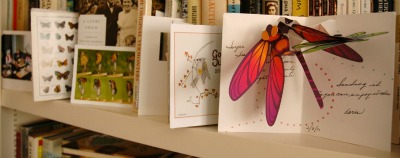
The shelves at Ross and Joyce Bell’s home at Wake Robin in Shelburne are filled with insect art, books and cards reflecting Ross’ life spent teaching zoology and doing research in entomology. Though his beetle specialty is a warm-weather creature that doesn’t live in Vermont, the Green Mountains were a teaching playground for students he introduced to the zoology of Camel’s Hump and Mount Mansfield and many a bog, fen and field north and south every summer.
Through their work, Ross and Joyce built the UVM Entomological Collection into a significant resource for northern New England. They were also instrumental in starting the Vermont Entomological Society (VES), where Ross served as one of the first presidents and frequently provided articles for the newsletter – which not surprisingly, is edited by a former student, Trish Hanson, an entomologist with the Department of Forests, Parks and Recreation.
Though he journeyed all over the world in his carabid capers, one of his funniest tales comes from Addison County, not far from his retirement home, where he headed to a bog to search for a beetle that only lives around beaver lodges. First, the student he was with let a spruce bough with a hornet’s nest attached snap back into his body, leading to eight or nine stings. Bell soldiered on and was crossing the narrow dam when he realized he had a hornet in his pants and had to strip down while balancing on one leg.
Finally at the beaver lodge, he climbed atop it to look for the beetle and found himself plunged into darkness.
“I suddenly fell through the roof of the beaver lodge and the beaver was there – and he was very angry,” Bell recalls. “He was gnashing his teeth, which I didn’t think was a very good sign.” The beaver left and Bell carefully extricated himself, bugless – and with his sense of humor intact.
Asked if his life’s passion sometimes seemed like an affliction, he quips, “It depends on the day… whether I fall into a beaver house or not.”
Andrew Nemethy is a veteran journalist and writer from Calais. He can be reached at Andrewnemethy@gmail.com.
