

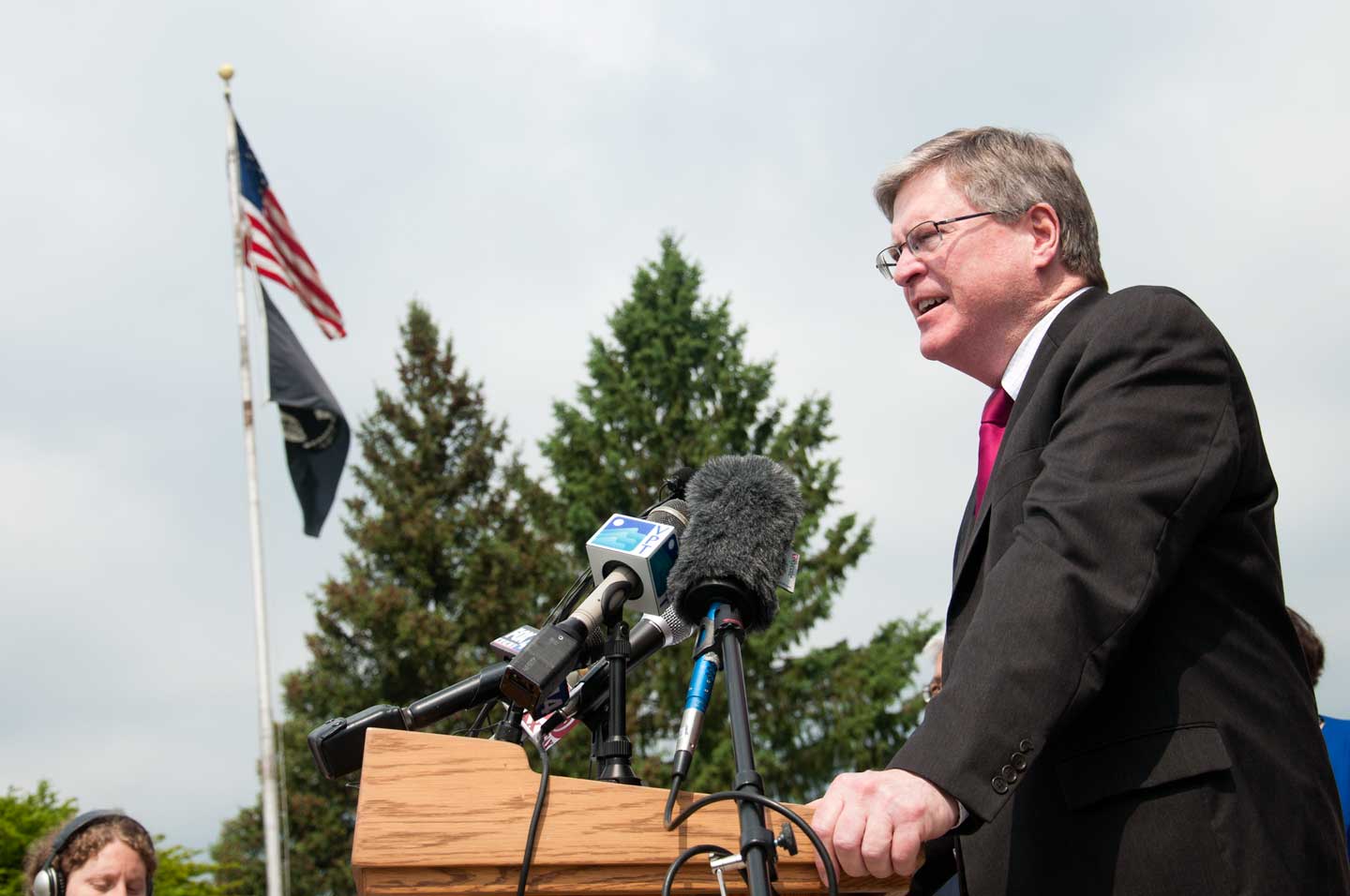
A bill that would allow early childhood educators to bargain collectively with the state is stalled in the Senate.
Sen. John Campbell, president pro tem of the Senate, said he does not anticipate seeing the bill come out of the rules committee.
Campbell said he is not anti-labor, and he wants the state to do what it can to help child-care providers, but he has serious reservations about H.97. He said a labor group has gone too far with its hard-ball lobbying tactics.
The legislation also has created a schism among some child-care providers and resulted in a behind-the-scenes political struggle.
The bill would allow providers to bargain with the state for child-care subsidy rates and reimbursement from the Vermont Department for Children and Families. The bill that was approved by the House, on a vote of 90-54, included an exemption for large child-care centers, removed health care and other benefits, and limited the right to bargain over the rates and reimbursement for subsidy payments through the state’s child-care financial assistance programs.
The American Federation of Teachers, which is affiliated with the AFL-CIO, has lobbied tirelessly for the bill. The Vermont Early Educators United, an affiliate of the AFT and the AFL-CIO, has embarked on a campaign to organize child-care providers and encourage them to contact their legislators directly. It plans a lobby day at the Statehouse in Montpelier on Feb. 7.
Campbell said he received countless calls, many from people who had been patched through to his phone by union representatives.
Things came to a head, Campbell said, when he met with Ben Johnson, the president of the Vermont AFL-CIO. Campbell claims Johnson attempted to intimidate him by sliding a piece of paper across his desk that showed how much money the union had spent on political action committees that supported Campbell and his party and asking him to support the bill.
Union representatives told him if he does not support House Bill 97, he does not support collective bargaining.
“The reason why I believe this bill does not have the right to go forward is the tactics used to intimidate myself and this body are so against what good clean government is about, I think it would be rewarding bad behavior,” Campbell said.
Johnson called allegations that the union has tried to intimidate politicians “ridiculous.”
“That’s an attempt to change a subject from whether low-income women have the right to organize,” he said.
Johnson said the bill would ensure that child-care providers receive fair treatment in their negotiations with the state.
“There are women in many cases that have been in the field for 30 or 40 years and never had a way to have a voice that counted in their working lives,” Johnson said.
He said the lobbying effort is a result of thousands of child-care providers coming together to find a way for their voices to be heard. The opposition, Johnson said, is to be expected to some degree.
The House bill would allow child-care providers to form a union and bargain with the state over rates and reimbursement practices for payments that subsidize child-care services for low-income, wage-earning parents.
Typically, union employees bargain with employers for wages and benefits.
“My fear is not against the union or organizing,” Campbell said. “If we extend collective bargaining to someone who just receives a subsidy, hundreds of other groups could do the same thing.”
Cathi Ste. Marie, a home child-care provider in North Troy, has been in the field for about 10 years and is an active member of the union’s organizing committee.
Ste. Marie says the bill will enable early childhood educators to provide “substantive” input in the state process for setting reimbursement rates and increase the quality of child care in the state.
Childcare businesses have a high turnover rate, she said, because of low reimbursement rates.
“The provider turnover rate can be bettered and reduced if educators are validated, supported and respected in what we do,” Ste. Marie said.
Shifting child care providers, she said, can lead to disruptions in the crucial early years of children’s development. If child-care providers have a seat at the table with the state, educators will be able to provide better services, Ste. Marie said.
“The importance right now in early education is high quality programs where children best thrive,” Ste. Marie said. “This bill gives us the collective bargaining rights to sit and discuss it and be taken seriously. We are no longer just a suggestion box.”
Ste. Marie said she and other child care providers would like to see the large child-care centers back in the bill.
The Boys & Girls Club of Burlington opposed the bill and successfully lobbied to be removed from it last year. Representatives of the center declined to be interviewed on the record for this story.
Smaller child-care providers have also opposed the bill.
Elsa Bosma is a registered home provider in Shelburne. She has taken the lead in organizing another grassroots group of child-care providers who are opposed to the bill.
Bosma said she feels the bill, which requires bargaining units to select an “exclusive representative,” will prohibit her from working directly with state officials with whom she has built good relationships.
Perhaps the most fundamental issue for Bosma, she said, is the negative interactions some providers have had with the union. Bosma said she received 80 emails with complaints. The pressure to support the bill is what bothers her, she said.
“We haven’t asked for anyone to advocate on our behalf,” Bosma said.
It’s also unclear how much dues would cost, she said.
Bosma’s final concern is a “scholarship” offered by the union to attend the event in order to hire a substitute or close up shop for the day. She is funding her efforts out of her own pocket. Ste. Marie denies that organizers have paid child-care providers to come to lobbying events. An online invitation to Tuesday’s lobbying day, however, includes a line for scholarships of up to $100 to help providers cover the cost of hiring a substitute or close for the day.
While the drama plays out over House Bill 97, a parallel bill, S.29, is sitting on another shelf in another committee.
The Senate bill still includes the large centers. It is pending in the Senate Economic Development, Housing and General Affairs Committee. Sen. Vince Illuzzi, R-Essex-Orleans, chairs the committee, and he says the bill stands little chance of coming off the wall.

