

Editor’s note: This essay by Greg Guma is from The Vermont Way: Restless Spirits and Popular Movements, a new study of the state’s evolution and influence slated for release in 2012. To find out more, visit The Vermont Way.
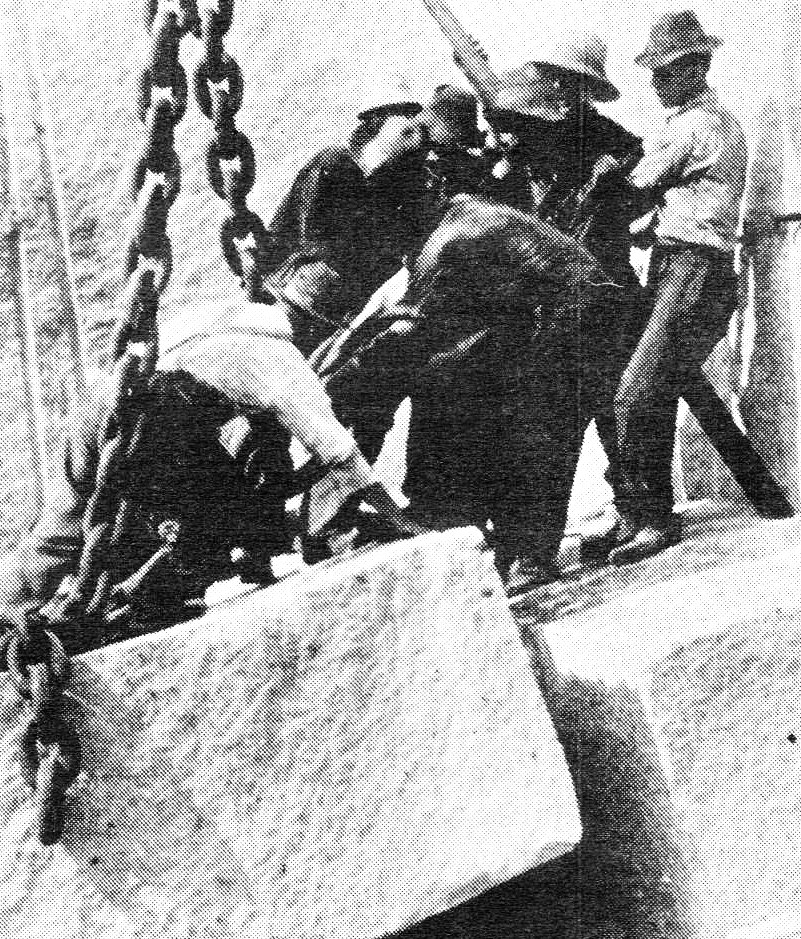
As Vermont agriculture entered a long, slow decline in the late 19th century, many Vermonters turned to mining and manufacturing. The first marble quarries had been cut in Dorset in 1792 using gunpowder, saws, wagons and sleds. But the industry faltered through various business cycles until 1857, when major business interests raised it from a decade-long standstill.
Then, in 1880, the Sutherland Falls Marble Company merged with the Rutland Marble Company, owned by New York banks and families, to form the Vermont Marble Company, which grew and took over smaller firms under Redfield Proctor. Within a few years it was the state’s largest corporation.
By 1900, Vermont was producing half the country’s marble output.
The benevolent ruler of both the company and a town named after him, Proctor provided workers with access to accident insurance, a company-owned bank and store, and a town library. As “friend and benefactor,” he also used his economic power to launch a political career, becoming a state legislator, governor, U.S. Secretary of War and U.S. senator from 1891 to 1908.
In the Senate, Proctor fanned the flames for the Spanish-American War and guided invasions of Chile and Peru. He also chaired the committee that awarded contracts for federal buildings, making certain that their exteriors were built with Vermont marble. The first was Indiana’s State Capitol, followed by the U.S. Supreme Court building and the Jefferson Memorial.
Following in his father’s footsteps, Fletcher Proctor acquired businesses for the Vermont Marble Company in Swanton, Roxbury, Danbury, Brandon, Pittsford and Fletcher. “The ownership of one marble quarry is very precarious,” he explained. “The ownership of many marble quarries of diverse kinds and differently located may be fairly stable.” Also like his father, Fletcher used business as a springboard to the governor’s office.
In 1882, the Proctors invited the first Italian immigrants to Vermont, five sculptors from Carrara. A flow of Italian marble workers and railroad builders into the state was soon underway. But accidents and dust in the quarries claimed lives.
Before coming to the U.S. some of the newcomers had been members of Italian “mutual aid societies,” and many were prepared to defend their rights using radical strategies and ideas. By the early 20th century over half of Barre’s residents were Italian and 90 percent were unionized. There were 15 separate locals, including laundry workers, musicians and bartenders. A Central Labor Union coordinated the groups, and socialist mayors were elected in 1916 and 1929.
As the Great Depression began, many Vermonters were still working in small industries. Employment was divided evenly between mining, quarrying, forestry and machinery production, with somewhat fewer workers in textile mills. New Deal programs tried to prime the pump with public investments, but buying power continued to lag, businesses closed, and unsold goods collected dust.
Some owners used Depression conditions as an excuse for layoffs and pay cuts. When this was attempted in Barre, granite workers launched a bitter two-month strike. Local residents backed the union, local tradesmen and farmers distributed free food, and a federal arbitration board looked for a compromise. On April 29, 1933, the Quarry Workers union rejected extension of the old contract for a second time. But the Granite Cutters accepted binding arbitration and the strike was practically settled by May 5.
Two days later, the National Guard arrived, creating easier access for strikebreakers. Soon most quarries were back to business as usual. The workers had been demanding union recognition in the open shop quarries. But the presence of the Guard, combined with a sellout by the Granite Cutters union, left many people high and dry. The strike was basically broken during arbitration.

At Vermont Marble the hard times, combined with increased costs, led to reduced services. Management dropped its free medical care and visiting nurses programs. By the mid-1930s the “company town” era had ended in Proctor.
Vermont Marble also claimed to be operating at a loss and therefore couldn’t consider any wage increases. The quarrymen didn’t believe it, and on October 18, 1935, more than a hundred of them decided to strike as a protest of management’s decision to stagger their hours, which meant work only three weeks out of every four. The workers wanted a 40-hour week, an hourly wage of 50 cents — up from 37, and recognition of their union for collective bargaining.
Within a few days hundreds of other quarry workers were backing their action and demands. But management refused to negotiate.
On November 3, at a mass demonstration, 900 workers voted to strike. A week later the Rutland Herald declared that “communist influence” might be to blame, its evidence a circular signed by “The Community Party of Rutland County.” Four days after that, when a riot broke out, the company responded by bringing in almost 100 sheriff deputies.
That Thanksgiving at least a thousand striking workers and their families marched through Proctor in the rain to draw attention to their cause. This was followed in early December by a clash with the authorities and hired thugs resulting in serious injuries. The strike continued right through the winter. But after four months on the picket line about half of the employees returned to work.
In the end the workers got a two and a half cent raise and inspired “Vermont Rebels Again,” a play about the campaign that opened in New York.
By now, however, the Vermont Legislature was ready to take a side, opting to help businesses troubled or threatened by worker militancy. Thus, a bill outlawing sit-down strikes was passed on April 7, 1937, making Vermont the first state to declare it illegal for employees to stop working but remain in their plant until a settlement was reached.
The bill was signed by Gov. George Aiken, who had just been elected on an anti-New Deal platform. But Aiken wasn’t happy with the law and subsequently tried to mend fences with organized labor, backing the creation of a state Department of Labor and helping to settle another granite workers strike in 1938.
