


If God helps those who helps themselves, Vermonters should be first in line for heavenly handouts (or at least disaster assistance from the feds).

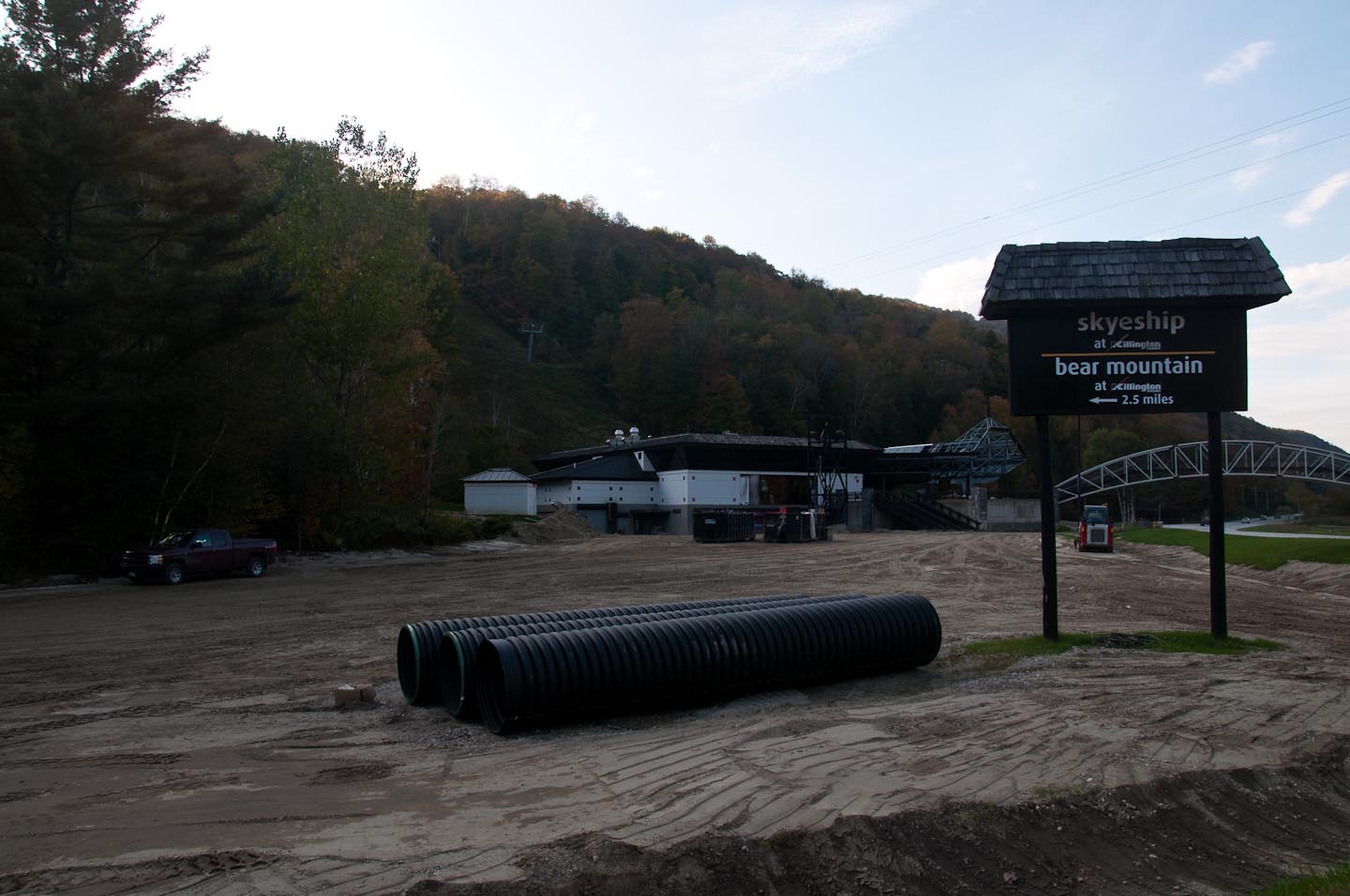

The state’s residents, known for being a hardy lot, have proved their mettle over the last month as they have dug out of the mud, muck and debris left by Tropical Storm Irene.
The storm struck Vermont Aug. 28 and dumped as much as 11 inches of rainfall on the Green Mountains in a 24-hour period. Overnight, the deluge turned small brooks, roads and even open fields into raging rivers of water. The White, Dog and Winooski Rivers and feeder tributaries flooded mountain towns in the state’s interior.
Floodwaters ravaged historic downtowns, destroyed businesses and damaged more than 2,000 houses (more than 120 were completely destroyed).
State highways, bridges and local roads were gutted and in some cases became part of nearby river beds.
Municipalities lost town offices (and in several cases the records, too), libraries, fire and police stations and sewage treatment systems. The Waterbury State Office Complex was flooded and four people died and hundreds were stranded in 13 communities that became inaccessible because of extensive road and bridge damage. Ninety schools delayed the first day of the school year. About 500 miles of roadways were impassable. Power outages compounded the sense of isolation in many communities.
The state hadn’t seen a natural disaster of this magnitude since the Flood of 1927.
In the immediate aftermath of the catastrophe, thousands of volunteers mobilized to rebuild roads, distribute emergency supplies, restore electricity and gut buildings damaged by the floodwaters. VTrans sent hundreds of workers to the disaster area to scout out the road damage. National Guard members from Ohio, Illinois, Virginia and Vermont delivered supplies by helicopter to isolated towns. New organizations – vtresponse.com and a number of local relief funds — sprang up to help raise money and organize volunteer labor. Schools, businesses, nonprofits and individuals donated thousands of hours and millions of dollars to help flood victims.
Thanks to the overwhelming disaster relief response, a semblance of normalcy has returned to many towns, and a deepened sense of connection among neighbors has taken hold.
Though the emergency phase has gone well, state officials urge patience and they warn that reconstruction could take several years to complete and the effort will be costly – estimates are in the $1 billion range.
In the photo gallery at the top of this post, and in the summary that follows, we take stock of how far the state has come since Aug. 29, when the rains stopped and the recovery effort began. We have compiled statistical information that underscores the magnitude of the damage and the scale of the response. We also went back to a few of the worst hit communities out of the more than 30 towns that sustained damage to find out from local residents how they’re faring post-Irene.
By the numbers
Transportation

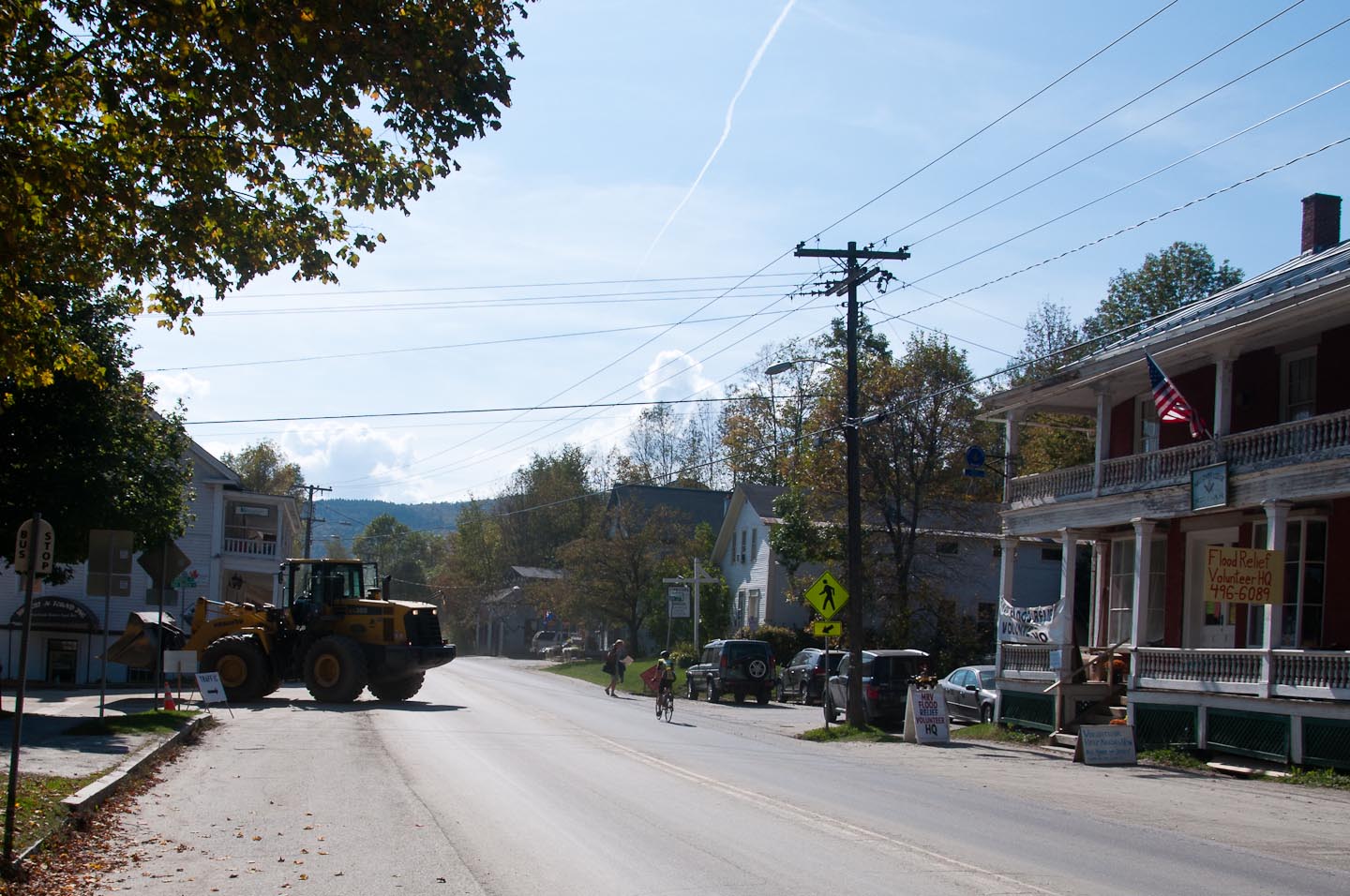

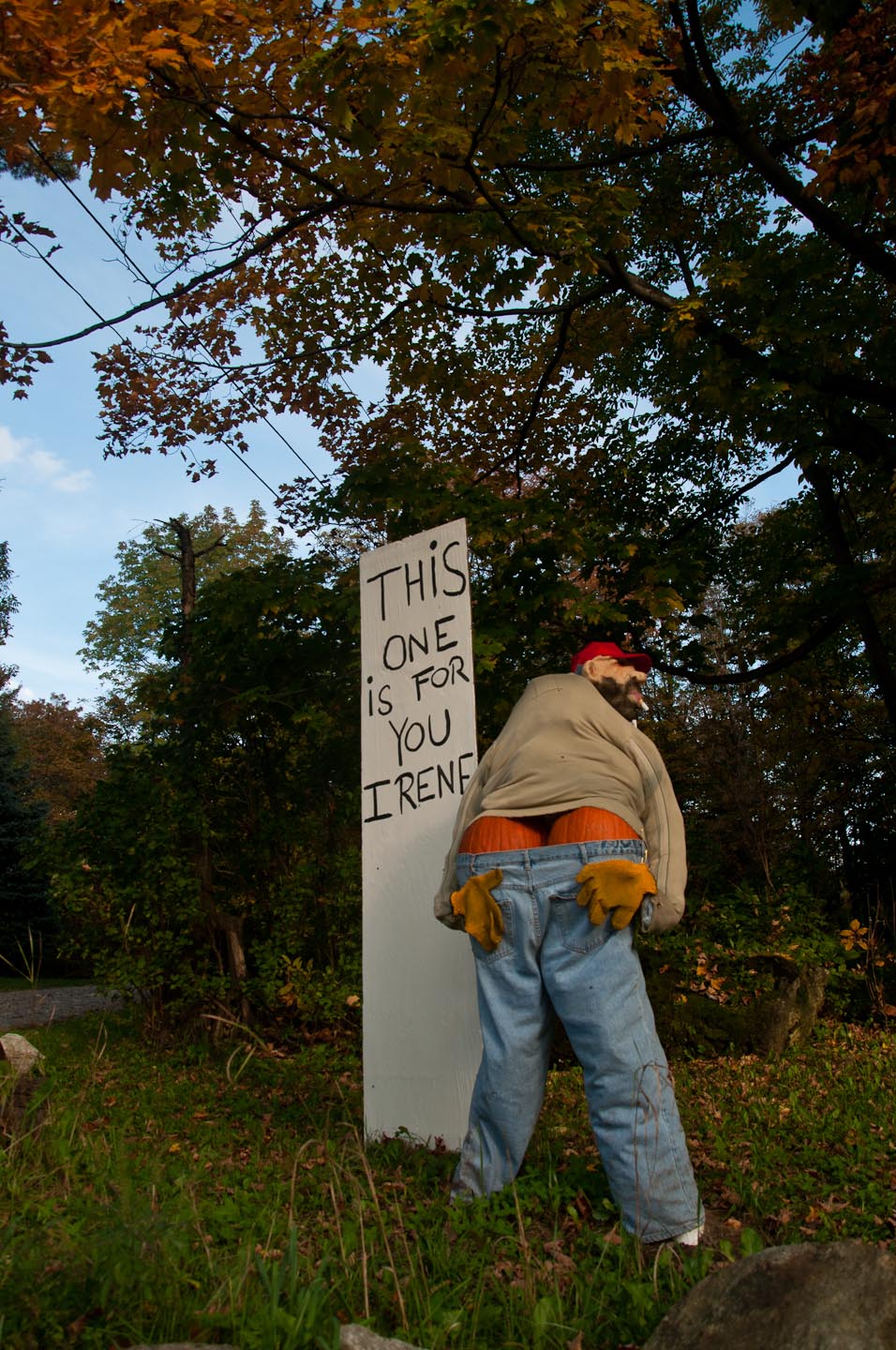


Thirty-four state bridges were closed on Aug. 29. Today, 27 of those have been reopened.
“We’re making huge progress,” Sue Minter, deputy secretary of the Agency of Transportation, said. “We couldn’t have done it without the outstanding dedication of our transportation workers, contractors, the National Guard and other states.”
The worst road sections will take more time. One segment of Route 131 in Cavendish, for example, is now a canyon with a 200-foot drop-off, Minter said. Route 107 in Stockbridge became part of the White River. In Jamaica and Wardsboro, Route 100 was badly gutted.
The price tag to bring all the state highways back up to snuff? $700 million, according to VTrans officials. About a third of that cost estimate is for emergency stabilization; the remainder reflects the cost of making permanent infrastructure investments.
The cost of rebuilding town highways and bridges is another matter. Municipalities are tallying the damage and must issue reports to VTrans on Oct. 1. Early estimates from the regional planning commissions, which are helping to coordinate recovery efforts for towns, are not yet available.
Brian Searles, secretary of the Agency of Transportation, reported that 2,135 town road segments needed to be repaired. Of that total, 178 segments are closed, and 36 are emergency-only access sections. There are 238 town bridges that sustained damage; 99 are closed.
Steve Jeffrey, executive director of the Vermont League of Cities and Towns, has said the cost of reconstructing municipal transportation infrastructure could be several hundred million dollars.
Read the memo from Searles to the Joint Fiscal Committee, Sept. 26, 2011.
Municipal infrastructure
The tally of municipal structures ruined by Irene is staggering: Eleven town offices, six highway garages, eight covered bridges, seven fire stations and five libraries. In all, claims for more than 130 municipal properties will likely be filed, according the Vermont League of Cities and Towns.
Download a PDF of damage costs
In addition, damage has been reported to a number of police cruisers, dozens of sewage pump stations, town garages, dams, playgrounds, concession stands, swimming pools and water treatment plants.
Steve Jeffrey, executive director of the League, said most municipal structures are insured under the League’s blanket policy. The preliminary estimate for rebuilding town infrastructure will be at least $15.48 million, according to League documents.
Homes


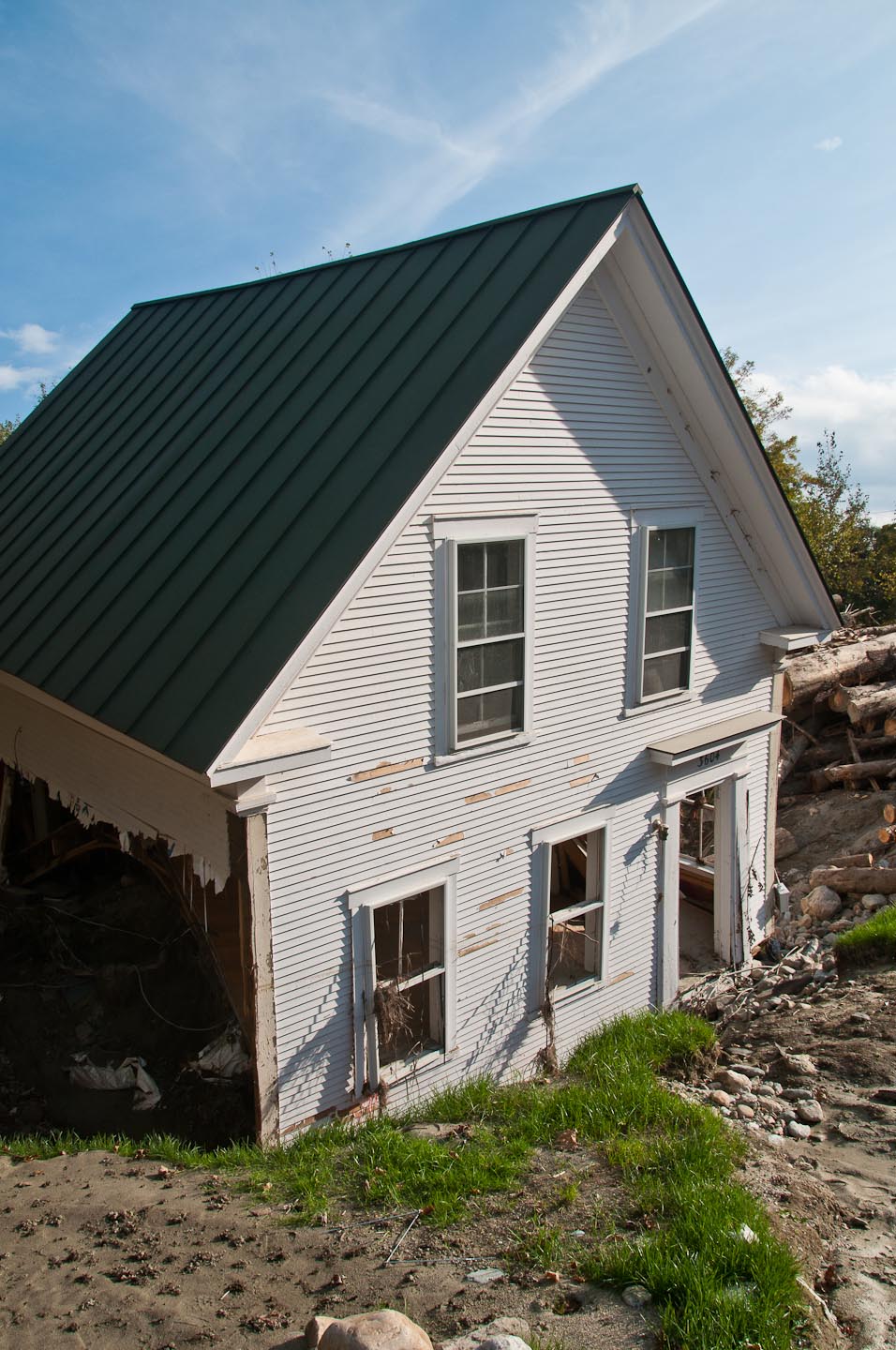

FEMA has distributed $15.5 million to individuals and families so far.
More than 5,700 Vermonters have applied for assistance, and 2700 are still waiting for housing inspectors and/or approval.
The worst hit counties, based on application rates, are: Windsor (1,566 applications); Windham (1,225 applications); Washington (972) and Rutland (905).
Mobile home owners are faced with a double-whammy. The value of their property depreciates, unlike permanent housing stock, and so reimbursement values, as approved by FEMA, can be quite low. In addition, homeowners must pay for removal costs out of FEMA grants. The disposal costs range between $5,000 and $6,000. The state is trying to help to lower that cost by breaking down the trailers before they’re shipped to the dump. Deconstructed mobile homes cost $1,500 to dispose of.
About 140 mobile homeowners were whacked by Irene; of those, about half were in the Weston Mobile Home Park in Berlin.
Lawrence Miller, secretary of the Agency of Commerce, said he’s concerned about Vermonters who aren’t signing up for FEMA assistance. Right now, though the number of homeless residents as a result of Irene is low (there are seven families without housing), Miller anticipates that in the dead of winter, Vermonters who are living in campers and sleeping on a neighbor or relative’s couch, might not have a place to live in February.
The governor has placed a request for temporary housing, but FEMA has not yet activated that request, but they have brought trailers to Springfield in case they are needed.
Businesses
As of Friday, the Small Business Administration had issued 4,912 loan applications to homeowners and businesses in Vermont. So far, 31 applications totaling $1,808,500 have been approved for low-interest loans.
The Vermont Economic Development Authority is in the process of issuing more than 143 low-interest loans to flood victims. So far, VEDA has distributed $7.5 million to businesses. The state gave VEDA $1.4 million to leverage about $10 million in capital for lending. The loans range from $5,000 to $100,000 and average about $65,000, according to Jo
Bradley, executive director of VEDA. The applications, she said, have been coming in at a rate of about 8 to 12 a day.
Bradley said many people “are just figuring out what they need to do.”
“I would guess we would have quite a bit more,” she said. VEDA may seek additional state funding in order to satisfy loan demand, Bradley said. Farmers who lost crops in the floodwaters can apply for VEDA funding, but haven’t been seeking funds yet.
Waterbury State Office Complex

The more than 500,000 square foot facility served about 1,500 state workers. The complex, which served as the “nerve center” of state government, housed the two largest segments of state government — the Agency of Natural Resources and the Agency of Human Services. The Vermont State Hospital is also part of the complex.
Floodwaters filled the extensive network of tunnels under the 19th century brick buildings and soaked the first floor of the campus buildings, knocked out generators, ruined computers and eroded the foundation of one structure. The state employees who had been based in Waterbury have been asked to relocate to one of a half dozen temporary locations in Winooski, Montpelier and Burlington.
Today, the future of the facility is in doubt. It will cost $20 million to $25 million to stabilize the complex.
Jeb Spaulding, the secretary of the Agency of Administration, has said a range of options are under review. He suggested that the state could demolish some of the buildings that would be too costly to repair and build anew on the Waterbury site. The facility could be sold and the state could build elsewhere or the whole facility could be renovated and reconstructed.
Whatever happens, lawmakers will be a part of the decisionmaking process, according to Rep. Alice Emmons, D-Springfield, and chair of the House Institutions Committee. Emmons’ committee and the Senate Institutions Committee recently took a tour of the complex to survey the damage. She said legislators will work with the administration to discuss the options, but it’s too early to begin that process now until the Department of Buildings and Grounds finishes its cleanup and environmental testing at the complex.
“I’m committed to involving the community of Waterbury … and work with House Institutions to air out all the sides and possibilities,” Emmons said. “I think we can really do some innovative things … I’m not closing the door on anything.”
Emmons expects the Irene disaster to dominate the Legislature’s agenda in the next session. “This hits every committee except health care,” she said.
Town by town
Pittsfield
Five houses were completely destroyed in the town of Pittsfield on Aug. 28. The ground underneath Brian Halligan’s house, which was about 150 yards from the Tweed River, was eaten away by a torrent of water. His house fell into the river, much of his yard was swept away. All that was left on Monday, Aug. 29, was the attached garage. Half of the house Jeremy Livesey and Heather Grev rented, disappeared – along with their belongings. Three bridges went out.
Pittsfield residents wasted no time. Like so many other communities that were devastated by Irene, they held daily meetings and began to take matters into their own hands. They organized food and water supplies, made meals for the town’s 400 or so residents, set up a makeshift medical facility at the library, and repaired the access to two bridges.
The road crew, led by George Deblon, began rebuilding roads immediately and by Tuesday, residents could leave town (though Killington and Stockbridge were deadends to the west and north). Roads were passable by Thursday and the power was back in service, according to Jason Evans, owner of Clear River Tavern.
The recovery effort is by no means over, Evans said. “It’s going to be a long stretch but it’s going better than expected.”
Moretown
Most of the downtown buildings in Moretown were severely damaged by Irene – including the post office, town offices, fire station and a church. Dozens of homes were trashed by the floodwaters and the elementary school building was coated in a filthy, sewage laden muck.
Two bridges in town were trashed.
A month later, the town has begun to turn around, according to Rep. Maxine Jo Grad, D-Moretown. The school is open, the fire station has new doors and homes have been gutted in anticipation of renovation work.
The elementary school children began classes several weeks ago. The first few days they went on sponsored field trips to Shelburne Farms and the Montshire Museum, and then they tented outside for a few days until the building was ready.
Just this week, the post office reopened with much fanfare. For the last month, the postmistress had been sorting mail at home, Grad said. Sen. Patrick Leahy was on hand to present the town with a flag that had flown over the White House.
Life is better, but Moretown’s restoration will take time, Grad said.
People are getting back into their houses,” Grad said. “There’s still a long haul ahead. It’s getting colder, the days shorter. The next phase of the recovery will be (figuring out) what this really does mean to people’s lives. There’s lots of challenges ahead.”
