

Editor’s note: This story was updated at 9:20 a.m. Thursday, April 14, 2011.
The Senate Health and Welfare Committee passed a new version of the single-payer health care bill out of committee Wednesday on a 5-0 vote. The unanimous decision was made shortly after the senators also agreed to incorporate amendments from two conservative senators on the committee, Sen. Hinda Miller, D-Chittenden, and Sen. Kevin Mullin, R-Rutland, into the bill.
The groundbreaking legislation, which was drafted by the Shumlin administration and passed by an overwhelming margin in the House creates an overarching vision for a single-payer system that would go live in 2017 – and only then if the state is granted a waiver from the federal government.
The bill, H.202, sets up the five member Green Mountain Care board that will make recommendations to the Legislature. The board is charged with determining what the common benefit package will look like for patients; how doctors and hospitals will be compensated; and how the system will be financed.
The proposed legislation also lays the foundation for the state’s federally mandated insurance “exchange,” which would go into effect in 2014.
Read the 1.3 version of H.202. http://www.leg.state.vt.us/jfo/healthcare/H_202_SH&W_Strike-all_amendment.pdf
Members of Gov. Peter Shumlin’s administration said they were pleased with the compromise legislation, which includes language that businesses lobbied for, including a provision that will allow more than one insurer to offer health care plans under the federal health care exchange.
Shumlin campaigned on a single-payer health care system, and as of last week, it appeared that the governor and his special assistant on health care, Anya Rader Wallack, had lost the support of some businesses, particularly large corporations, like Biotek, IBM, Dealer.com and Rhino Foods.
IBM, Vermont Country Store and about a dozen businesses represented by the Vermont Chamber of Commerce, Fleischer Jacobs Group and Business Resource Specialists held back-to-back meetings with Shumlin last Friday in an attempt to change H.202. The governor asked the companies to support the plan and help the state save money; the business groups pushed back and insisted on changes to undercut the bill. Business leaders, coached on effective legislative communication, also buttonholed lawmakers on Wednesday and Thursday.
On Wednesday, lawmakers attempted to win businesses back with changes to the bill that
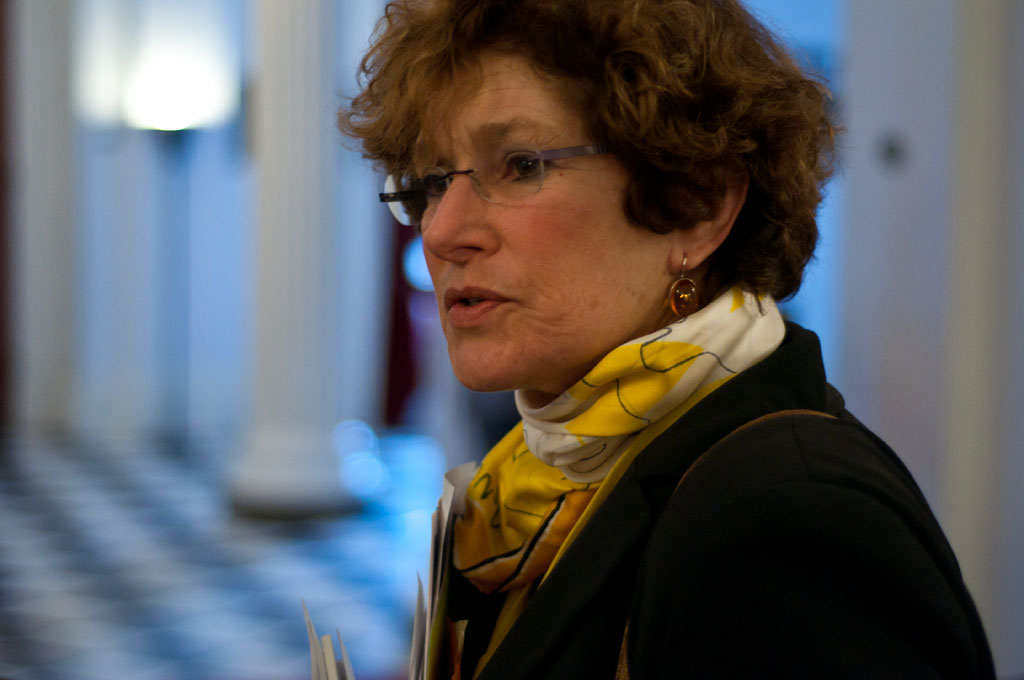
Miller introduced an amendment to the bill that requires the Green Mountain Care board to consider the impact of the financing system for the universal health care plan on the state’s economy and its bond rating. In addition, the board is required to review the impact of any tax system changes as a result of the health care plan, “in circumstances under which a particular tax change may result in double payments, such as premiums and tax obligations.”
Bill Shouldice, a lobbyist representing a number of the businesses that objected to the original plan, said self-insured companies are still worried about their rights under the ERISA law.
“They’ve recognized there are flaws in the bill, but they are only partially addressing them,” Shouldice said. Businesses, he said, need the comfort in knowing what the whole plan will look like.
Dr. Deb Richter, a single-payer advocate, said it’s a “good compromise and it puts all the checks and balances in place.”
The state’s hospitals embrace elements of the bill, namely the Vermont Blueprint for Health; investments in electronic health records and the creation of payment reform pilots, according to Bea Grause, president and CEO of the Vermont Association of Hospitals and Health Systems.
The association continues, however, to take issue, however, with the state’s fiscal year 2012 budget.
“The budget ‘contains costs’ through cuts to doctors and hospitals yet H.202 aims to create fair and sustainable payment to these very same providers,” Grause said in a statement. “The promises the state is making for tomorrow do not align with the reality of how the state underpays providers today. We already know that a health care system funded at current Medicaid levels is not what Vermonters want. The Vermont State Hospital is ample proof of that.”
