

Vermont’s Legislature is unusual for many reasons, not least of which is the fact that the 180 lawmakers who occupy the Golden Dome four months out of the year are marginally remunerated, part-timers, unlike the professional politicians who preside over legislatures in other states. Vermont’s citizen legislature is made up of representatives and senators from the furthest reaches of the state who are readily accessible to their constituents and the public at large.
Another oft-touted factoid about the Statehouse is its relative preponderance (by national standards) of women in office. Vermont is ranked No. 2 – right after Colorado – for the largest percentage of women who hold seats in a state legislature. About 38 percent of Vermont’s representatives and senators are women; the Colorado legislature stands at 40 percent.
Not bad, when you compare that number to states across the country. The average, according to the Center for American Women in Politics, is 23.58 percent.
Vermont also has a core group of women in the Statehouse in positions of power. All four of the “money” chairs – the appropriations and finance committees – are occupied by women. And in all, nine women are House committee chairs out of a total of 15; in the Senate women chair half of the committees. The majority leader in the House and the deputy majority leader in the Senate are both women. Gov. Peter Shumlin, a Democrat, made an effort to appoint as many women as possible to positions in his administration.
Gender inequality in politics, however, is still pervasive on the local, state and national levels. All but one of Vermont’s constitutional officers are men. The state has never elected a woman to Congress, and has had only one female chief of state, Gov. Madeleine Kunin. Twenty-three states never have sent a woman to the governor’s mansion. Only six states nationwide are led by women governors at the moment.
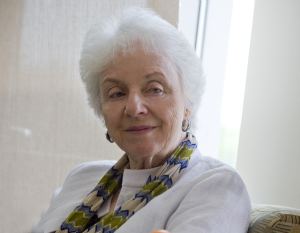
Women bring an important, often missing, perspective to male-dominated politics, Kunin said.
Kunin, who has long been a booster for women who run for office (she was the Vermont chair for Hillary Clinton’s bid for the presidential primary and backed Deb Markowitz in Vermont’s gubernatorial primary last year), wants to help women overcome their natural aversion to leadership and politics. She is worried that fewer young women are seeking election to local town offices and school boards — as well as higher office.
Women bring an important, often missing, perspective to male-dominated politics, Kunin said. They tend to vote more favorably on issues that affect children and education, for example, she said. Before women became involved in electoral politics, issues like domestic violence and breast cancer weren’t really on the agenda, in her view.
Kunin doesn’t talk about gender bias much. Instead, she focuses her efforts on self-discrimination. Women too often, Kunin says, don’t feel qualified to run for office or to push for the top slot in a profession. They don’t see themselves as leaders or politicians, she says, and they don’t like to promote themselves.
While this female ethos may seem like a habit of mind that is more a relic of Betty Friedan’s 1950s than the 21st century post-feminist era, a study last month from the Steering Committee on Undergraduate Women’s Leadership at Princeton University shows that college-aged women still act like shrinking violets when it comes to leadership roles. They’re happy to work behind the scenes in politics, but they tend to undersell their abilities “in situations where men might stress their own accomplishments,” according to the study. Even at Princeton, one of the nation’s top universities, “women, more than men, are pressured to behave in certain socially acceptable ways.”
Kunin wants to change that basic assumption that she says is commonplace in Vermont, too, and help women build the skills — and confidence – they need to become leaders in their communities. She believes the best way for women to obtain a new-found sense of empowerment is through exposure to role models.
That’s why, as a Marsh Professor At-Large at the University of Vermont, she has organized a daylong event, “Ready to Run: Campaign Training for Women.” The by-women, for-women event is designed to encourage women of all ages, political stripes and demographic backgrounds to run for local office. The workshop, which was developed by the Center for American Women and Politics, includes sessions on how to break into community and state politics and how to speak effectively in public.
“People ask me, why have a workshop just for women?” Kunin said. “One reason is, women are not out there in the same proportion. They often don’t think they’re qualified. They’re much tougher on themselves in terms of qualifications than men are. Women are much more literal about what that means. A man will say, ‘I can do this,’ and a woman says, ‘Who me? I’ve got to take two more courses.’ You don’t get a degree in politics.”
Two national political consultants will be on hand at the conference to impart their knowledge of all things political: Celinda Lake, a leading political strategist for the national Democratic Party, and Chris Jahnke, a media and public speaking coach, who has worked with CEOs of Fortune 500 companies, politicians and, most recently, Michelle Obama.
There will also be several panels featuring prominent local women from across the political spectrum, including: Roberta McDonald, Lucy LeRiche, Carole Ode, Heidi Tringe, Liz Bankowski, Heidi Scheuermann, Patricia Moulton Powden, Rita Markley, Beth Robinson, Mary Miles Teachout, Meghan Emery, Wanda Hines, Rachel Weston, Sarah Buxton, Jane Knodell, Deb Markowitz and Diane Snelling.
Kunin said she expects the 75 hoped-for workshop attendees will each take away something different from the experience.
“For some people, it will be how to speak up in a class or in a meeting,” Kunin said. “For others, it may be a run for the school board or the Legislature. I think it will vary a great deal. I hope they feel they have the skills and confidence to speak up about the issues of our time. That’s the most important thing.”
“Ready to Run,” will be held from 8 a.m. to 4:30 p.m. on April 16 in the Livak Ballroom at the Dudley H. Davis Student Center on the campus of the University of Vermont. Registration is required by April 10. There is a $10 suggested donation.
