

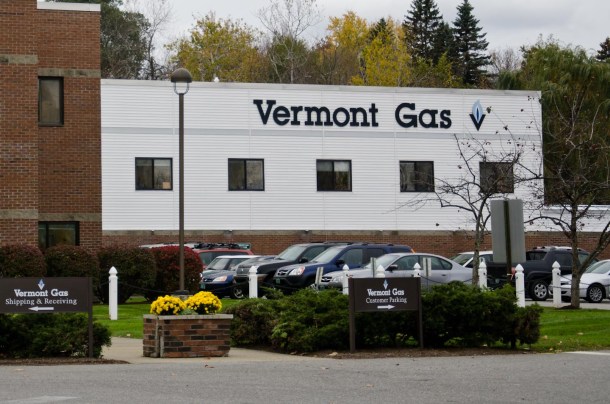
The state’s natural-gas utility has asked state regulators to approve a rate reduction that would see residential customers pay 2.7 percent less starting in the next fiscal year.
Combined with cuts for commercial and industrial customers, the total average rate reduction will be 3.8 percent if the proposal submitted by the company on Feb. 15 is approved by the Public Utility Commission.
Vermont Gas, which is owned by Canadian fossil fuel giant Énergir, agreed to a cap of 8.5 percent return on equity from 2017-2019 as a punishment for “imprudence” related to a 41-mile gas pipeline extension into Addison County.
The company may have to pay another $25,000 fine for failing to bury the pipeline according to the standards set out in the permit authorizing its construction.
Following the federal tax cut approved last year, Vermont Gas said it would save $2.4 million annually in taxes, translating into 5.6 percent decrease in annual rates. As a public utility, the company must pass those savings onto customers.
As is the case with other regulated monopolies in Vermont, Vermont Gas may profit only off its capital assets (such as pipelines and pumping stations), and not the fuel itself.
The latest rate proposal is a reflection of various factors including the tax cuts, and also accounts for the profit cap imposed due to the pipeline issues, said the company’s communications and brand manager, Beth Parent.
Vermont Gas made between 9.75 and 10.26 percent return on equity from 2012 to 2016, before the PUC imposed the 8.5 cap over the firm’s failure to “prudently plan and manage” the pipeline construction. The cost rose from a planned $86 million to $168 million, leaving Vermont ratepayers on the hook for $135 million of that sum.
In the press release announcing the latest rate cuts, Vermont Gas President and CEO Don Rendall noted that the company’s rates have decreased 16 percent since 2011.
“That means that with this proposed reduction, the typical family will pay about $270 less on their heating bills than they were seven years ago,” Rendall said.
The Henry Hub spot price for natural gas — the most widely-used index for wholesale US prices — decreased by 25 percent over that same period, on an average yearly basis. Parent said that Vermont Gas’ retail prices incorporated many factors apart from short-term wholesale prices.
Another factor in Vermont Gas’ rates is its System Expansion and Reliability Fund, which includes a $5 million annual customer contribution meant to protect against potential price swings. Vermont Gas is looking to withdraw $8 million from the fund in FY19 to help reduce rates, according to the company.
The Public Utility Commission will consider the rate request through what regulators have described as “a fully-litigated case,” meaning that the Department of Public Service may comb through the firm’s financial records to ensure it is charging a fair rate.
The Public Utility Commission must approve, modify or deny the request by October 31.
“Obviously we are pleased to see that Vermont Gas is proposing to reduce its rates,” said Jim Porter, who is director of the Department of Public Service’s Public Advocacy Division.
“The Department is currently reviewing Vermont Gas’s filing and will make recommendations to the Public Utility Commission on whether an investigation or additional adjustments to the proposed rates will need to be made.”
Énergir, which owns both Vermont Gas and Green Mountain Power, recently changed its name from Gaz Métropolitain. It brought in $27 million in adjusted net income from the two Vermont utilities in its first quarter of 2018, according to a report from Valener, the firm’s investment arm.

